
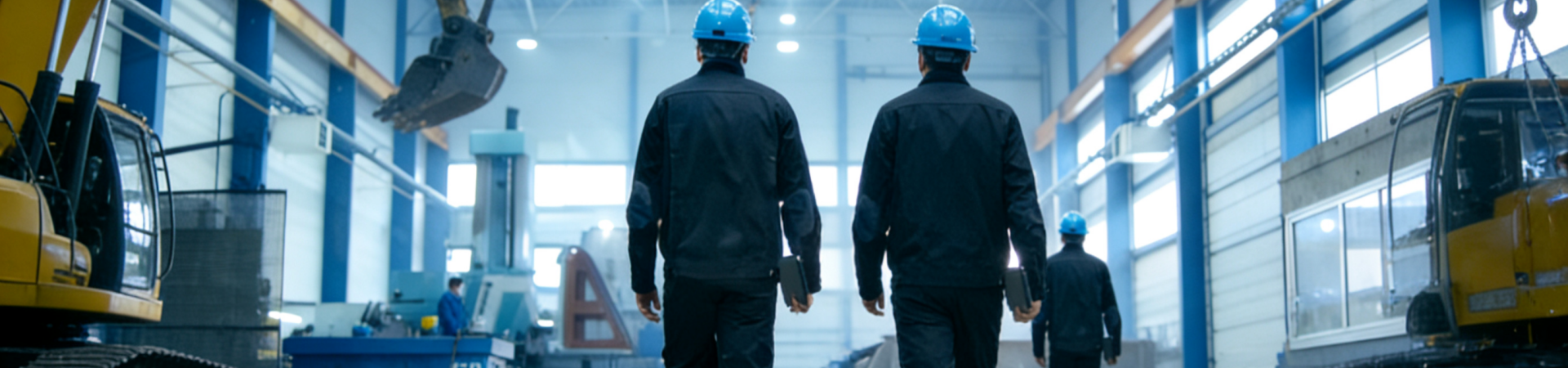
Before every machine leaves the factory, it must pass a comprehensive and multi-layered quality control process to ensure outstanding performance, durability, and operational safety. Quality management begins at the source, with strict inspection of raw materials and key components. Steel structures, hydraulic parts, engines, and electrical systems are carefully examined to confirm compliance with technical standards and design specifications.
During production, each assembly stage is supervised by experienced engineers and quality inspectors. Critical procedures such as structural welding, hydraulic pipeline installation, torque calibration, and electrical system integration are conducted according to standardized operating guidelines. Precision tools and digital measuring instruments are used to verify alignment accuracy, structural strength, and component compatibility.
After assembly, every machine enters a rigorous testing phase. Advanced diagnostic equipment evaluates engine output, fuel efficiency, hydraulic pressure stability, transmission performance, braking systems, and overall safety functions. Real-load simulations and operational trials are carried out to replicate real working conditions, ensuring smooth coordination between mechanical, hydraulic, and electronic systems. Durability and endurance tests further confirm the machine’s reliability under continuous operation.
Only equipment that successfully passes all inspection checkpoints, performance benchmarks, and safety verifications receives final approval for delivery. Detailed inspection records are archived for traceability and long-term service support. Through this systematic and disciplined quality control framework, we guarantee stable operation, reduced downtime, and consistent product reliability—providing customers with confidence, safety, and long-term value in every machine delivered.