Advantages and Disadvantages Comparison of Air-cooled and Water-cooled Engine Loaders
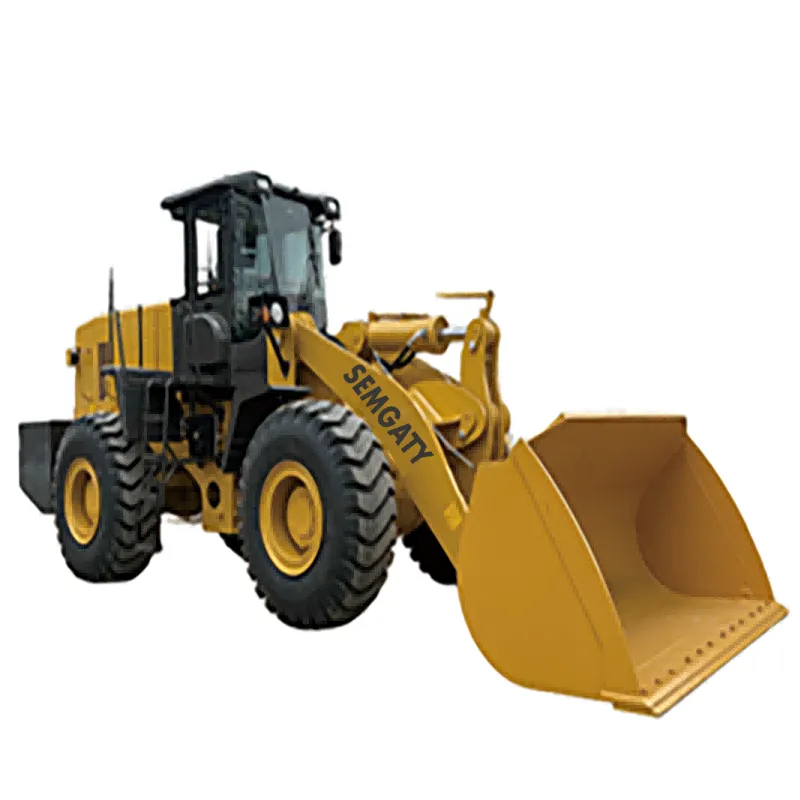
Engine cooling systems serve as pivotal components determining continuous operation capacity and environmental adaptability of compact loaders. Air-cooled and water-cooled structures represent two mainstream cooling technical routes for construction machinery engines. Different cooling mechanisms bring distinct differences in environmental adaptability, maintenance difficulty, operational stability and service life.
articulating wheel loader and
compact front end loader adopt targeted cooling configurations to match diversified construction scenarios. In-depth comparison of two cooling systems assists global buyers in completing scientific model selection based on project conditions and long-term operation demands.
Air-cooled engine systems rely on fan-driven airflow to take away surface heat of engine cylinders and crankcase components. Simple structural composition removes complex water tanks, cooling pipelines and circulating water pumps. Reduced mechanical parts lower overall failure probability and simplify daily maintenance procedures. Such cooling structures feature strong environmental adaptability and free operation from liquid freezing, pipeline blockage and water quality restriction troubles.
Water-cooled engine systems utilize circulating coolant for constant-temperature heat dissipation inside engine cavities. Sealed circulating structures achieve uniform heat distribution across all engine components. Stable cooling effect controls engine operating temperature within fixed numerical ranges. Constant-temperature operation effectively suppresses thermal deformation of precision parts and maintains consistent power output under long-duration heavy-load working states.
Adaptability to extreme low-temperature environments forms core advantages of air-cooled engine loaders. Cold regions with subzero temperatures cause freezing risks to cooling water and coolant liquids. Air-cooled designs eliminate liquid freezing faults and support normal engine startup and operation in frost and snow weather. No liquid replacement work reduces seasonal maintenance pressure for equipment operating in high-latitude cold areas all year round.
compact front loader widely applies air-cooled engine configurations for grassroots light-load construction scenarios. Simplified cooling structures match low-budget positioning and simple operation demands of farmland renovation, yard sorting and rural road maintenance. Stable anti-freezing performance and low maintenance requirements reduce operational thresholds for novice operators and remote construction teams. Cost-effective cooling schemes create high practical value for scattered small-scale engineering tasks.
High-temperature and high-intensity working scenarios expose inherent defects of air-cooled engines. Natural airflow cooling fails to achieve efficient heat dissipation under continuous full-load operation and high ambient temperature. Local heat accumulation causes uneven engine temperature distribution. Overheated components trigger power attenuation, increased fuel consumption and accelerated wear of internal precision parts during long-hour cyclic construction.
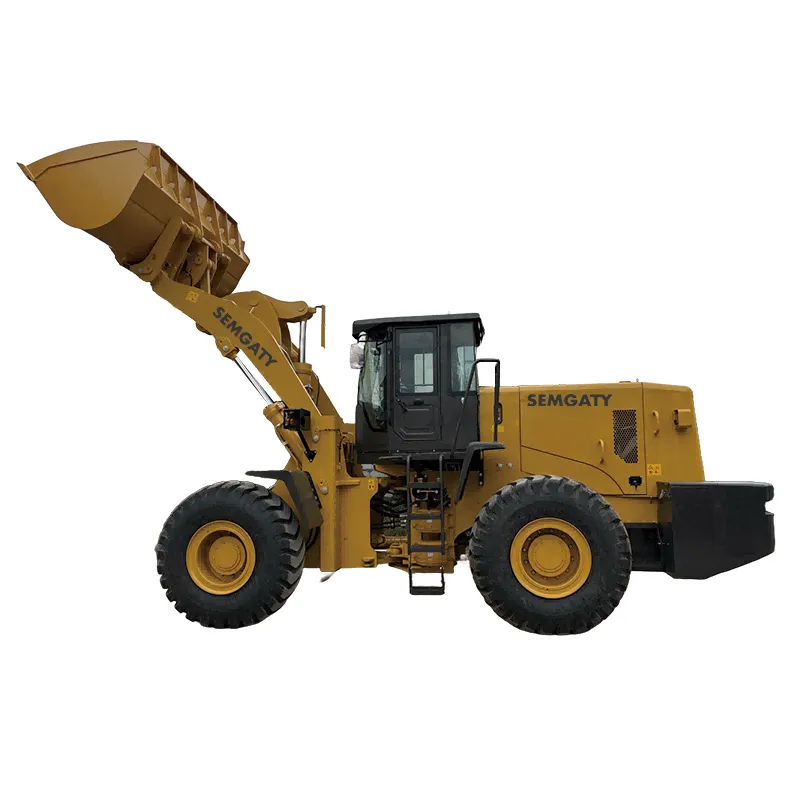
Water-cooled engines deliver superior heat dissipation stability for high-intensity operation. Circulating coolant conducts internal heat rapidly and realizes balanced temperature control of engine core components. Closed cooling systems resist external dust and impurity interference to maintain stable heat dissipation efficiency. Continuous constant-temperature working state supports non-stop heavy-load operation in high-temperature summer environments and large-scale earthwork projects.
articulating wheel loader generally equips water-cooled engine systems for complex high-intensity field operation. Variable terrain working conditions including slope climbing, muddy ground traveling and long-distance material transfer generate continuous engine heat accumulation. Efficient circulating cooling structures stabilize power output and avoid overheating-induced performance degradation. Reliable constant-temperature operation guarantees equipment safety and efficiency in harsh long-duration construction tasks.
Maintenance difficulty and cost differ significantly between two cooling systems. Air-cooled engines adopt open heat dissipation structures with fewer precision accessories. Daily maintenance only requires regular cleaning of heat dissipation fins and fan components. No coolant replacement, pipeline inspection and anti-freezing treatment cut long-term maintenance expenditure and time cost for engineering teams.
Water-cooled engine systems require standardized periodic maintenance for stable operation. Maintenance items cover regular coolant replacement, water tank cleaning, pipeline leakage inspection and pump performance detection. Complex accessory systems increase maintenance technical thresholds and spare parts costs. Strict maintenance cycles become essential to avoid overheating faults and pipeline blockage in later operation stages.
compact front end loader provides dual cooling configuration options for multi-scenario medium-load projects. Water-cooled versions maintain stable power performance for frequent heavy-load switching and long-hour urban construction. Air-cooled versions control comprehensive operational costs for conventional medium-intensity tasks. Flexible configuration choices meet differentiated budget and working condition demands of global medium-scale engineering procurement.
Operational noise and working comfort form another obvious gap between two cooling structures. Air-cooled engines rely on high-speed rotating fans for heat dissipation, generating larger mechanical noise and airflow vibration. Long-term high-noise operation affects operator comfort and on-site construction environment. Water-cooled circulating structures operate with lower noise and smoother mechanical movement to optimize on-site working conditions.
Component service life varies with cooling system stability. Fluctuating temperature operation of air-cooled engines causes repeated thermal expansion and contraction of internal parts. Unstable thermal state accelerates fatigue wear of engine components and shortens overall service life. Constant-temperature working environment of water-cooled engines reduces thermal stress and deformation of precision parts, greatly extending engine durability.
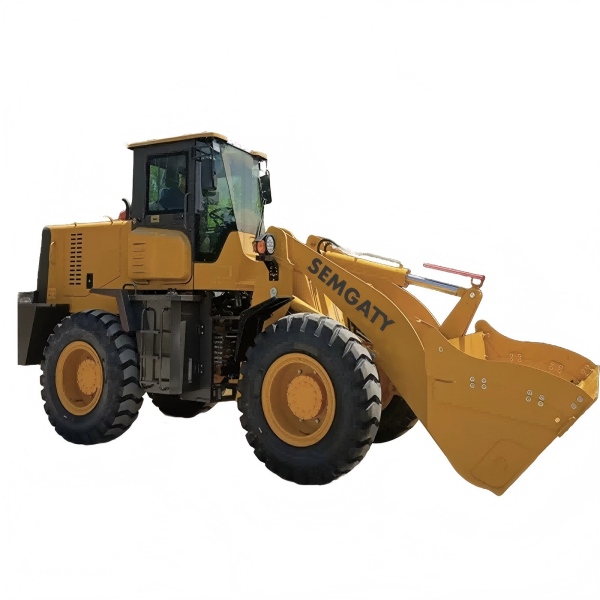
Environmental adaptability differences guide targeted equipment selection. Dry and cold regions with frequent temperature changes suit air-cooled engine operation for anti-freezing and low-maintenance advantages. Humid, hot and high-dust industrial yards require water-cooled engines for stable heat dissipation and sealed anti-pollution performance. Scenario-based matching maximizes equipment operation stability and service value.
Economic and performance balance determines final cooling configuration selection. Air-cooled loaders feature lower procurement cost, simpler maintenance and stronger low-temperature adaptability for low-budget and cold-region projects. Water-cooled loaders possess higher stability, longer service life and stronger high-load resistance for high-standard and long-cycle engineering construction.
Differentiated cooling configuration application optimizes loader operational benefits. Cold-region scattered projects adopt low-maintenance
compact front loader with air-cooled engines to reduce operational troubles. High-intensity complex field construction chooses stable
articulating wheel loader with water-cooled engines to guarantee continuous productivity. Multi-scenario municipal projects select dual-configurable
compact front end loader to balance economy and performance.
Clear cognition of air-cooled and water-cooled engine pros and cons eliminates blind procurement risks. Comprehensive evaluation of construction temperature, operation intensity, maintenance capacity and project budget forms scientific selection standards. Reasonable cooling configuration matching stabilizes equipment working performance, reduces failure rates and creates sustainable economic benefits for global compact loader engineering applications.