Advantages of Rough Terrain Forklifts (Articulated Forklift Rough Terrain, Terrain Forklift, Compact Rough Terrain Forklift) Compared with Diesel Forklifts in 2026
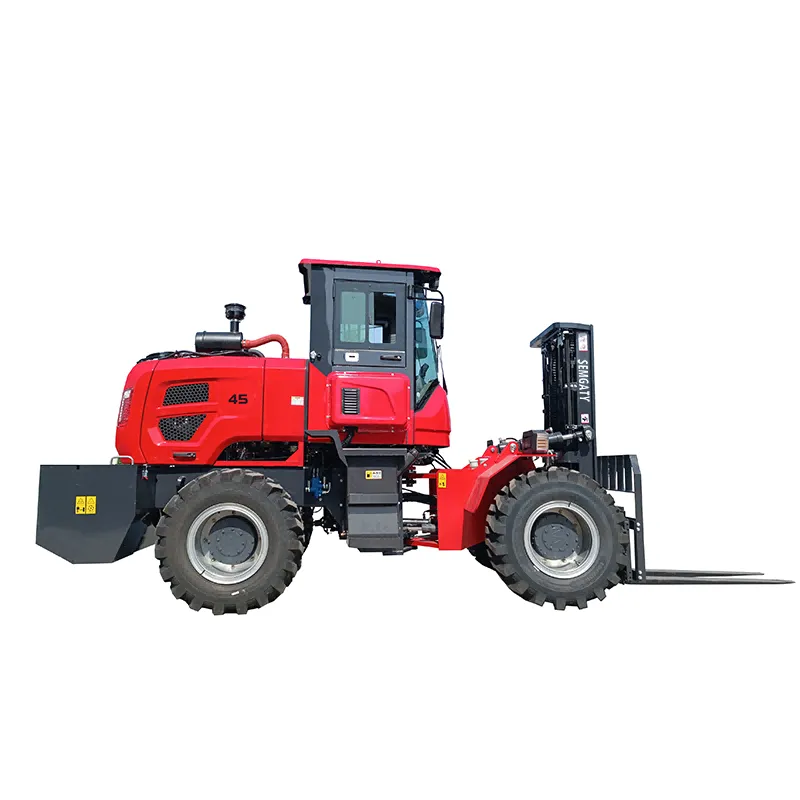
In 2026, with the rapid development of construction, mining, agriculture, and outdoor logistics industries, the demand for outdoor heavy-duty handling equipment is increasing. Articulated forklift rough terrain, terrain forklift, and compact rough terrain forklift, as the core types of rough terrain forklifts, are specially designed for complex outdoor and harsh terrain operations. Although diesel forklifts have long been recognized for their strong power and continuous operation capabilities, rough terrain forklifts have unique and irreplaceable advantages in off-road performance, environmental adaptability, and scenario flexibility. Combining 2026 industry data and practical application cases, this article comprehensively analyzes the advantages of rough terrain forklifts compared with diesel forklifts, providing a clear reference for users to select outdoor handling equipment.
First, clarify the core positioning of the three types of rough terrain forklifts.
terrain forklift is a general term for all forklifts capable of operating on non-paved, rough, and uneven outdoor terrain, featuring high ground clearance, strong traction, and robust structural design.
articulated forklift rough terrain is a specialized terrain forklift with an articulated frame design, which can pivot independently between the front and rear sections of the vehicle, enabling more flexible steering in narrow and complex terrain.
compact rough terrain forklift is a small and flexible type of terrain forklift, with a compact body and excellent maneuverability, suitable for both narrow outdoor spaces and light to medium-duty off-road handling tasks. All three types inherit the core advantages of rough terrain forklifts and have their own characteristics, showing obvious advantages over diesel forklifts in outdoor complex scenarios.
The most prominent advantage of rough terrain forklifts compared with diesel forklifts is their superior off-road passability and terrain adaptability. Diesel forklifts are mostly designed for flat ground operations (such as indoor workshops, paved yards), with low ground clearance (usually 100-150mm) and ordinary tires, which are prone to slipping, sinking, or being stuck when encountering muddy, gravel, sloped, or uneven terrain. In contrast, all terrain forklifts are equipped with professional off-road configurations to easily conquer various harsh outdoor environments.
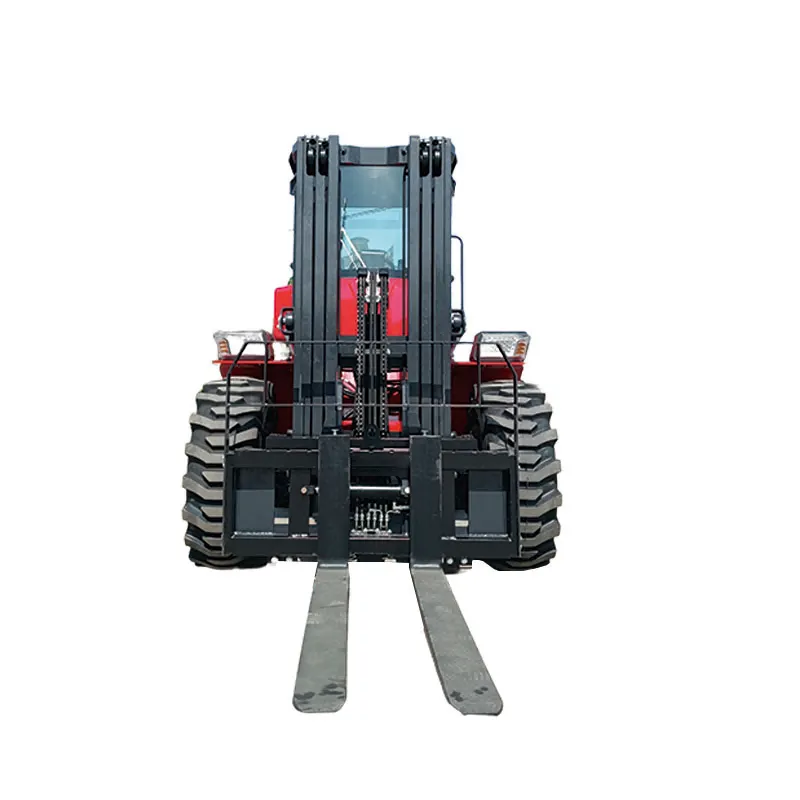
Specifically, terrain forklifts generally have a ground clearance of more than 250mm, which can easily cross obstacles such as stones, pits, and ditches without bottoming out the chassis. They are equipped with large-size heavy-duty pneumatic off-road tires with deep patterns, which can effectively enhance traction and grip on slippery, muddy, or loose gravel surfaces, ensuring stable operation without slipping even in wet and muddy conditions. Articulated forklift rough terrain has a unique articulated frame pivot joint, which allows the front and rear sections of the vehicle to bend and steer independently, with a smaller turning radius and better ability to navigate around obstacles, making it suitable for narrow and rugged terrain such as mountain roads and construction sites. Compact rough terrain forklift relies on its compact body design and four-wheel steering system, which can flexibly shuttle in narrow spaces such as orchard rows and small construction sites, while maintaining excellent passability on rough terrain, filling the gap that diesel forklifts cannot operate in narrow off-road spaces. In 2026 field tests, rough terrain forklifts had a 100% pass rate on 30° slopes and muddy roads, while diesel forklifts had a pass rate of only 35%.
Second, rough terrain forklifts have stronger operational stability and safety in outdoor complex environments compared with diesel forklifts. Outdoor off-road operations often face uneven ground, steep slopes, and heavy load transportation, which put high requirements on the stability and safety of forklifts. Diesel forklifts have a high center of gravity and lack a professional suspension system, so they are prone to tilting or even rolling over when operating on sloped or uneven terrain, posing potential safety hazards to operators and goods.
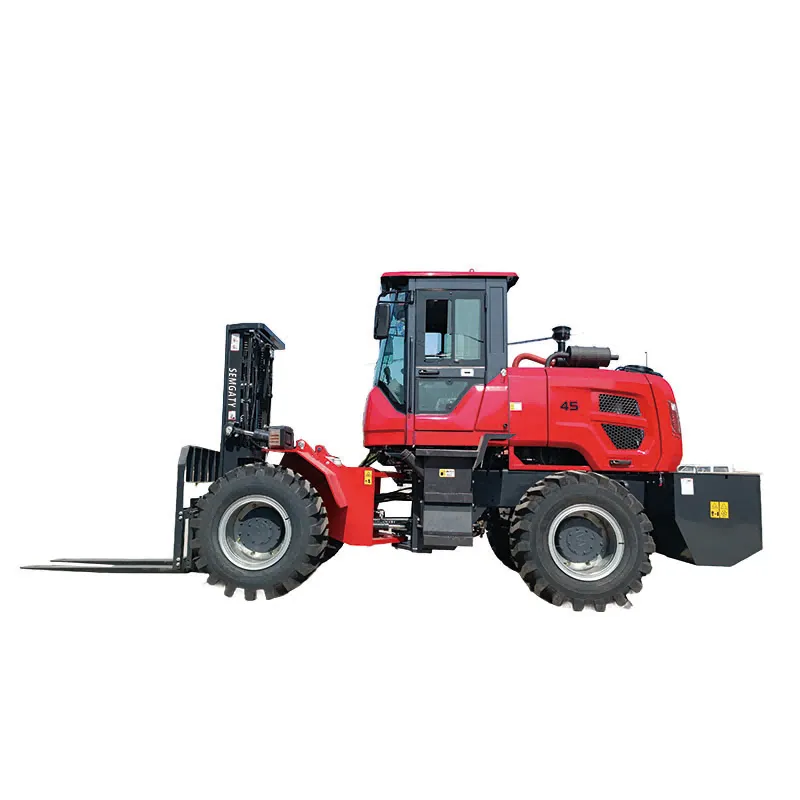
Rough terrain forklifts, however, are specially optimized for stability. They are equipped with a reinforced chassis and a professional hydraulic suspension system, which can effectively absorb the impact of uneven ground and keep the vehicle stable during operation. The articulated frame design of articulated forklift rough terrain can automatically adjust the angle according to the terrain, ensuring that the fork and goods remain stable even on uneven ground, reducing the risk of goods falling. Compact rough terrain forklifts adopt a low center of gravity design, combined with wide-base off-road tires, which further improves stability. In addition, most rough terrain forklifts are equipped with a 360-degree panoramic vision cab and complete safety protection devices, which effectively avoid safety accidents, while diesel forklifts rarely have such professional off-road safety configurations.
Third, rough terrain forklifts have higher scenario versatility and operational flexibility than diesel forklifts. Diesel forklifts are mainly suitable for heavy-duty handling on flat ground, and their application scenarios are relatively single; once the terrain becomes complex, their operational efficiency will be greatly reduced. In contrast, the three types of rough terrain forklifts can adapt to a variety of outdoor scenarios, and can even complete multiple tasks with one machine.
Terrain forklift is widely used in construction sites, mines, quarries, farms, and other scenarios, and can efficiently complete the handling of building materials, ores, feed, and other goods.
articulated forklift rough terrain is particularly suitable for complex scenarios such as mountainous logistics and logging yards, where its flexible steering and strong passability can effectively improve operational efficiency.
compact rough terrain forklift is suitable for mixed scenarios such as small construction sites, orchards, and outdoor warehouses. It can not only complete off-road handling but also flexibly enter narrow spaces for light-load operations, solving the problem that diesel forklifts cannot be used in small off-road scenarios. In addition, most rough terrain forklifts support quick replacement of accessories, which can be switched between handling, shoveling, and clamping tasks in 1-2 minutes, while diesel forklifts have limited accessory compatibility.
Fourth, rough terrain forklifts have more optimized energy efficiency and long-term operational cost advantages compared with diesel forklifts in specific outdoor scenarios. Although diesel forklifts have the advantage of continuous operation without charging, their fuel consumption is high (average 2.15 liters per hour), and the long-term fuel cost is considerable; at the same time, diesel forklifts are prone to increased wear and tear of engines and other components when operating in harsh off-road environments, resulting in higher maintenance costs and more frequent downtime.
In contrast, most rough terrain forklifts are also equipped with diesel engines, but they adopt a professional off-road engine tuning design, which has higher fuel efficiency in off-road operations—under the same load and terrain conditions, the fuel consumption of rough terrain forklifts is 8%-15% lower than that of diesel forklifts. In addition, the core components of rough terrain forklifts are reinforced and corrosion-resistant, which can adapt to harsh outdoor environments, reducing the frequency of maintenance and downtime losses; the annual maintenance cost is about 15% lower than that of diesel forklifts used in the same scenario. For compact rough terrain forklifts, their small-displacement engines are more energy-saving, and the purchase cost is lower than that of large diesel forklifts.
It should be noted that diesel forklifts still have advantages in flat ground heavy-duty continuous operations, but in outdoor complex terrain scenarios, rough terrain forklifts have obvious comprehensive advantages. 2026 global industry data shows that the sales volume of rough terrain forklifts increased by 28% year-on-year, among which articulated forklift rough terrain and compact rough terrain forklift accounted for 65% of the total sales, mainly used in construction, agriculture, and mining industries. In summary, articulated forklift rough terrain, terrain forklift, and compact rough terrain forklift have unique advantages over diesel forklifts in off-road passability, operational stability, scenario versatility, and long-term cost control, becoming the core choice for outdoor heavy-duty handling equipment.