

Application Cases of Backhoe Loaders in Port Cargo Yard Material Handling and Transportation
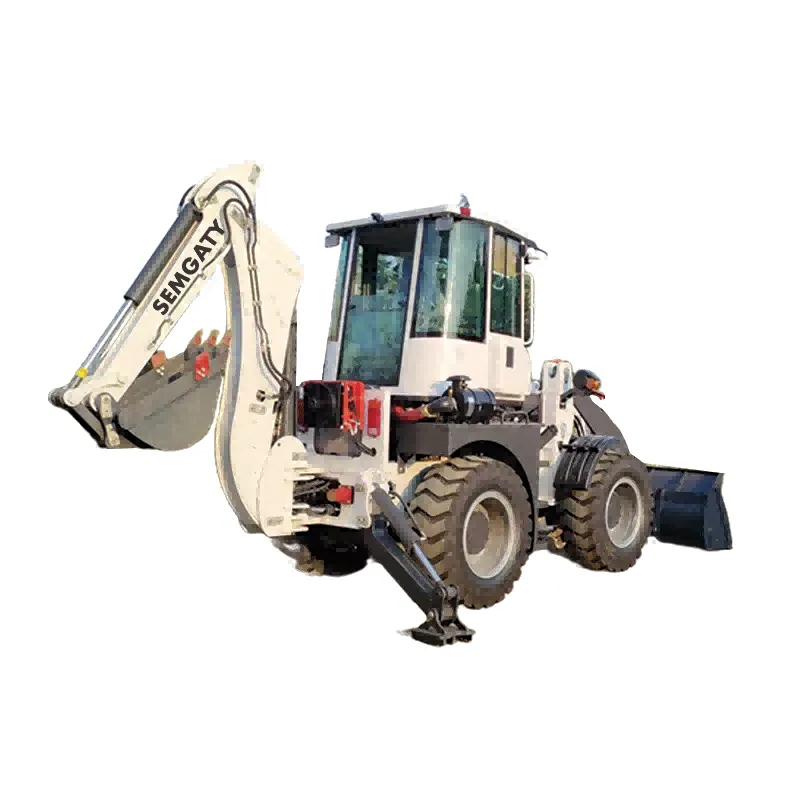
Modern port cargo yards undertake core functions of cargo aggregation, temporary storage, sorting and cross-regional transfer for maritime and land logistics systems. Efficient material handling and orderly cargo turnover serve as vital indicators measuring port throughput capacity, operational efficiency and market competitiveness. Large and medium-sized port yards feature diversified cargo types, intensive stacking layouts and high-frequency cyclic handling tasks that impose strict requirements on equipment stability, flexibility and continuous working performance. Traditional single-function handling equipment shows obvious limitations in multi-scene adaptation and flexible operation, frequently causing cargo accumulation, turnover blockage and reduced yard operational efficiency. Multi-functional engineering machinery effectively solves various operational bottlenecks in daily port yard management. backhoe machine with professional port-level structural configurations fully adapts to high-load, high-frequency and multi-type material handling work in intensive port environments. Reinforced load-bearing components and optimized power systems enable robust backhoe machine to steadily complete bulk material stacking, cargo surface leveling and short-distance cargo distribution during long-duration port yard operations.
Unique operational environments of port cargo yards raise upgraded industrial standards for handling machinery performance. Daily port handling business covers bulk grain, mineral aggregates, construction sand, industrial raw materials and packaged general goods with distinct densities, stacking traits and processing specifications. Long-hour continuous operation, frequent start-stop cycles and complex ground conditions continuously test equipment wear resistance and operational stability. Narrow transfer passages, densely stacked cargo areas and cross-working zones demand superior mechanical flexibility and precise control capability. Ordinary handling equipment suffers from low flexibility, high energy consumption and poor mixed-cargo adaptability, restricting overall yard turnover efficiency. Industrial-grade structural upgrades and optimized hydraulic parameters resolve common pain points of port material handling. Refined transmission systems and reinforced frameworks greatly enhance continuous working reliability of newly developed new backhoe in large-scale port cargo transfer projects. Matched power output and anti-wear structural design sustain stable operational status of advanced new backhoe under long-term high-intensity port working conditions.
Integrated dual-functional structures support one-stop efficient material handling for port yard scenarios. Daily port yard maintenance includes bulk material gathering, cargo pile trimming, auxiliary container loading, residual waste cleaning and short-distance cargo transportation. Separate deployment of single-function loading and transportation equipment leads to cumbersome scheduling, low collaborative efficiency and excessive equipment idle time. Dual-end working designs integrate digging, shoveling and loading functions to cover full-link port handling workflows and support rapid switching between diverse operational tasks. Comprehensive working advantages simplify on-site construction procedures and significantly accelerate cargo turnover speed. Multi-functional integration and high-strength industrial manufacturing standards make front loader and backhoe fully suitable for full-cycle operational maintenance of various port cargo yards. Outstanding comprehensive performance and scenario adaptability steadily improve practical application value of classic front loader and backhoe in modern port logistics handling systems.
Powerful mixed-cargo adaptation capability addresses diversified handling difficulties in port operation scenarios. Different port materials correspond to unique handling resistance, stacking standards and transfer specifications. Light granular materials such as grain and fine sand require gentle shoveling and uniform stacking to minimize scattering loss and maintain neat cargo surfaces. Heavy bulk materials including ore and coarse aggregates need reliable load-bearing capacity and stable power output to support rapid loading and pile rearrangement. Equipped with replaceable professional buckets and adjustable hydraulic output, qualified handling equipment delivers targeted processing for different materials, effectively avoiding material overflow, pile collapse and uneven stacking. Precise operational control shapes standardized cargo piles, realizes orderly functional zoning and creates favorable conditions for subsequent cargo inspection, counting and outbound transportation. Refined handling modes reduce material waste and maximize utilization efficiency of limited yard storage space.
Superior terrain adaptability and anti-slip performance ensure stable operation on complex port ground. Port yard ground environments feature diverse and changeable conditions, including hardened concrete pavement, loose gravel areas and residual material covered passages. Long-term cargo dropping and frequent mechanical traveling form uneven road surfaces, slippery zones and scattered particle accumulation, increasing operational difficulty and safety risks for handling equipment. Optimized chassis structures and deep-groove anti-slip tires enhance ground adhesion and traveling stability, preventing sliding and position deviation during high-speed transfer and loading processes. Reasonable chassis ground clearance avoids friction and collision with ground protrusions and residual cargo piles. Reliable terrain passing performance guarantees uninterrupted handling progress in complex yard environments and eliminates efficiency loss caused by terrain restrictions and equipment adjustment.
Excellent high-intensity endurance performance meets round-the-clock operational demands of port logistics. Most port cargo yards maintain continuous operational states with massive daily cargo throughput and dense peak handling tasks. Ordinary machinery suffers from severe component heating, power attenuation and frequent faults after long-hour continuous operation, triggering forced shutdown and delayed cargo delivery. Upgraded circulating heat dissipation systems and optimized engine structures support stable high-load operation without performance degradation. Scientific power circulation design reduces internal component abrasion and enhances equipment durability under continuous working conditions. Consistent working output ensures uniform handling efficiency during cargo peak periods, shortens single-batch processing cycles and improves overall daily throughput of port yards. Reliable continuous working capacity provides solid mechanical support for peak-season logistics guarantee and stable daily port operation.
Flexible narrow-space operation optimizes resource utilization of compact port yards. Modern port terminals adopt compact functional zoning and intensive cargo stacking layouts to expand storage capacity, forming narrow transfer passages and limited operational spaces. Large single-function machinery fails to move flexibly in dense working zones and leaves operational dead angles that reduce space utilization efficiency. Compact body design and flexible in-situ rotation enable precise operation in cramped areas, realizing dead-angle-free material cleaning and cargo arrangement. Flexible steering and short-distance position adjustment adapt to dense cargo stacking environments, completing targeted trimming of local cargo piles without moving large-scale cargo facilities. Efficient narrow-space operation fully taps yard space potential, optimizes overall cargo layout and improves comprehensive storage and transfer capacity of modern port cargo yards.