Application Scenarios of Large Wheel Loaders: A Comprehensive Guide for Enterprises
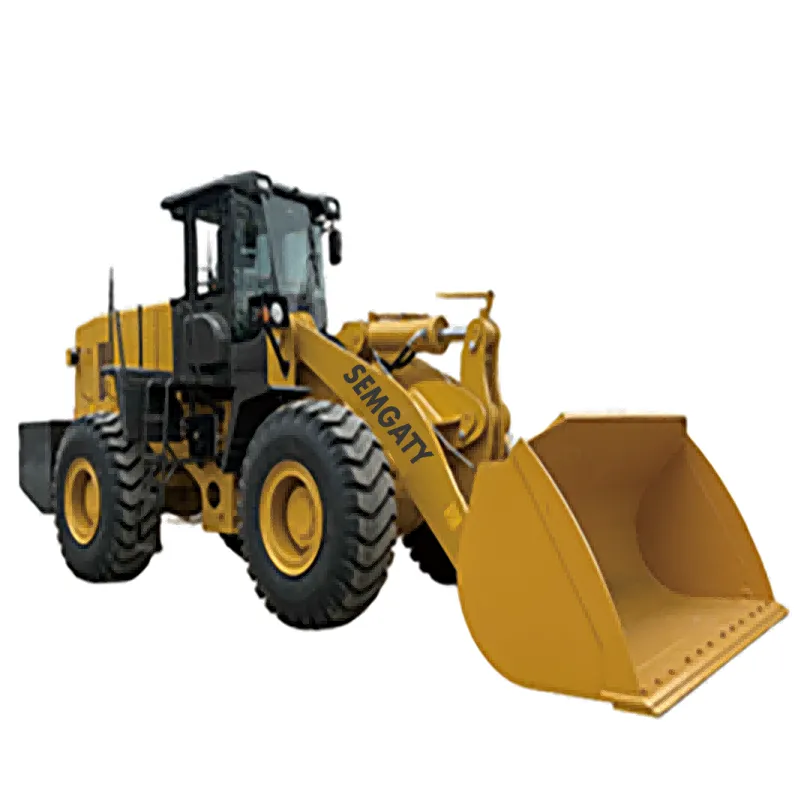
In the booming engineering and construction industry, large wheel loaders have become irreplaceable core equipment for high-intensity material handling. With the continuous expansion of large-scale projects such as mines, ports, and infrastructure construction, the demand for efficient, heavy-duty loading equipment is growing day by day. However, many enterprises still have unclear cognition about the specific application scenarios of large wheel loaders, leading to improper model selection and reduced operational efficiency. Today, industry experts will focus on interpreting the applicable scenarios of big loaders, huge loader, and huge wheel loader, and deeply analyze how these equipment play their advantages in different fields, providing a clear reference for enterprises to choose suitable equipment.
Large wheel loaders, including big loaders, huge loader, and huge wheel loader, are mainly designed for high-intensity, large-volume, and long-time continuous operations. Compared with small wheel loaders, they have stronger power, larger load-bearing capacity, and more stable operational performance, which determine their application scenarios are mostly concentrated in large-scale, high-yield industrial and engineering fields. From the perspective of industry application, the applicable scenarios of large wheel loaders can be divided into five major categories, each with distinct characteristics and functional requirements.
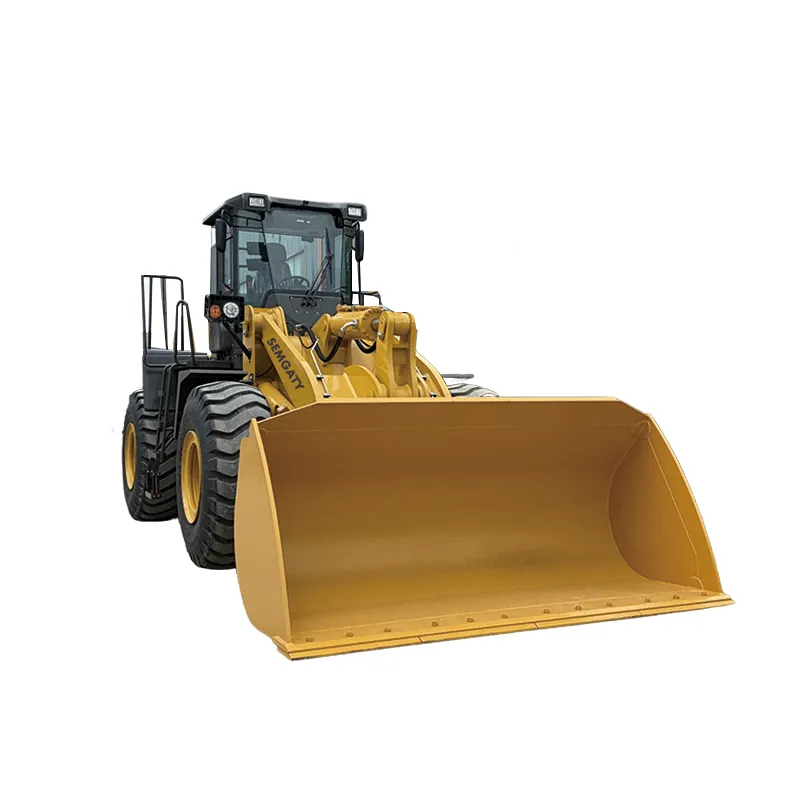
The first and most core application scenario is large-scale mines. Mines, whether open-pit coal mines, metal ore mines, or non-metallic ore mines, require a large amount of ore, gangue, and other materials to be shoveled, transported, and stacked every day. In such high-intensity operation environments,
huge loader shows unique advantages. With tonnage exceeding 15 tons, engine power up to 147kw or more, and bucket capacity of 5 cubic meters or more, huge loader can complete the loading of heavy ore in a short time, greatly improving the turnover efficiency of materials. In open-pit mines, the operation space is relatively open, which perfectly matches the structural characteristics of huge loader — although the body is large and the mobility is slightly insufficient, the strong load-bearing capacity and continuous operation performance can make up for this deficiency. Many large mining enterprises have introduced a number of huge loader to replace traditional small equipment, which not only reduces the number of equipment input but also reduces labor costs, and the overall operational efficiency has been improved by more than 50%.
Quarries are another important application scenario for large wheel loaders. Quarries mainly produce sand, gravel, stone, and other building materials, which are characterized by large output, high hardness of materials, and high requirements for loading efficiency.huge wheel loader, as a representative of large wheel loaders, is particularly suitable for such scenarios. Equipped with reinforced bucket and high-strength tires, huge wheel loader can easily shovel and load hard stones and gravel, and the single handling capacity can reach more than 10 tons, which is far higher than that of small wheel loaders. In addition, quarries often have uneven ground and harsh operation environments, and huge wheel loader adopts a reinforced structural frame and intelligent hydraulic system, which can effectively resist the impact of materials and adapt to the complex ground conditions, reducing equipment failure rate and ensuring continuous operation. Many quarry operators said that the use of huge wheel loader has shortened the loading cycle of materials, improved the output of finished materials, and laid a solid foundation for the timely supply of building materials.
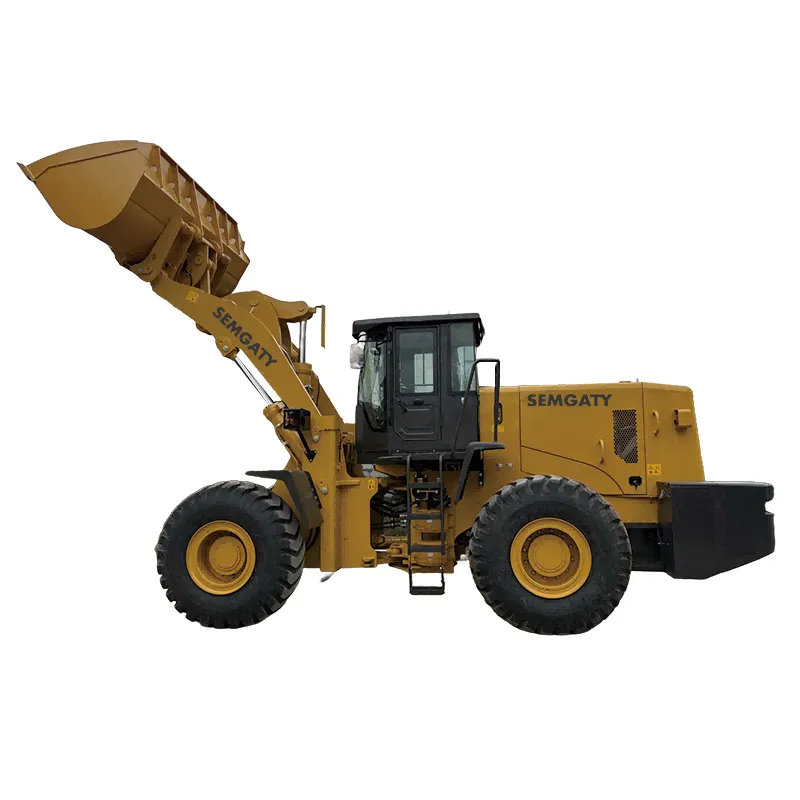
Ports and terminals are also key application fields for
big loaders and huge wheel loader. As important hubs for cargo transportation, ports and terminals need to handle a large number of bulk cargoes every day, such as coal, grain, ore, and building materials. These bulk cargoes have the characteristics of large volume, heavy weight, and fast turnover, which put forward high requirements for loading and unloading equipment. big loaders, with their stable operational performance and efficient loading capacity, are widely used in the loading and unloading of bulk cargoes at ports. They can quickly shovel the bulk cargoes from the storage yard into the cargo ships or trucks, realizing the rapid turnover of goods. For some large ports with extremely large cargo throughput, huge wheel loader is even more indispensable. Its super load-bearing capacity and high-efficiency operation performance can meet the needs of large-volume cargo loading and unloading, effectively solving the problem of slow loading and unloading efficiency in large ports. At the same time, big loaders and huge wheel loader are equipped with advanced operation control systems, which can realize precise operation, avoid cargo damage, and reduce cargo loss.
Large-scale infrastructure construction projects, such as high-speed railways, highways, airports, and urban rail transit, are also important application scenarios for large wheel loaders. In these projects, a large amount of earthwork excavation, filling, and material transportation are required, and the operation intensity is high, and the construction period is tight.
big loaders can play an important role in earthwork handling, shoveling and transporting soil, sand, and other materials to the designated positions, ensuring the smooth progress of the project. In the construction of high-speed railway subgrades and highway embankments,
huge loader can complete the loading and transportation of a large amount of filling materials in a short time, improving the construction efficiency. In addition, in the construction of airport runways and terminal buildings, huge wheel loader is also used for the handling of construction materials such as cement, steel, and gravel, which provides strong support for the acceleration of the construction progress. Compared with small wheel loaders, big loaders and huge wheel loader can adapt to the large-scale and high-intensity operation needs of infrastructure projects, reducing the number of equipment investment and shortening the construction period.
In addition to the above four major scenarios, large-scale waste treatment plants and steel plants are also applicable scenarios for large wheel loaders. In large-scale waste treatment plants, a large amount of domestic waste, industrial waste, and other materials need to be sorted, transported, and stacked every day. big loaders can effectively handle these waste materials, transport them to the designated treatment area, and ensure the normal operation of the waste treatment plant. In steel plants, huge loader is used for the handling of raw materials such as iron ore, coke, and scrap steel, as well as the transportation of finished steel products. Its strong load-bearing capacity and high-temperature resistance can adapt to the harsh operation environment of steel plants, ensuring the smooth progress of the production process. It is worth noting that in these scenarios, the selection of big loaders or huge wheel loader needs to be combined with the actual operation needs, such as the type of materials, the volume of handling, and the operation environment, to ensure the rationality and efficiency of equipment use.
Industry experts point out that the correct understanding of the applicable scenarios of big loaders, huge loader, and huge wheel loader is the premise for enterprises to select equipment rationally. Many enterprises blindly pursue large tonnage equipment, ignoring the matching degree between equipment and operation scenarios, resulting in waste of resources and increased operating costs. On the contrary, some enterprises select small wheel loaders for high-intensity operation scenarios, which leads to low operation efficiency and frequent equipment failures. Therefore, enterprises should comprehensively consider their own operation scenarios, material types, handling volume, and other factors when selecting large wheel loaders, and choose suitable big loaders or huge wheel loader to maximize the role of equipment.
With the continuous progress of science and technology, big loaders, huge loader, and huge wheel loader are also developing towards intelligence, energy conservation, and environmental protection. More and more advanced technologies are applied to large wheel loaders, such as automatic operation, intelligent monitoring, and energy-saving engines, which not only improve the operation efficiency and safety of equipment but also reduce energy consumption and environmental pollution. In the future, with the continuous expansion of large-scale engineering projects, the application scenarios of large wheel loaders will be more extensive, and they will play a more important role in promoting the development of the engineering and construction industry.
To sum up, big loaders, huge loader, and huge wheel loader are mainly applicable to large-scale mines, quarries, ports and terminals, large-scale infrastructure construction projects, large-scale waste treatment plants, and steel plants. These scenarios have the characteristics of high intensity, large volume, and long-time continuous operation, which are completely matched with the performance advantages of large wheel loaders. Enterprises should accurately grasp the applicable scenarios of large wheel loaders, select equipment according to their own actual needs, and use scientific equipment selection methods to improve operational efficiency, reduce operating costs, and achieve high-quality development in the fierce market competition.