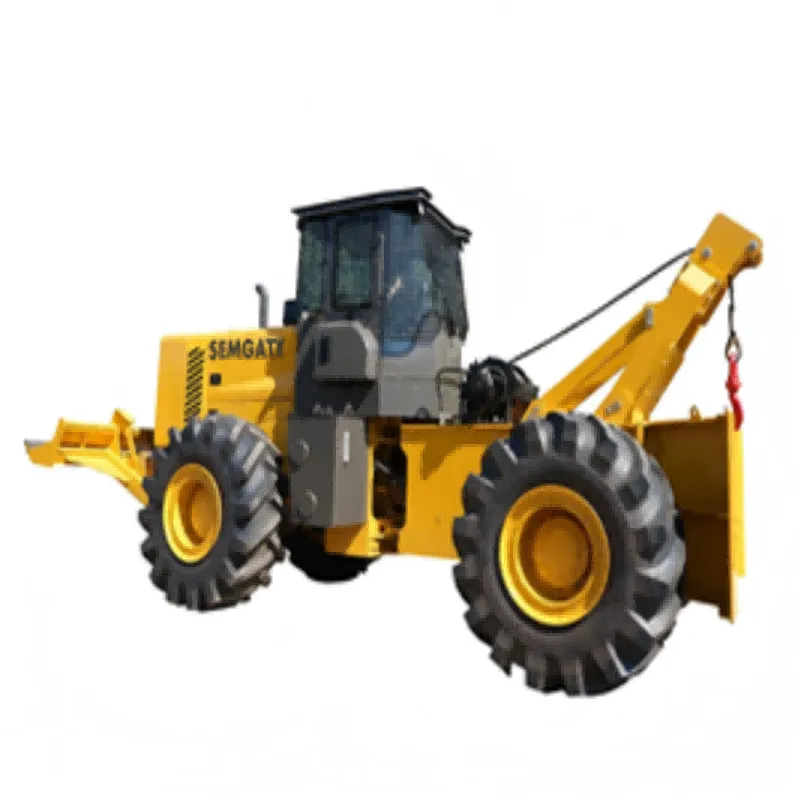
Application Scenarios of Skidders (Log Skidder, Skidder Tractor, Forest Skidder) in 2026
In 2026, global forestry industry moves towards intensive and mechanized development, with efficient and eco-friendly operation becoming core demands. log skidder, skidder tractor, forest skidder, as key equipment in forest harvesting and transportation chains, undertake important tasks of collecting and transporting cut logs from forest interiors to road sides or storage yards. Equipment cover diverse forest types and terrain conditions, with application scenarios closely integrated with forestry production links. Article elaborates on specific application scenarios, providing practical references for forestry practitioners.
The first core application scenario is large-scale natural forest harvesting operations. Natural forests often have dense vegetation, uneven terrain and complex landforms, with logs scattered randomly after felling. Manual transportation is inefficient and prone to safety accidents. Forest skidder is equipped with powerful traction systems and off-road tires, capable of shuttling freely in dense forests.
log skidder adopts steel cable or hydraulic grab structures to firmly fix logs, reducing damage to logs and surrounding vegetation during transportation. In natural forests with steep slopes and thick underbrush, log skidder can drag multiple logs at one time, improving transportation efficiency by 4-6 times compared with manual operations. 2026 industry data shows that log skidder has become standard equipment in natural forest harvesting with an area of more than 1000 mu.
Plantation forests are the second important application scenario. Plantation forests have regular tree spacing and relatively flat terrain, suitable for large-scale mechanized operations.
skidder tractor, with compact structure and flexible operation, is widely used in pine, fir and eucalyptus plantations. Skidder tractor integrates traction and loading functions, capable of completing log collection and short-distance transportation in one operation.
Many plantations adopt skidder tractor with adjustable traction force, which can adapt to logs of different diameters and weights. In fast-growing plantation forests, skidder tractor cooperates with harvesters to form a complete harvesting line, realizing continuous operations from felling to log transportation. Such configuration shortens operation cycles and reduces labor input, meeting intensive production needs of plantations.
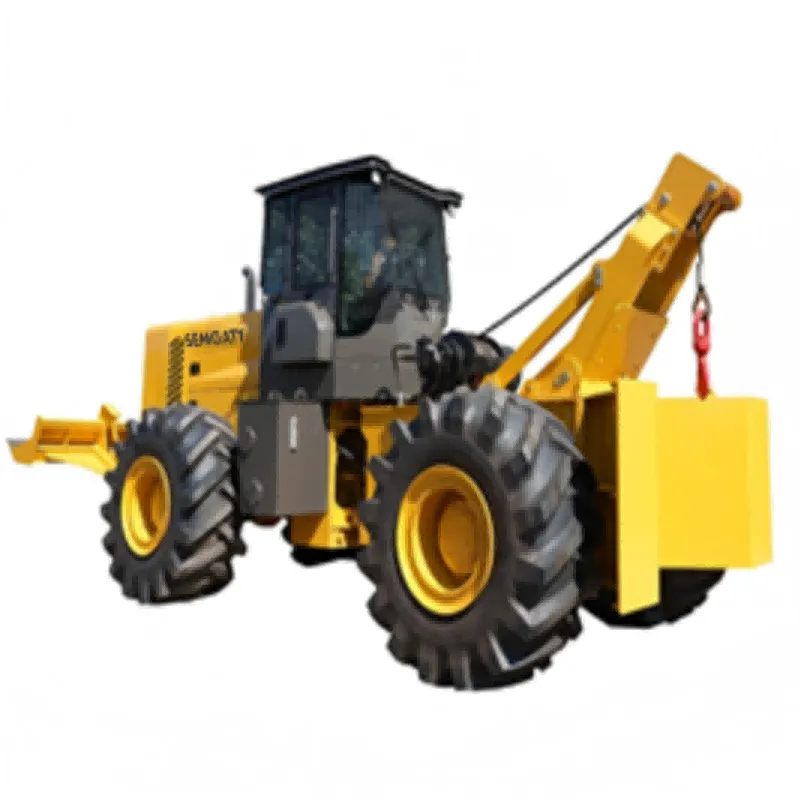
Mountainous and hilly forest areas are special application scenarios testing equipment adaptability. Mountainous forests have steep slopes, narrow roads and soft soil, making common transportation equipment prone to slipping or getting stuck.
forest skidder with crawler-type traveling system has strong traction and stability, capable of adapting to slopes of up to 35 degrees.
High ground clearance of forest skidder avoids chassis scratching by stones and tree stumps, and reinforced suspension systems absorb impact from uneven terrain. In hilly forest areas with scattered logs, forest skidder can flexibly shuttle between slopes and valleys, collecting logs from hard-to-reach areas. Such adaptability makes forest skidder an indispensable equipment in mountainous forestry operations.
Forest tending and thinning operations are extended application scenarios. Forest tending requires removing diseased, dead and overcrowded trees to promote healthy growth of remaining trees. Skidder tractor with small size and light weight is suitable for such operations, capable of entering dense young forests without damaging young trees.
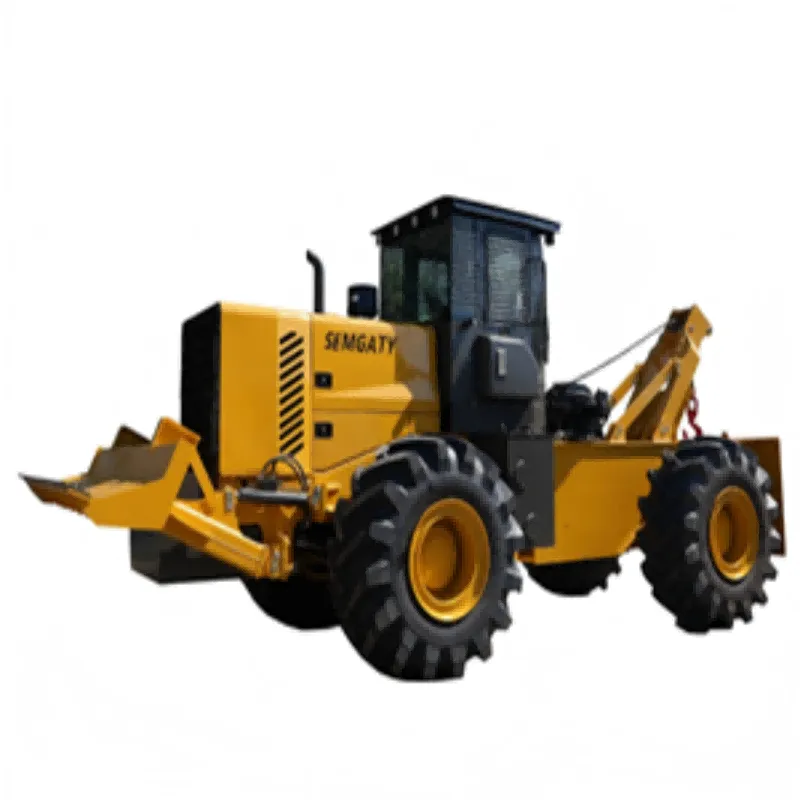
Log skidder with gentle traction force can transport thinned logs out of forests smoothly, avoiding damage to soil and vegetation. In winter forest tending operations in cold regions, skidder tractor with cold-resistant design can operate normally in low temperatures of -20℃, ensuring continuous progress of tending work.
Log yards and transfer stations are important application scenarios for these machines. Log yards need to sort, stack and load logs, requiring equipment with strong loading and stacking capabilities.
forest skidder with rotating grabber can sort logs by diameter and length, stacking them neatly to improve space utilization.
Skidder tractor undertakes short-distance transportation tasks between log yards and transport vehicles, with adjustable dumping height matching different vehicle types. Log skidder with large load capacity can quickly load logs onto trucks, shortening loading time and improving transfer efficiency. Such applications ensure smooth circulation of logs from forest to processing factories.
Tropical rainforest areas have unique application needs. Tropical rainforests have high rainfall, humid environment and dense vegetation, requiring equipment with corrosion-resistant and waterproof performance. Log skidder with anti-corrosion coating and sealed hydraulic system can adapt to humid and hot environments, avoiding component damage caused by moisture.
skidder tractor with large off-road tires can pass through muddy forest roads, collecting logs from rainforest interiors. In African and Southeast Asian tropical rainforests, forest skidder has become a core equipment for log harvesting, balancing operation efficiency and ecological protection.
Small-scale forestry operations and family forest farms are also important application scenarios. Small log skidder and skidder tractor, with low energy consumption and easy operation, are suitable for small-scale log collection. Lightweight forest skidder requires no professional operators after simple training, meeting budget and operation needs of family forest farms.
In 2026, sales volume of small skidder tractor increased by 35% year-on-year, reflecting growing demand in small-scale forestry scenarios. These machines help small-scale forest owners reduce labor intensity and improve operation efficiency, narrowing the gap with large-scale forestry operations.
Auxiliary forestry infrastructure construction is another extended scenario. Skidder tractor can be equipped with special accessories to undertake tasks such as clearing forest roads, transporting construction materials and cleaning stumps. Forest skidder with traction function can pull construction equipment to forest interiors, promoting construction of forest roads and fire prevention facilities.
Such multi-functional applications reduce equipment purchase costs for forestry enterprises and improve comprehensive utilization rate. In forest fire prevention work, log skidder is used to clear firebreaks, transporting soil and fire-fighting materials quickly to prevent fire spread.
In summary, log skidder, skidder tractor and forest skidder have diverse and extensive application scenarios in 2026 forestry industry. From natural forests to plantations, from mountainous areas to tropical rainforests, from large-scale operations to small family farms, these machines play irreplaceable roles in every link of forest harvesting and transportation. With continuous technological upgrading, their application scenarios will be further expanded, providing stronger support for sustainable development of forestry industry.