

Compact Wheel Loaders: Ideal Equipment for Small and Medium-sized Engineering Projects
In the global construction machinery industry, the market demand for small and medium-sized loading equipment has shown a continuous growth trend. With the continuous refinement of infrastructure construction, agricultural modernization and landscaping projects, traditional large-scale loaders can no longer meet the needs of narrow space operation and diversified small-scale construction. At the same time, skid steer loaders have certain limitations in long-term operation stability and service life. In this context, compact wheel loaders have become the preferred choice of more and more global users with their unique performance advantages, filling the market gap between large loaders and skid steer loaders.
The development of global engineering projects has put forward higher requirements for the flexibility, stability and cost-effectiveness of construction machinery. Small and medium-sized construction sites, agricultural production bases, logistics parks and landscaping teams all need machinery that can adapt to complex working environments, complete efficient material handling and reduce comprehensive use costs. Compact wheel loaders integrate the advantages of traditional wheel loaders and small machinery, and have gradually occupied an important position in the global small construction machinery market.
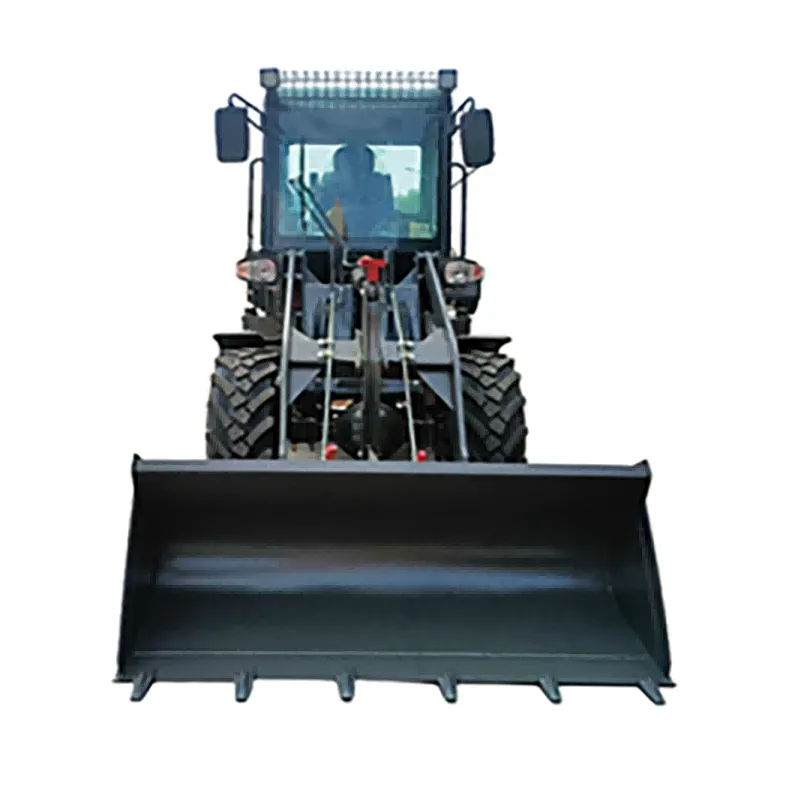
Different types of compact wheel loaders have subtle differences in design and application, but they all focus on solving the pain points of small-scale construction. Among them, sub compact wheel loader is a professional model developed for ultra-narrow operation scenarios, with a more compact body structure and lighter weight. It retains the basic operating performance of wheel loaders while realizing flexible movement in limited spaces, and is suitable for indoor construction, community maintenance, small farm management and other scenarios.
This type of loader adopts a mature front-wheel steering system, which is different from the skid steering mode of skid steer loaders. The steering process is smoother, which can effectively reduce tire wear and fuel consumption in long-term use. For users who need long-term continuous operation, this design can greatly reduce later maintenance costs and improve the overall economic benefits of equipment use.
mini wheel loader has a more balanced performance configuration, with moderate body size and enhanced load capacity. It can not only adapt to narrow construction sites, but also undertake medium-sized material handling tasks, with wider application scenarios. Whether it is urban municipal construction, rural infrastructure maintenance or agricultural material transportation, it can show stable operation efficiency.
In terms of operation performance, the mini wheel loader has better stability than skid steer loaders. The longer wheelbase design reduces the vibration sense during operation, improves the comfort of operators, and is more suitable for long-hour continuous work. The optimized hydraulic system ensures the smoothness of lifting and shoveling actions, avoids material scattering during operation, and improves the accuracy of construction.
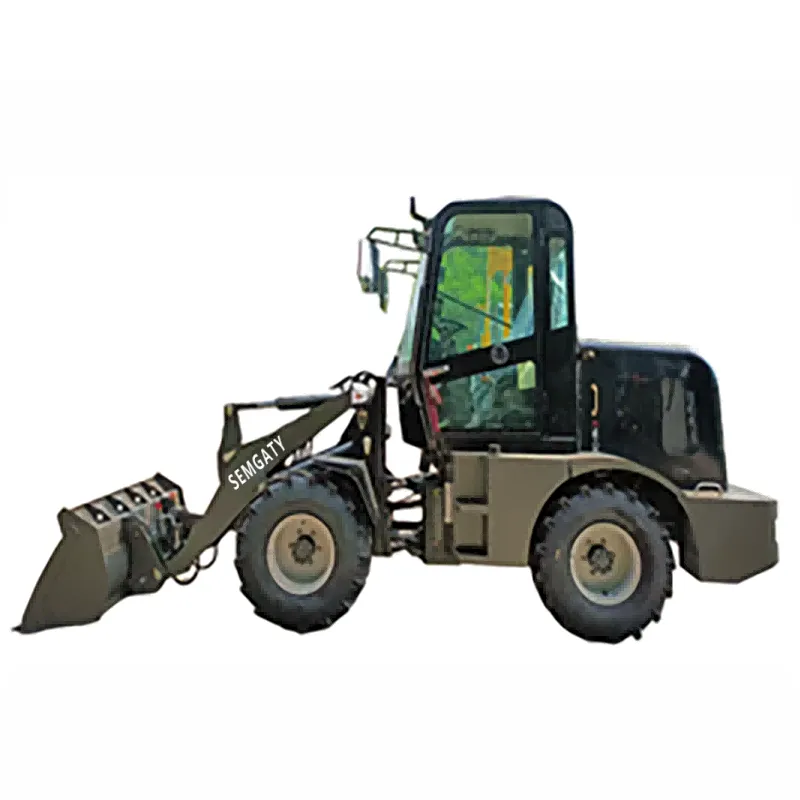
compact wheeled loader focuses on the integration of flexibility and load capacity, with stronger structural stability and wider application scope. It can adapt to slightly complex terrain such as soft land and uneven ground, and maintain stable operation without rollover risks. This type of loader can be equipped with a variety of attachments, realizing multi-purpose use of one machine and meeting the diversified operation needs of users.
Compared with skid steer loaders, compact wheeled loaders have obvious advantages in driving smoothness and equipment durability. The traditional wheel steering structure reduces the mechanical loss during operation, prolongs the service life of the whole machine, and is more suitable for long-term investment and use of engineering teams. The daily maintenance is simpler and more convenient, which reduces the downtime caused by maintenance and improves the overall construction efficiency.
The core difference between compact wheel loaders and skid steer loaders is first reflected in the steering system. Skid steer loaders realize steering through the speed difference of left and right wheels, with a small turning radius, but large tire wear and high energy consumption during steering. Compact wheel loaders adopt front-wheel steering, with a slightly larger turning radius, but more stable driving, lower wear and lower comprehensive use cost, which is more suitable for outdoor long-distance transportation and long-hour operation.
In terms of operation comfort, skid steer loaders have strong vibration during operation due to structural reasons, which easily causes operator fatigue. Compact wheel loaders have a more reasonable chassis design, small vibration and better operating comfort, which can reduce the labor intensity of operators and improve work efficiency in long-term operation.
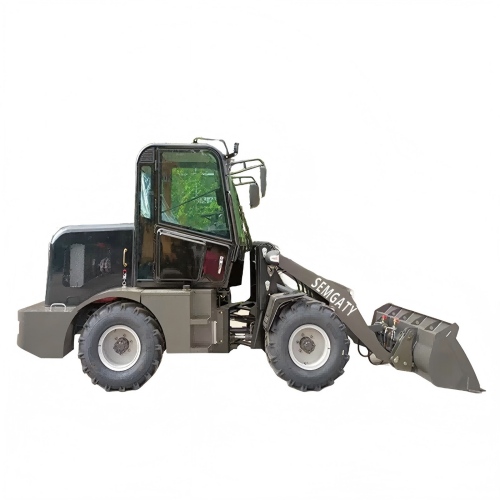
In terms of application scenarios, skid steer loaders are more suitable for extremely narrow indoor spaces, short-term quick construction and frequent steering tasks. While sub compact wheel loader, mini wheel loader and compact wheeled loader are more suitable for outdoor narrow sites, agricultural production, logistics handling and landscaping and other scenarios that require stable operation and long-hour work. They have higher cost performance in large-scale and long-term projects.
In the global market, the application scope of compact wheel loaders is constantly expanding. In European and American markets, they are widely used in farm management, garden maintenance and small municipal projects; in emerging markets in Asia, Africa and South America, they are favored by small and medium-sized engineering teams due to their affordable price and low use cost. The continuous optimization of product performance has further promoted the popularization of this equipment in the global market.
Manufacturers of compact wheel loaders continuously carry out technological upgrading around user needs, optimizing power configuration, structural design and safety performance. The equipment adopts energy-saving engines to meet global environmental protection standards, reduces fuel consumption and emissions, and adapts to the environmental protection requirements of various countries. Strict quality control is implemented in the production process, and each equipment undergoes strict factory testing to ensure stable performance and reliable quality.
The after-sales service system of compact wheel loaders is constantly improving, providing global users with equipment installation guidance, operation training, maintenance support and spare parts supply services. Professional after-sales service solves the worries of users in the process of using, ensures the long-term stable operation of equipment, and enhances the user's trust in products.
With the continuous development of global small and medium-sized engineering projects and the increasing demand for refined construction, the market position of compact wheel loaders will be further consolidated. Compared with skid steer loaders, they have unique advantages in operation stability, use cost and durability; compared with large loaders, they have better flexibility and applicability.
In the future, with the continuous progress of construction machinery technology, compact wheel loaders will develop towards intelligence, lightweight and environmental protection, further improving operation efficiency and comfort. They will continue to provide efficient and reliable equipment support for global small and medium-sized engineering construction, agricultural production and landscaping projects, and become an indispensable part of the global construction machinery industry.