Complete Guide to Selecting Suitable Loaders According to Actual Working Sites
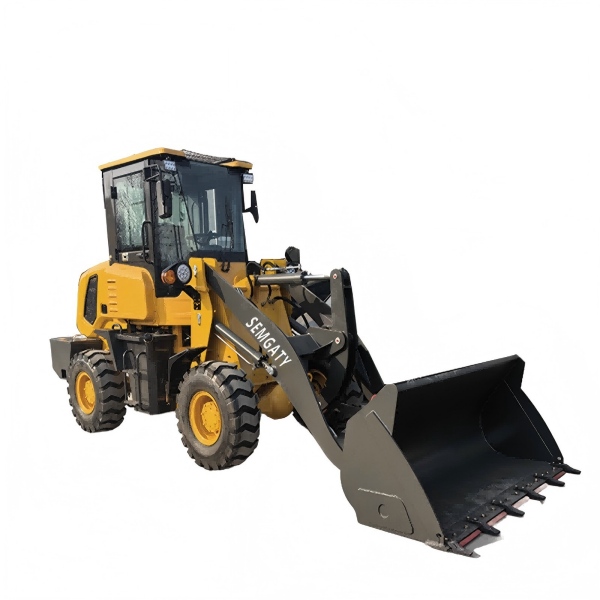
Scientific machinery model selection serves as key premise for efficient and safe engineering construction. Different working sites feature unique terrain conditions, operation spaces, load demands and environmental characteristics that directly determine matching degree of loader equipment. Blind model selection without site evaluation leads to insufficient operating efficiency, frequent mechanical wear and restricted construction progress.
articulating wheel loader and
compact front end loader present distinct structural performance and scenario adaptability for diversified construction environments. Standardized site-based selection methods help engineering teams optimize equipment utilization and maximize construction benefits in various projects.
Flat and open working sites represent the most common construction environment for municipal maintenance, yard stacking and logistics loading. Such sites feature smooth ground, wide operation space and stable bearing conditions with no terrain obstacles or gradient changes. Machinery operation under such conditions focuses on continuous material handling efficiency and stable load performance. Equipment with flexible operation, low energy consumption and standardized load parameters delivers optimal working effects for long-duration flat-site cyclic operation tasks.
Narrow and confined working sites impose strict requirements on machinery flexibility and body size. Residential area renovation, indoor yard sorting and narrow road maintenance limit traveling and turning space for large construction machinery. Compact body structure and small turning radius become core selection indicators for such scenarios. Agile mechanical movement avoids collision with surrounding buildings, fences and facility structures while completing precise material shoveling and cleaning work.
Sloped and undulating working sites prioritize equipment stability and anti-tilt performance. Mountain area development, roadside slope trimming and terraced field construction contain continuous gradient changes and uneven ground distribution. Machinery chassis structure, gravity center design and traction capacity determine operational safety on inclined terrains. Professional terrain-adaptive machinery effectively reduces body shaking, skidding and rollover risks during slope climbing and material operation.
Humid and muddy working sites require reliable anti-slip and anti-sink performance from construction loaders. Rain-soaked farmland, water conservancy sites and muddy rural roads form soft ground with low friction coefficients. Ordinary machinery faces sinking wheels and powerless traveling without professional terrain adaptation. Reinforced traction systems, wide tire design and optimized chassis height guarantee stable forward movement and continuous operation on wet soft ground.
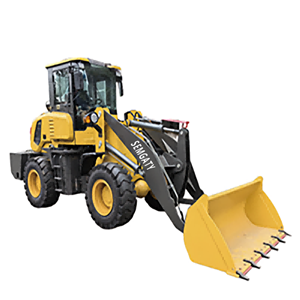
compact front loader delivers optimal adaptation for flat and narrow conventional working sites. Ultra-compact body dimension and flexible steering capacity support free traveling in limited operation areas. Stable light-load performance fully meets routine tasks of ground leveling, feed transportation and bulk material stacking. Simplified structural design lowers energy consumption and maintenance pressure for long-hour flat-site operation, creating high cost performance for basic engineering scenarios.
Dusty and harsh open sites demand excellent dustproof and durable mechanical configuration. Sand yards, mining auxiliary areas and open-air earthwork sites produce massive floating dust and hard particle impact. Loaders with sealed hydraulic systems, enhanced dust filtration devices and wear-resistant structural parts maintain stable working performance in harsh environments. Professional anti-dust and anti-wear designs reduce component blockage and abrasion for continuous high-intensity operation.
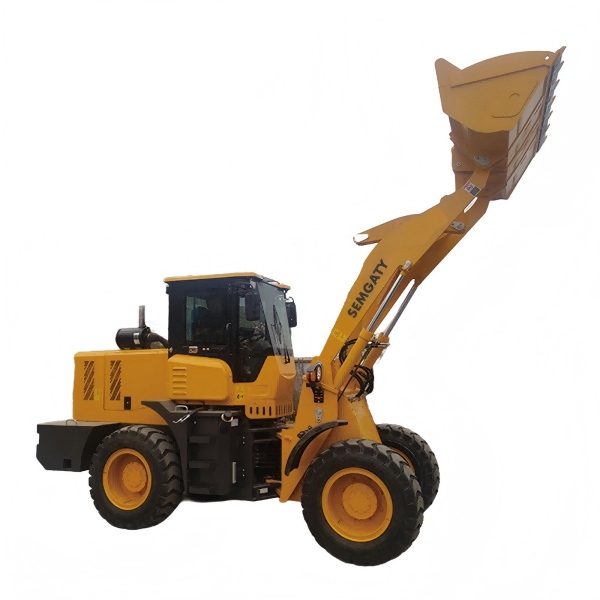
articulating wheel loader shows outstanding adaptability for complex slope and rugged field sites. Unique articulated body structure achieves flexible steering without rigid torsion on irregular terrains. Optimized low gravity center and enhanced four-wheel traction systems ensure stable body posture during slope operation and obstacle crossing. Superior terrain adaptation capacity enables reliable working performance in mountainous, suburban and undulating field construction environments.
Heavy-load centralized working sites require sufficient power reserve and structural strength from loader equipment. Large-scale stockyards, centralized earthmoving projects and logistics freight sites involve frequent heavy material shoveling and high-frequency cyclic operation. High-torque power output, thickened bucket structure and reinforced chassis parts support long-term heavy-load work without structural deformation or power attenuation.
Light-load scattered working sites prioritize equipment flexibility and energy-saving performance. Decentralized rural renovation, sporadic garden maintenance and small-scale farmland sorting do not require high-power output. Lightweight machinery structures reduce unnecessary energy waste and mechanical loss. Agile operation modes improve response speed for scattered small tasks and elevate overall construction efficiency of fragmented projects.
compact front end loader realizes balanced performance adaptation for mixed comprehensive working sites. Alternating flat ground, shallow muddy areas and gentle slopes constitute typical mixed construction environments for urban and suburban projects. Moderate body size, balanced power performance and multi-scenario adaptation capacity cope with frequent site condition switching. Versatile working characteristics meet diversified task demands of medium-sized municipal and infrastructure projects.
Site space planning matches corresponding machinery turning radius and body parameters. Wide open sites allow operation of various loader models with no restriction on turning modes and traveling routes. Narrow community sites require miniaturized machinery with zero-radius steering advantages to complete flexible operation. Reasonable matching between body size and site space eliminates operation dead angles and improves overall construction fluency.
Ground bearing capacity guides reasonable load configuration selection of construction machinery. Hard cement ground and compacted soil ground bear high-load machinery operation without subsidence risks. Soft newly filled soil and wet mud ground require lightweight equipment to avoid chassis sinking and ground damage. Scientific load matching protects site foundation conditions and maintains stable equipment operating state.
Long-term operation frequency affects final loader selection for fixed working sites. Stable daily operation of fixed yards and farmland bases requires durable and low-failure machinery models. Temporary short-term projects prioritize cost-effective equipment with simple operation and flexible deployment characteristics. Differentiated selection based on operation frequency balances equipment service life and project economic benefits.
Accurate site classification achieves precise model matching for diversified construction demands. Flat narrow sites adopt flexible and energy-saving
compact front loader to finish daily light-load tasks. Complex rugged terrains and slope projects rely on stable and adaptable
articulating wheel loader to ensure construction safety. Mixed urban and suburban sites take comprehensive
compact front end loader as mainstream equipment for multi-scenario engineering needs.
Site-oriented loader selection avoids equipment performance waste and operational risks. Comprehensive evaluation of site space, terrain condition, ground hardness and operation intensity forms reliable selection basis. Targeted model matching improves construction efficiency, reduces maintenance costs and extends machinery service life. Standardized site selection strategies provide valuable reference for global engineering procurement and equipment deployment in modern construction industries.