Craft Differences Between Premium Loaders and Ordinary Loaders
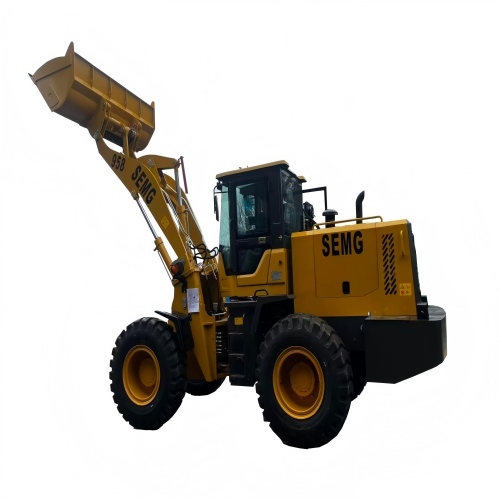
Construction machinery performance and service life largely depend on manufacturing craftsmanship and production standards, especially for mainstream loading equipment in engineering operations.
Loader serves as core handling machinery for earthmoving, mining, and road construction, with manufacturing details directly determining operational stability and long-term value.
Loader products with premium craftsmanship show obvious gaps in structural durability, operational efficiency, and maintenance cost compared with ordinary mass-produced models. Systematic craft differences cover material selection, welding processing, hydraulic assembly, and quality inspection links.
Material selection forms the fundamental gap between premium and ordinary construction loading equipment. Ordinary loading machines adopt common low-carbon steel plates with uniform thickness and basic anti-rust treatment to control production costs. Such materials lack wear resistance and structural toughness, leading to easy deformation under heavy-load and high-frequency working scenarios.
wheel loader machine built with premium standards applies high-strength alloy wear-resistant steel for core load-bearing parts including bucket, boom, and frame. Thickened structural plates and integral forging technology enhance overall rigidity and impact resistance.
wheel loader machine of premium grade also undergoes strict material sampling tests to ensure every steel component meets international industrial load standards.
Welding and structural processing technology creates core performance disparities for engineering loading equipment. Ordinary loaders rely on manual welding with low-precision operation, resulting in uneven welding seams, tiny pores, and incomplete fusion. Unprocessed welding burrs and stress concentration points gradually expand under long-term vibration, causing structural cracks and component loosening. big wheel loader for premium engineering scenarios adopts full-automatic robotic welding production lines. Fixed welding parameters and constant-temperature processing eliminate manual operation errors. Integrated frame forming technology replaces split welding structures to improve overall structural integrity. big wheel loader also conducts professional stress relief treatment after welding to remove internal structural stress and avoid deformation during long-term operation.
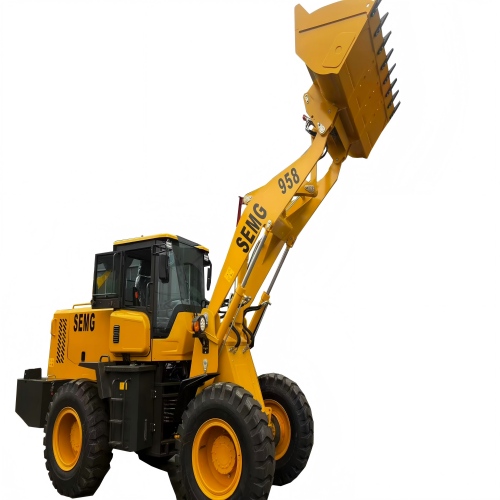
Hydraulic system assembly and calibration craft further widen the gap between premium and ordinary loaders. Ordinary loaders adopt simplified hydraulic pipeline layout with fewer fixed points and basic sealing accessories. Random assembly modes lead to poor pipeline fitting precision, easily triggering oil leakage, pipeline friction damage, and unsmooth power transmission. Premium loader products implement modular hydraulic assembly standards with optimized pipeline routing designs. Reasonable spacing and multi-point fixing structures prevent pipeline shaking and friction during equipment operation. Imported high-density sealing parts and precise interface calibration maintain stable internal hydraulic pressure. Strict hydraulic system pressure testing ensures no leakage under extreme load conditions.
Precision machining and component matching standards reflect refined craft advantages of high-end loading equipment. Ordinary loaders adopt rough cutting and drilling processing for mechanical parts with large dimensional tolerances. Gaps exist in gear matching, bearing assembly, and rotating component connection, causing increased operating noise, reduced power transmission efficiency, and accelerated component wear. Premium loaders apply numerical control precision machining for all core components. Micron-level dimensional control ensures tight fitting of all moving parts. Standardized component screening mechanisms eliminate unqualified accessories. Uniform assembly gaps and smooth mechanical operation reduce equipment wear and energy consumption during daily work.
Surface treatment and anti-corrosion craft determine long-term service life of loading machinery. Ordinary loaders only conduct simple paint spraying and surface polishing without professional rust removal and primer treatment. Paint layers peel off easily in humid, dusty, and corrosive working environments, exposing metal structures to oxidation and rust. Premium loader products go through multi-stage surface pretreatment including shot blasting, derusting, and oil removal. Multi-layer electrostatic spraying technology combines anti-rust primer, middle coating, and wear-resistant topcoat. High-adhesion paint layers resist ultraviolet erosion, dust corrosion, and mechanical scratch damage. Complete surface protection systems maintain equipment appearance and structural stability for years.
Finished product inspection and performance debugging systems constitute the final craft barrier for high-quality loading equipment. Ordinary loaders only complete simple startup and static detection before leaving factories, lacking full-load simulation tests and systematic performance calibration. Potential problems in power output, hydraulic response, and structural bearing capacity cannot be detected in advance. Premium loader brands implement comprehensive multi-dimensional inspection standards. Full-load operation simulation tests cover various working conditions including heavy loading, frequent startup, and long-distance walking. Professional debugging teams calibrate power system, hydraulic sensitivity, and braking performance one by one. Strict factory inspection procedures ensure stable and consistent performance of every delivered device.
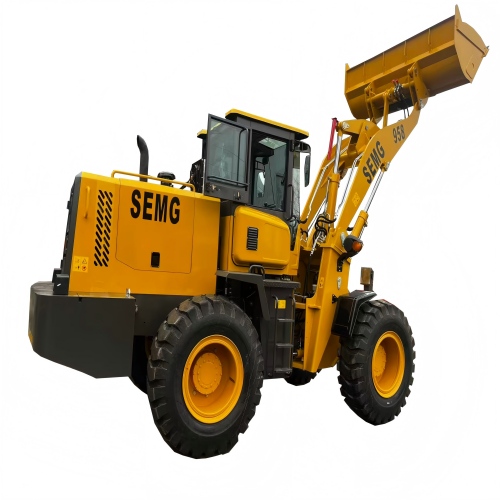
Intelligent manufacturing and standardized production management bring sustainable quality advantages to premium loaders. Ordinary loader production adopts semi-mechanized and semi-manual modes with inconsistent production processes and unstable product quality. Different batches of equipment show obvious differences in assembly precision and performance. Premium loader manufacturing realizes full-process standardized production from raw material incoming inspection to finished product delivery. Digital production management systems monitor every processing link in real time. Unified process parameters and operation standards eliminate batch quality differences. Intelligent detection equipment improves inspection accuracy and efficiency, providing reliable quality guarantee for long-term stable equipment operation.
In summary, craft differences between premium and ordinary loaders run through the entire production chain from material selection, processing, assembly to inspection. Premium manufacturing standards focus on long-term stability, durability, and operational efficiency, while ordinary production modes prioritize cost control and rapid delivery. Users can obtain lower failure rates, longer service life, and lower maintenance costs from premium loader equipment. Such quality advantages create higher comprehensive economic benefits for long-term engineering construction projects.