

Crawler Excavators: Detailed Parameters & Professional Selection Guide
In the global engineering construction, agricultural development, municipal maintenance and mining industries, crawler excavators are indispensable core mechanical equipment, relying on their strong terrain adaptability, stable operation performance and efficient excavation capacity. Different from wheeled construction machinery, this type of equipment can operate stably in soft soil, muddy land, slopes and other complex terrains, filling the application gap of machinery in harsh working conditions. For global engineering users and equipment purchasers, clarifying the core parameters of crawler excavators and mastering scientific selection methods is the key to selecting suitable equipment and improving project construction efficiency.
When purchasing crawler excavators, core technical parameters are the primary basis for selection, and each parameter directly corresponds to the actual application needs of the project. The operating weight is a fundamental parameter, which affects the stability and trafficability of the equipment. Excavators with different operating weights are suitable for different scale of projects, ranging from small mini models to large mining models, covering diversified construction needs. The whole machine weight design is reasonable, which can not only ensure stable operation without rollover, but also facilitate the transfer and transportation between different construction sites.
Digging force is a core indicator to measure the excavation capacity of equipment, which determines the construction efficiency of soil, gravel, weathered rock and other materials. The greater the digging force, the stronger the ability of the equipment to adapt to hard working conditions, and the more efficient the excavation and handling operations. Users need to select the appropriate digging force index according to the actual construction material hardness to avoid insufficient power affecting the construction progress or excessive power causing energy waste.
Bucket capacity is directly related to the single excavation volume of the equipment, which affects the overall construction efficiency of the project. The bucket capacity of crawler excavators covers a wide range, small buckets are suitable for refined small-scale construction, and large buckets are suitable for large-scale earthwork excavation. Matching bucket capacity with project scale and material type can maximize the operation efficiency and reduce the construction period.
The hydraulic system is the core component affecting the operation performance of excavators. High-quality hydraulic system can ensure the smoothness, responsiveness and coordination of boom, arm and bucket actions, reduce energy loss, improve operation accuracy, and meet the needs of refined construction such as urban pipe laying and landscaping. At the same time, the advanced hydraulic system can also reduce fuel consumption and lower the long-term operation cost of equipment.
Engine performance is closely related to the power output, fuel efficiency and environmental protection standards of the equipment. Most crawler excavators are equipped with diesel engines that meet international environmental protection standards, with stable power output and strong endurance, which can ensure long-term continuous operation in various complex construction environments. The environmental protection emission level of the engine also needs to meet the access standards of different countries and regions to adapt to the global market use requirements.
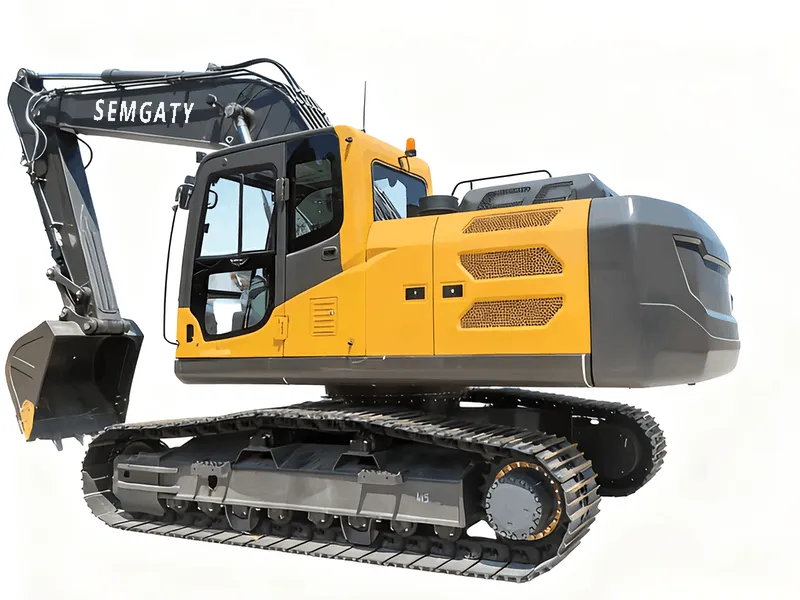
crawler excavator has excellent terrain adaptability, and the crawler design increases the contact area between the equipment and the ground, reduces the ground pressure, and can operate stably in soft, muddy and sloping terrains. It is widely used in large-scale earthwork excavation, farmland water conservancy construction, mining and other scenarios, and has strong load-bearing and excavation capabilities.
The walking system of crawler excavators has strong stability and durability, the crawler made of high-strength materials is wear-resistant and pressure-resistant, suitable for long-term operation in complex terrain, and not easy to be damaged. The daily maintenance of the walking system is simple, which can reduce the equipment failure rate and ensure the continuous progress of the project.
When selecting crawler excavators, users should also consider the operation comfort and safety configuration of the equipment. The humanized cab design reduces the vibration sense during operation, reduces the fatigue of operators, and improves the long-hour operation efficiency. Complete safety protection devices can avoid potential safety hazards during construction and ensure the personal safety of operators.
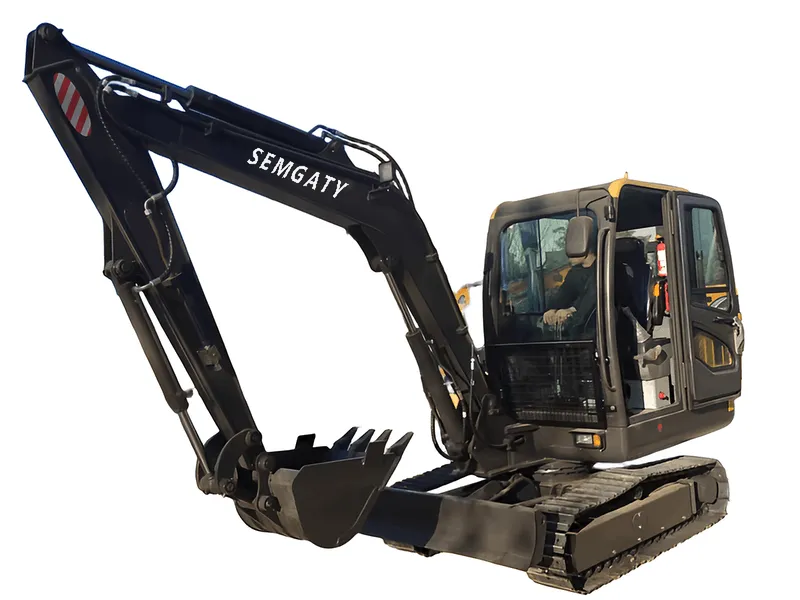
crawler digger is more suitable for small and medium-sized construction projects and refined operation scenarios, with moderate size and flexible operation, which can meet the needs of municipal maintenance, garden renovation, rural infrastructure construction and other projects. It has the advantages of convenient transfer, low fuel consumption and high cost performance, and is favored by small and medium-sized engineering teams.
This type of equipment has a compact structure, can flexibly shuttle in narrow construction sites, and complete precise excavation and handling operations. The operation is simple and easy to learn, and operators can quickly master the operation skills without long-term professional training, which reduces the personnel training cost of engineering teams.
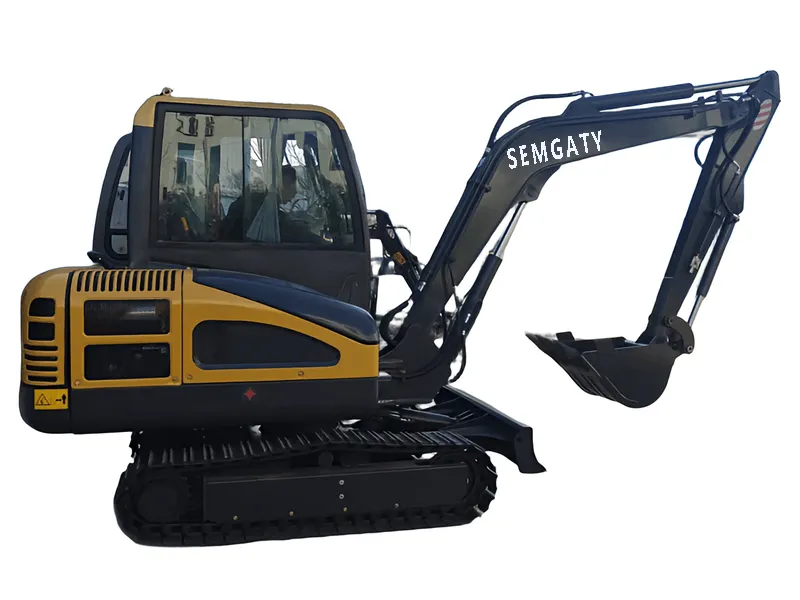
crawler mounted hydraulic excavator integrates advanced hydraulic technology and crawler walking structure, with stronger operation power and higher stability. It can realize efficient and precise excavation operations in various complex terrains, and is suitable for large-scale infrastructure construction, mining exploration and other high-intensity construction scenarios.
The equipment has strong versatility and can be equipped with different accessories to realize multiple functions such as crushing, grabbing and cleaning, expanding the application scope of the equipment. It has high durability and long service life, and can meet the needs of long-term high-intensity continuous construction, bringing stable economic benefits to users.
For users with different construction needs, crawler excavator can meet the basic needs of various large-scale earthwork projects; crawler digger is suitable for small and medium-sized refined construction; crawler mounted hydraulic excavator has stronger performance and adapts to high-intensity complex working conditions.
In summary, selecting a suitable crawler excavator needs to comprehensively consider core technical parameters, actual construction terrain, project scale and long-term use needs. Accurate matching of equipment and working conditions can maximize construction efficiency, reduce operation and maintenance costs, and provide stable and efficient mechanical support for global engineering construction projects. With the continuous development of global infrastructure construction, the technical performance of crawler excavators will continue to be optimized, and the application scope will be further expanded.