

Market Demand for Diesel Forklift and Rough Terrain Fork Lifts
As global logistics, construction, and agricultural industries continue to expand, equipment such as diesel forklift, rough terrain fork lifts, and off terrain forklift machines has become increasingly important. Buyers are no longer choosing equipment based only on price, but also based on working environment and operational efficiency.
A diesel forklift is designed for precision, stability, and high-frequency indoor operations. In contrast, rough terrain fork lifts are engineered to conquer harsh outdoor environments. The rise of infrastructure projects worldwide has significantly increased demand for off terrain forklift equipment.
Steering and Frame Structure Differences
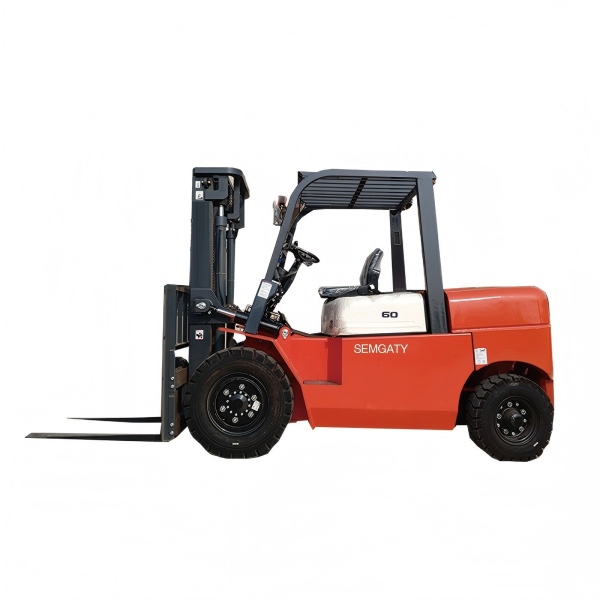
A diesel forklift typically adopts a rigid frame combined with rear-wheel steering. Such a structure allows the diesel forklift to operate efficiently in warehouses, factories, and flat working environments.
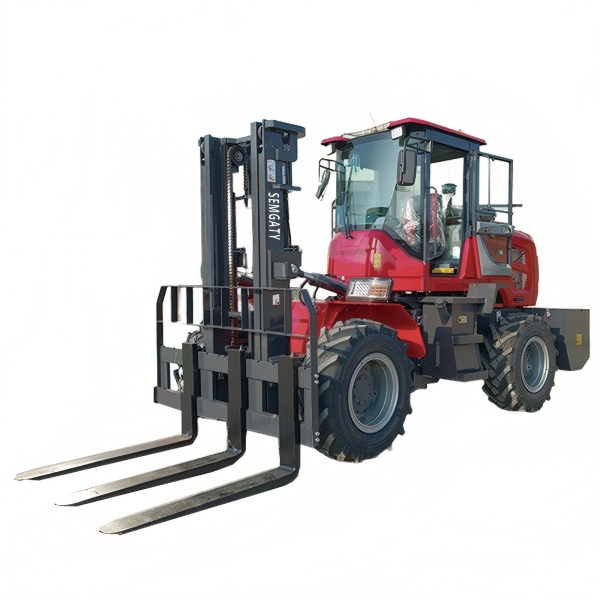
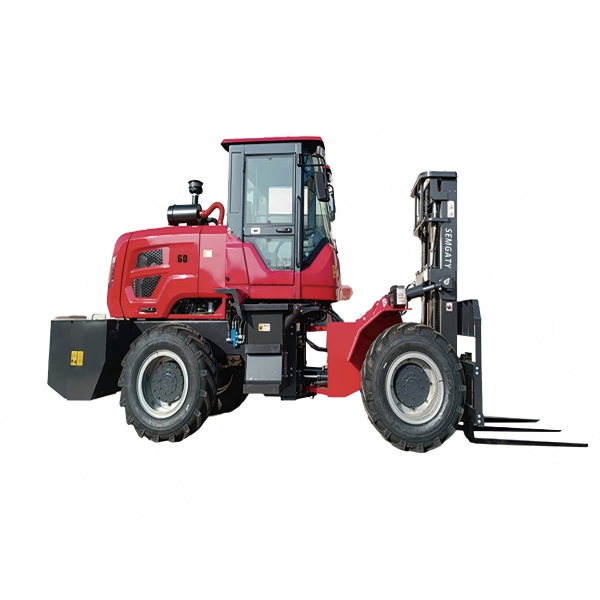
On the other hand, rough terrain fork lifts often feature an articulated frame design. An articulated off terrain forklift allows the front and rear body sections to pivot independently, reducing turning radius by up to 40% compared with a standard diesel forklift.
Because of flexible structure, rough terrain fork lifts provide superior maneuverability in muddy fields, forests, and uneven construction sites where a traditional diesel forklift would face limitations.
Power and Drive System Comparison
A standard diesel forklift usually operates with a two-wheel drive system, focusing on stable power output and fuel efficiency. Such a diesel forklift performs best in flat and controlled environments.
In contrast, rough terrain fork lifts are equipped with four-wheel drive systems and automatic differential locks. A powerful off terrain forklift can deliver 20–30% higher torque compared with a similar-capacity diesel forklift.
Because of enhanced traction and torque, rough terrain fork lifts can climb slopes ranging from 20° to 35%. Such performance makes an off terrain forklift ideal for construction, mining, and agricultural applications.
Tire Design and Ground Performance
Tire selection directly affects performance. A diesel forklift is typically equipped with solid tires or industrial pneumatic tires. Such tires provide excellent load-bearing capacity but offer limited shock absorption.
In comparison, rough terrain fork lifts use deep-tread pneumatic off-road tires. A typical off terrain forklift operates at lower tire pressure, around 15–20 PSI, allowing better ground contact and improved traction.
Because of advanced tire design, rough terrain fork lifts can adapt to sand, mud, and gravel surfaces. A standard diesel forklift may struggle or become stuck under the same conditions.
Ground Clearance and Mobility
Ground clearance plays a crucial role in determining machine capability. A diesel forklift has relatively low ground clearance, making the diesel forklift suitable for smooth surfaces but limited in off-road conditions.
An off terrain forklift provides significantly higher ground clearance, often reaching 25–35 cm. Such clearance allows rough terrain fork lifts to easily pass over obstacles such as rocks, tree stumps, and uneven terrain.
Because of enhanced mobility, rough terrain fork lifts can operate efficiently in wet environments and rugged landscapes, where a diesel forklift cannot maintain stability.
Safety Systems and Operator Protection
Safety configurations differ significantly between a diesel forklift and rough terrain fork lifts. A diesel forklift focuses on operational safety systems such as operator presence systems (OPS) and speed control alarms.
However, rough terrain fork lifts are designed for high-risk environments and are equipped with ROPS (Roll-Over Protective Structure) and FOPS (Falling Object Protective Structure). A modern off terrain forklift may also include tilt sensors that restrict lifting when slope angles exceed safe limits.
Such advanced safety systems allow rough terrain fork lifts to provide enhanced protection for operators working in unstable outdoor environments compared with a diesel forklift.
Functional Differences and Versatility
A diesel forklift is primarily designed for precise stacking and pallet handling. Fast hydraulic response ensures that a diesel forklift can perform accurate lifting tasks in warehouses and logistics centers.
In contrast, rough terrain fork lifts function as multifunctional machines. A typical off terrain forklift can be equipped with attachments such as buckets, log grapples, and snow plows.
Because of attachment versatility, rough terrain fork lifts can perform tasks similar to compact loaders. Such flexibility allows an off terrain forklift to handle construction materials, timber, and bulk goods efficiently.
Application-Based Selection Strategy
Selecting between a diesel forklift and rough terrain fork lifts depends entirely on working conditions. A diesel forklift is ideal for warehouses, factories, and flat concrete surfaces where precision and efficiency are critical.
A diesel forklift is also suitable for businesses requiring long operating hours and operator comfort during repetitive tasks.
In contrast, rough terrain fork lifts are the best choice for outdoor environments such as construction sites, farms, and forestry operations. An off terrain forklift performs exceptionally well in muddy, sandy, or uneven terrain.
Because of strong off-road capability and multifunctional design, rough terrain fork lifts are the preferred solution for demanding applications where a diesel forklift cannot operate effectively.
Future Trends in Forklift Equipment
Global demand for both diesel forklift and rough terrain fork lifts continues to rise. Warehousing and logistics sectors drive demand for diesel forklift equipment, while infrastructure development increases the need for off terrain forklift machines.
Manufacturers are focusing on improving fuel efficiency, durability, and safety systems. Advanced hydraulic systems and intelligent controls are enhancing the performance of rough terrain fork lifts and diesel forklift equipment.
As industrial applications become more specialized, selecting the right diesel forklift, rough terrain fork lifts, or off terrain forklift machine will be essential for maximizing productivity and reducing operational costs.
Understanding the differences between diesel forklift and rough terrain fork lifts helps buyers make informed purchasing decisions and achieve better performance in both indoor and outdoor working environments.