Differences Between Large and Small Wheel Loaders, Heavyweight Guide on Tonnage Selection Released
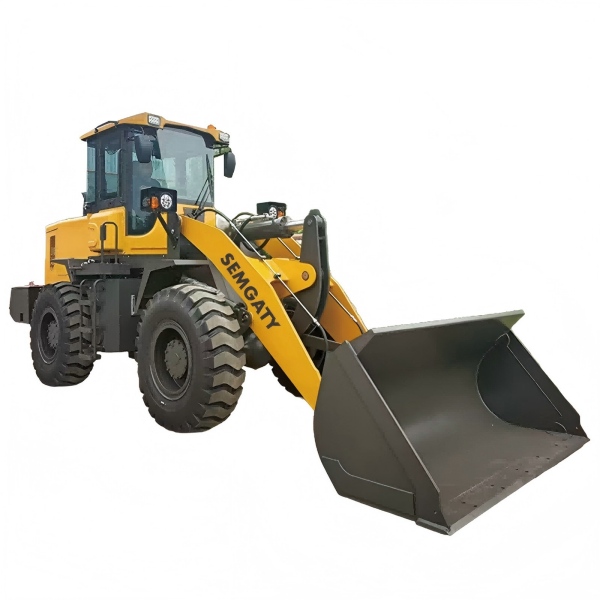
Recently, with the diversified development of the engineering and construction field, wheel loaders, as core material handling equipment, have become crucial for enterprises to improve operational efficiency and control operating costs. Demand for small wheel loaders and large wheel loaders in the market continues to rise, but many enterprises often fall into confusion when selecting models — what are the core differences between the two? How to accurately match their own operational needs and choose the right tonnage of loader? To this end, industry experts, combining the characteristics of mainstream equipment in the current market and application scenarios, comprehensively analyze the differences between the two and provide professional tonnage selection suggestions to serve as a reference for enterprises in model selection.
Wheel loaders can be divided into two major categories according to tonnage and operational capacity: small and large. Among them, big loaders (large loaders) and small loaders have significant differences in core performance, structural design, application scenarios and other aspects. These differences directly determine equipment adaptability and operational efficiency, and are the core considerations for enterprises in model selection.
First of all, there are significant differences in core performance parameters, which is also the most fundamental difference between the two. Small wheel loaders usually have a tonnage between 1 and 5 tons, an engine power of less than 74kw, a bucket capacity concentrated between 0.3 and 1.5 cubic meters, a light overall operating weight, and focus more on flexibility and convenience during operation. In contrast,
huge loader (large loaders) generally have a tonnage of more than 15 tons, an engine power of up to 147kw or more, and some heavy-duty models even have a power exceeding 515kw. Bucket capacity can reach more than 5 cubic meters, with a large overall operating weight. Core advantages lie in strong load-bearing capacity and operational efficiency. Taking mainstream models in the market as an example, small loaders usually have a single material handling capacity of 1 to 3 tons, while
huge wheel loader (large wheel loaders) can achieve a single handling capacity of more than 10 tons, greatly improving the material turnover speed in high-load operation scenarios.
Secondly, differences in structural design and mobility are obvious. Small wheel loaders adopt an optimized compact structure, with a small turning radius and a flexible body, suitable for narrow operation spaces such as indoor warehouses, small construction sites, and urban municipal maintenance. Their walking systems mostly adopt hydraulic transmission, with simple structure, low cost, and easy operation and maintenance. In contrast,
big loaders (large loaders) adopt a reinforced structural frame, with larger body size, mostly adopting hydraulic-mechanical transmission to balance power and operational stability. Some
huge wheel loader (large wheel loaders) are also equipped with advanced technologies such as automatic traction control and intelligent hydraulic systems to improve operational stability and safety, but mobility is relatively poor, more suitable for open operation sites and unable to operate flexibly in narrow spaces. In addition, large loaders have larger tires and stronger load-bearing capacity, while small loaders have small tires, focusing more on ground adaptability and flexibility.
Differences in application scenarios are the most intuitive distinction between the two and an important basis for enterprise model selection. Small wheel loaders are mainly used for light-load and small-scale operation tasks, including earth excavation and transportation in small construction projects, urban greening, material handling in agricultural orchards, and cargo loading and unloading in indoor warehouses. Their small bodies can flexibly shuttle through narrow areas, with convenient transportation and small storage space requirements, making them an ideal choice for small and medium-sized enterprises and small-scale operation scenarios. In contrast,
huge loader (large loaders) are mainly used in high-intensity and high-yield operation scenarios such as large mines, quarries, ports and terminals, and large-scale infrastructure construction. They are responsible for the loading, transportation and stacking of large quantities of materials such as sand, gravel, coal and ore. With strong power and load-bearing capacity, they can greatly improve operational efficiency and reduce labor costs, and are indispensable for large-scale projects. In addition to the above differences, there are also obvious gaps in investment cost, maintenance cost and service life between the two. Small wheel loaders have lower initial purchase cost, simple maintenance process and lower daily maintenance cost, which is suitable for enterprises with limited funds and small-scale operations. Large wheel loaders have higher initial investment, more complex structural components, higher requirements for maintenance technology and higher maintenance cost, but longer service life and higher operational efficiency, which can bring considerable economic benefits to large-scale enterprises in long-term high-intensity operations.
For enterprises, how to determine the required tonnage of loader? Industry experts suggest starting from three core aspects to achieve accurate matching. First, clarify the operation scenario and task volume. If the operation site is narrow and the daily material handling volume is small, such as indoor warehouses and small construction sites, small wheel loaders with 1-5 tons are preferred; if the operation site is open and requires high-intensity and large-volume material turnover, such as large mines and ports, big loaders (large loaders) or huge wheel loader (large wheel loaders) with more than 15 tons should be selected. Second, consider the type of materials handled. For light materials such as soil and sand, small or medium-sized loaders can meet the needs; for heavy materials such as ore and coal, large loaders with strong load-bearing capacity are required to avoid equipment overload and affect operational safety and service life. Third, combine the enterprise's long-term development plan and budget. If the enterprise plans to expand the scale of operation in the future and increase the volume of tasks, it is recommended to appropriately increase the tonnage of the loader to avoid repeated investment; if the budget is limited and the operation volume is stable, select the loader with matching tonnage according to the actual needs to avoid waste of resources.
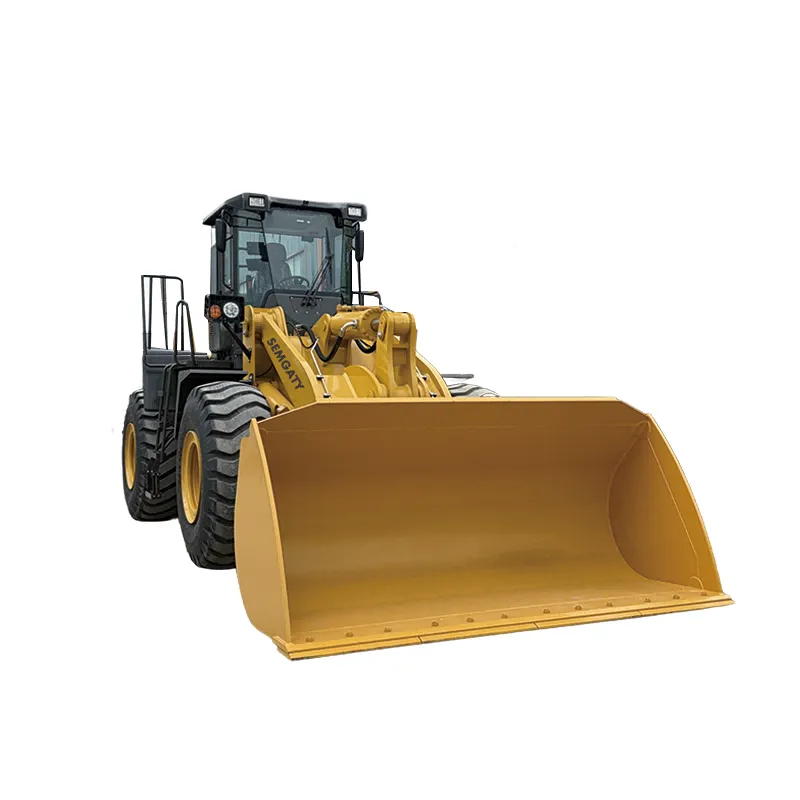
Industry insiders pointed out that the correct selection of wheel loader tonnage is not only related to the efficiency of on-site operations, but also directly affects the enterprise's operating costs and investment returns. Blindly pursuing large tonnage will lead to increased investment and maintenance costs, while selecting small tonnage that cannot meet the operation needs will reduce efficiency and affect the progress of the project. Therefore, enterprises should comprehensively consider their own operation characteristics, material types, site conditions and budget, and refer to professional suggestions to select the most suitable loader tonnage.
With the continuous progress of technology, both small wheel loaders and
big loaders (large loaders) are developing towards intelligence and energy conservation. In the future, more efficient, energy-saving and intelligent wheel loader products will be launched, providing more choices for enterprises. For enterprises, grasping the differences between different types of loaders and mastering scientific tonnage selection methods will help improve core competitiveness in the fierce market competition and achieve high-quality development.