Full Construction Scope of Backhoe Loaders in Landscape Greening Projects
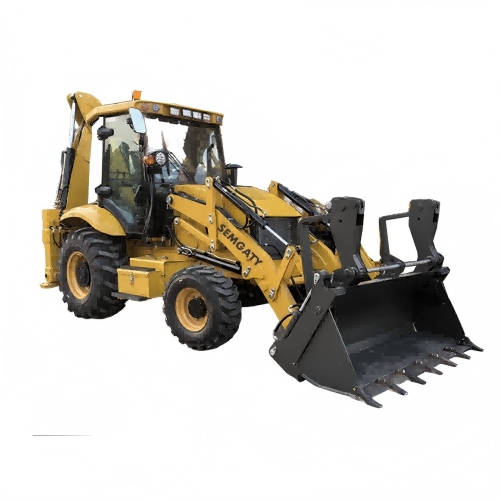
Modern landscape greening projects focus on standardized site renovation, ecological optimization and refined landscape shaping to build aesthetic, eco-friendly and sustainable urban and rural green spaces. Complete landscape construction covers core procedures including site clearing, terrain shaping, trench excavation, soil backfilling, green belt arrangement and construction waste disposal. Traditional manual work and single-function small machinery fail to meet modern high-precision, low-damage greening standards, often causing terrain disorder, vegetation damage and delayed project progress. Multi-functional engineering machinery serves as essential equipment for standardized landscape construction.
backhoe machine with professional landscape-oriented configurations adapts to diverse greening scenarios and completes full-process refined construction operations. Optimized flexible performance and low-disturbance structural design enable reliable
backhoe machine to protect native vegetation while ensuring efficient and high-quality landscape construction.
Site cleaning and preliminary terrain arrangement form the primary construction scope of landscape greening projects. Early-stage greening construction requires thorough removal of surface weeds, abandoned tree stumps, scattered stones, construction residues and uneven soil mounds to lay tidy and flat ground for subsequent planting and landscape layout. Irregular ground and residual sundries negatively affect planting accuracy, landscape flatness and long-term green belt maintenance. Landscape construction demands flexible and precise mechanical operation to avoid excessive soil excavation and damage to reserved vegetation. Compact fuselage layout and sensitive hydraulic control support refined site cleaning and preliminary leveling. Upgraded mechanical structures and optimized operating parameters greatly improve construction precision and ecological protection capacity of advanced new backhoe in early landscape site renovation. Stable low-amplitude working modes minimize ecological damage while maximizing construction effects of updated new backhoe in urban and rural greening projects.
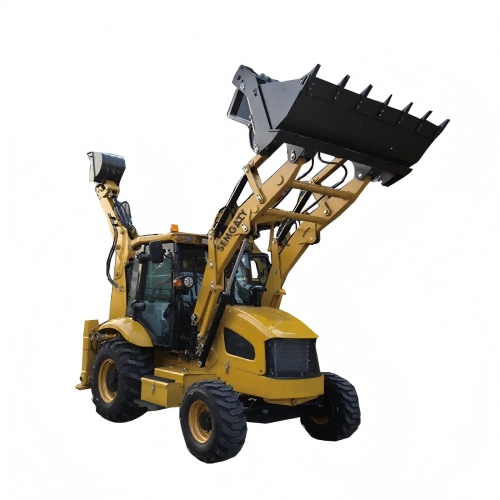
Landscape terrain shaping and micro-topography adjustment represent core procedures for high-grade greening engineering. Modern landscape design pursues natural undulating terrain, hierarchical spatial changes and scientific drainage gradients to enrich green space layering and eliminate rainwater accumulation risks. Manual construction cannot achieve uniform radian shaping and accurate gradient control, resulting in rigid landscape effects and unsmooth field drainage. Dual-end integrated working structures combine flexible digging and flat leveling functions to complete natural terrain shaping, gentle slope trimming and low-lying land remediation. Comprehensive working features make
front loader and backhoe ideal equipment for micro-topography optimization of parks, community green belts and roadside landscape zones. Accurate terrain adjustment and strong scenario adaptability enhance long-term application value of classic
front loader and backhoe in high-standard landscape shaping projects.
Greening trench excavation provides reliable foundation for vegetation planting and landscape pipeline layout. Landscape engineering involves multiple standardized trenching tasks including tree planting pits, shrub belt trenches, irrigation pipelines and surface drainage ditches. Qualified trenching requires regular groove shapes, consistent depth and flat trench bottoms to guarantee stable seedling growth and unobstructed water system operation. Irregular trenching easily causes seedling root compression, pipeline laying deviation and increased later maintenance difficulties. Adjustable digging buckets and stable hydraulic output support targeted trenching for different vegetation and pipeline specifications. Neat trench wall molding prevents loose soil collapse, improves one-time construction qualification rate and reduces secondary trimming workload for landscape projects.
Soil replacement, backfilling and layered compaction effectively optimize vegetation growth conditions. Most urban greening sites contain hardened soil, gravel-mixed soil and low-quality foundation soil that lack sufficient air permeability and nutrients for landscape plants. Professional soil treatment processes include impurity removal, fertile soil backfilling and layered compaction to improve soil structure and planting environment. Layered thin-spread backfilling avoids hollow soil layers and uneven ground settlement which threaten seedling stability and landscape flatness. Moderate compaction strength balances soil firmness and air permeability, protecting seedling root systems while consolidating planting foundations. Refined soil treatment significantly improves plant survival rate and extends the service life of finished green landscapes.
Water system construction and garden ditch arrangement enrich ecological and ornamental landscape functions. Ecological landscape projects cover artificial stream digging, pond foundation shaping, rainwater ditch layout and wetland terrain reconstruction. Such construction requires flexible curve operation and precise depth control to simulate natural water system textures and maintain reasonable water storage capacity. Ordinary single-function machinery cannot adapt to irregular curved construction requirements for ecological water landscapes. Flexible mechanical arm rotation and adjustable working angles support free curve trenching and undulating terrain shaping, creating smooth and natural water system outlines. Low-disturbance working modes protect surrounding vegetation and original landforms, realizing perfect integration of artificial water landscapes and natural ecological environments.
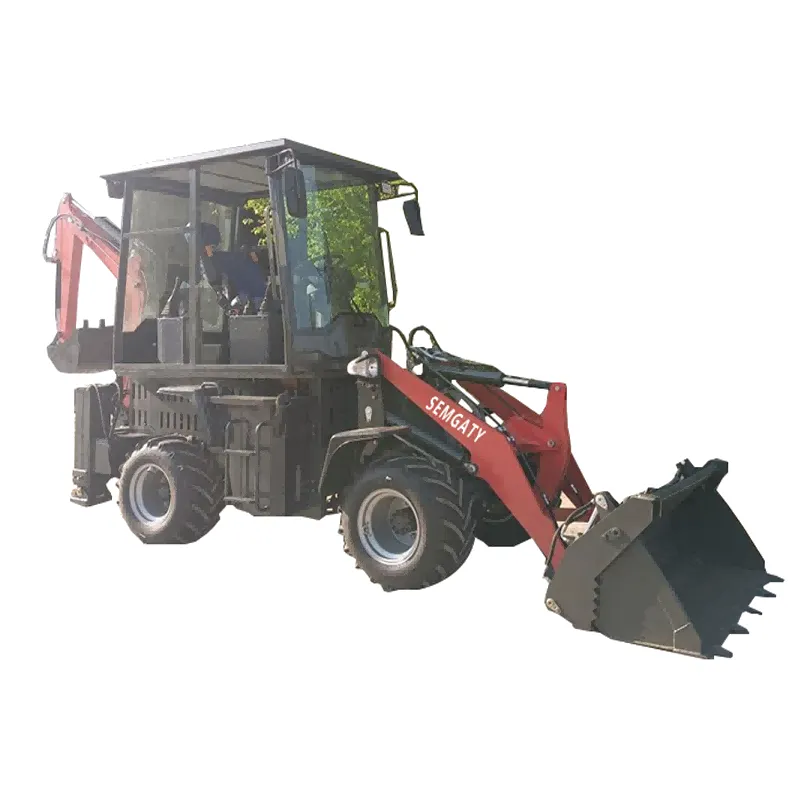
Green belt trimming and landscape boundary finishing enhance overall project aesthetics and standardization. Urban road green belts, park boundaries and residential landscape zones require regular edge trimming, residual soil cleaning and terrain neatening to form standardized and tidy green space boundaries. Chaotic boundary lines and protruding residual soil reduce landscape tidiness and ornamental value. Precise leveling and linear trimming functions create straight green belt edges and smooth transition surfaces between green areas and hard pavement. Accurate mechanical operation avoids damage to mature lawns and shrubs, retaining complete landscape effects while finishing standardized boundary renovation.
Construction waste cleaning and final site finishing ensure standardized project delivery. Landscape construction produces large quantities of residual soil, broken branches, waste stones and packaging sundries that require centralized cleaning and unified transportation. Timely waste removal prevents sundry accumulation from squeezing planting soil and affecting vegetation growth. Integrated loading and cleaning functions realize rapid residue disposal and greatly improve site tidiness. Final fine leveling and detailed trimming eliminate minor terrain undulations and scattered impurities, enabling landscape sites to meet delivery standards and simplify daily greening maintenance in later operational stages.
Low-disturbance construction features meet ecological protection requirements of modern green engineering. Landscape projects prioritize vegetation protection and ecological stability throughout construction processes, differing greatly from heavy industrial construction. Optimized hydraulic systems reduce mechanical vibration and ground pressure to avoid soil hardening and underground root damage of reserved plants. Gentle working modes prevent large-scale soil turnover and excessive dust diffusion, effectively protecting existing lawns, shrubs and mature trees. Environment-friendly construction behaviors maintain green space ecological balance and coordinate construction progress with environmental protection, fully complying with low-carbon green construction standards for modern landscape engineering.
Multi-scene functional switching adapts to diversified demands of integrated landscape projects. Large-scale greening construction covers multiple complex scenarios including urban park renovation, roadside green belt upgrading, residential landscape construction and ecological wetland transformation. Different projects require targeted construction methods such as fine terrain shaping, large-area leveling and rapid standardized trenching. Modular accessories including narrow trenching buckets and flat grading buckets support fast functional switching to match diverse construction standards. Flexible working mode conversion allows single equipment to complete full-process landscape construction tasks, reducing overall machinery deployment quantity and controlling project construction costs.
Energy-saving and high-efficiency operation improve comprehensive economic benefits of landscape engineering. Most landscape greening projects feature long cycles and scattered construction points, requiring long-duration continuous refined operation. Professional energy-saving engine configurations perfectly adapt to low-intensity, high-precision greening work and reduce invalid fuel consumption and energy loss. Stable mechanical structure lowers daily fault frequency and avoids construction stagnation. Universal vulnerable parts and simplified maintenance structures reduce post-project maintenance time and capital investment. Reliable working efficiency and outstanding economic performance create stable cost-control advantages for large-scale urban and rural landscape greening renovation projects.