Key Impacts of Different Tire Sizes on Loader Application Effects
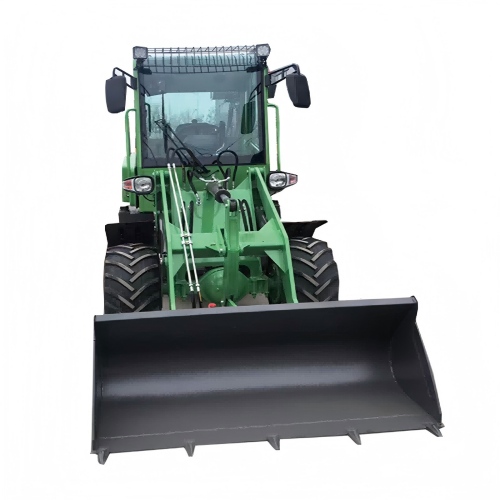
In multiple fields such as engineering construction, mining, and municipal operation and maintenance, loaders serve as core operating equipment. Application effects directly determine project progress efficiency and operating costs. As the only component connecting loaders to the ground, tires highlight increasing importance in reasonable size selection. From small-scale operation scenarios to large-scale heavy-duty working conditions, differences in load-bearing capacity, passability and wear resistance among different tire sizes directly affect operating performance of various loaders. Among them, adaptation differences between
small articulating loader and
wheel loader are particularly obvious.
Currently, loader tire sizes show a diversified trend. Core differences focus on four dimensions: tread width, rim diameter, ply strength and pattern type. Tread width determines contact area with the ground; rim diameter affects equipment passability; ply strength is related to load-bearing limit; pattern type adapts to different operating road surfaces. Combination of these parameters forms precise matching logic between tire sizes and loader application scenarios, and also becomes a key starting point for enterprises to improve operating efficiency and reduce losses.
For small payloader, core application scenarios focus on narrow-space operations such as urban greening, small construction sites and indoor warehousing. Tire size selection must give priority to flexibility and lightweight. Common 16/70-20 size tires have moderate tread width and rim diameter suitable for small equipment bodies. With 16 plies mostly, they can not only meet load-bearing needs of light material handling, but also reduce equipment turning radius, ensuring flexible movement in narrow areas and effectively avoiding excessive ground rolling during operations.
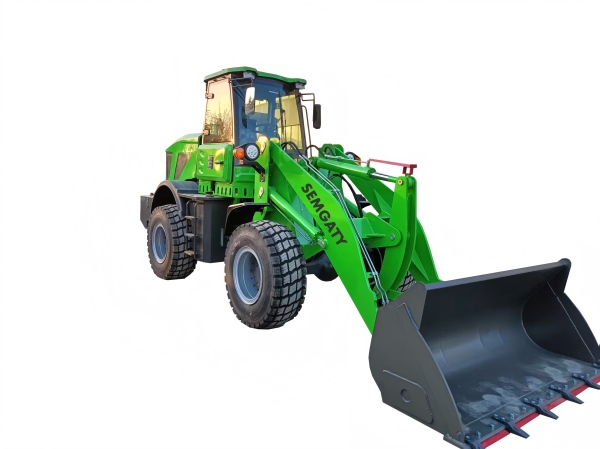
In contrast, large
wheel loader is mostly used in heavy-duty scenarios such as mines, ports and large-scale infrastructure construction sites. Tire size selection needs to focus on load-bearing capacity and wear resistance. 23.5-25 size tires, as mainstream choices, have significantly increased tread width. Expanded contact area can effectively disperse total weight of equipment and materials, reduce ground pressure, and avoid sinking problems on soft road surfaces. At the same time, strength design of more than 20 plies can bear impact force during heavy-duty operations. Combined with deep pattern design, they can improve grip on gravel and muddy road surfaces and reduce skidding risks.
As an important part of tire size, pattern type selection and adaptation to operating scenarios directly affect loader application effects. Smooth shallow-pattern tires are suitable for flat hardened road surfaces such as ports and warehouses. Small rolling resistance can improve operating efficiency and reduce fuel consumption, adapting to loader operations mainly for material transfer. Block deep-pattern tires target complex terrains such as mines and gravel roads. Pattern depth can reach more than 20mm, with strong grip and wear resistance, which can effectively cope with impact of sharp stones and extend tire service life.
Differences in rim diameter also have a significant impact on loader application effects. Small-diameter rim tires (such as 16 inches) matched with small articulating loader can lower equipment center of gravity and improve operating stability, especially suitable for indoor and low-height space operations, avoiding equipment tipping risks caused by excessively high center of gravity. Large-diameter rim tires (such as 25 inches) are adapted to large articulating loader, which can improve equipment passability, easily cross obstacles such as potholes and steps, adapt to outdoor complex terrain operations, and reduce losses of equipment components caused by road bumps.
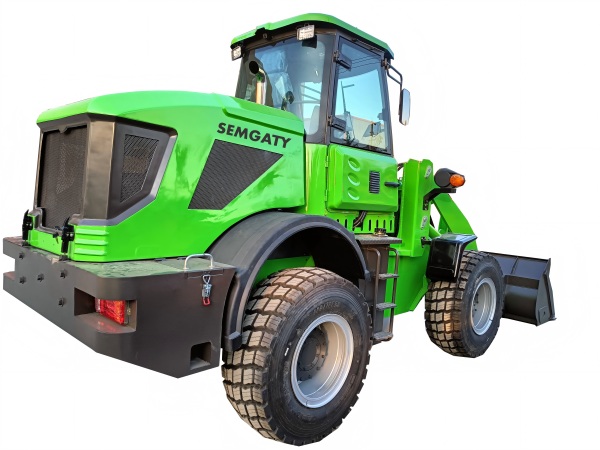
Ply strength, as a core indicator of tire load-bearing capacity, has different ply designs corresponding to different operating load requirements. 16-ply tires are mostly adapted to small loaders, suitable for light operations. Their thin structure design can reduce equipment weight, improve flexibility and reduce fuel consumption. 18-ply tires balance strength and flexibility, suitable for complex site operations of medium loaders, capable of coping with frequent start-stop and medium load requirements. Tires with 20 plies and above are specially designed for heavy-duty loaders, which can bear huge pressure and avoid tire deformation, cracking and other failures during heavy-duty operations.
Industry practice data shows that improper tire size selection will reduce loader operating efficiency by 15%-30%, accelerate tire wear rate by more than 20%, and increase equipment failure risks and maintenance costs. A mining enterprise once used 23.5-25 size tires for small loaders, leading to difficult equipment turning and surging fuel consumption. After replacing with suitable sizes, operating efficiency increased by 20% and monthly average tire maintenance costs decreased by 18%. This case fully illustrates that precise matching of tire sizes is the key to improving loader application effects.
With continuous upgrading of loader technology and intelligent, multi-functional development of articulating loader, higher requirements are put forward for tire size adaptability. During design and production, manufacturers need to optimize tire size configuration and launch customized tire solutions based on operating scenarios and load-bearing needs of different loaders. At the same time, during procurement and use, enterprises should fully investigate operating environments, select suitable tire sizes based on equipment models and operating loads, avoid blind pursuit of large sizes and high strength, and achieve balance between loader application effects and operating costs.
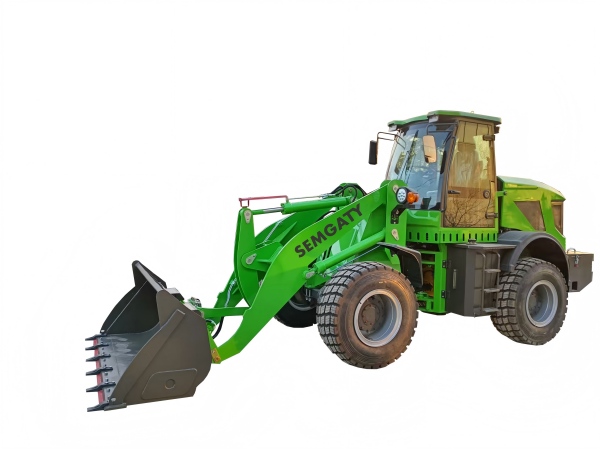
From the perspective of market development trends, environmental protection, high efficiency and durability have become development directions of loader tires. Technological upgrading of different size tires is also advancing continuously. For example, radial tires have gradually replaced traditional bias tires as mainstream choices due to superior flexibility and heat resistance. Application of wear-resistant rubber formulas has further extended tire service life. Customized pattern design has optimized application effects for different operating scenarios. Combination of these technological upgrades and reasonable selection of tire sizes will further improve operating efficiency of loaders.
Industry experts point out that loader application effects are the result of coordinated action of equipment performance, operating scenarios and tire sizes. As a basic component, tire size adaptability directly determines exertion of equipment performance. In the future, with continuous improvement of requirements for operating efficiency and environmental protection in the engineering construction field, refinement and customization of tire sizes will be further improved, providing more precise adaptation schemes for different types of loaders and helping the industry develop high-quality.
For enterprises, mastering influence rules of different tire sizes on loader application effects and reasonably selecting suitable tires can not only improve operating efficiency and reduce operating costs, but also extend equipment service life and enhance market competitiveness. Under the background of transformation and upgrading of the current engineering construction industry, attaching importance to scientific selection of tire sizes will become an important measure for enterprises to achieve refined management and improve core competitiveness, promoting loader application towards a more efficient, economical and environmentally friendly direction.