

Differences Between Skid Steer Loaders and Wheel Loaders
In the field of construction and material handling machinery, skid steer loaders and wheel loaders are two common types of equipment with distinct design concepts and application scenarios. Understanding their core differences helps enterprises choose the right machinery to match project needs, improve operation efficiency and reduce unnecessary investment. For small and medium-sized construction and narrow space operations, the compact models of skid steer series have unique competitive advantages.
The most obvious difference lies in the steering structure and maneuverability. Wheel loaders adopt traditional front wheel steering design, with a large turning radius and obvious tail swing during turning, so they are only suitable for open and spacious construction sites. They cannot flexibly shuttle in narrow areas, which limits their application in urban and refined construction scenarios.
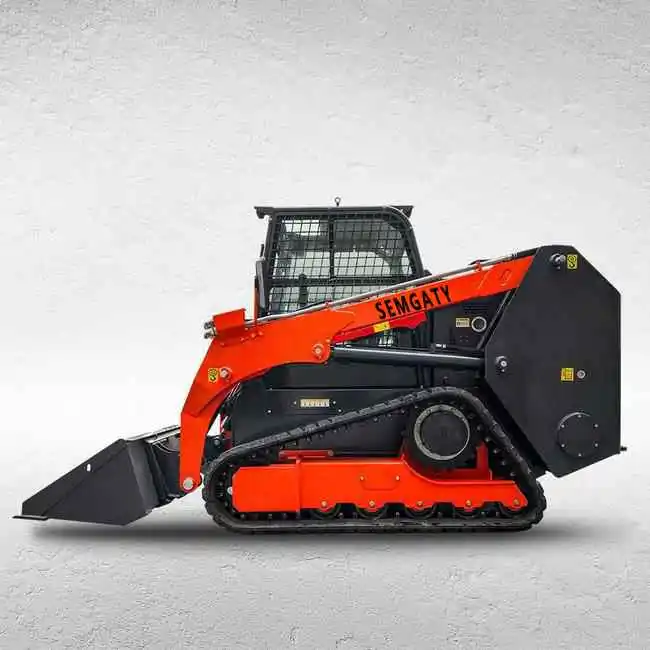
skid steer loader adopts a unique skid steering mode, relying on the speed difference of left and right wheels to realize turning, with an ultra-small turning radius and zero tail swing. This design allows it to work freely in narrow construction roads, indoor spaces and crowded sites, making up for the application limitations of wheel loaders in compact spaces.
In terms of body size and adaptability, the two also have huge differences. Wheel loaders are large in size, heavy in weight and take up a lot of space, suitable for large-scale earthwork and open-pit material handling projects with sufficient space. They are difficult to transport and transfer, and are not suitable for scattered small-scale projects.
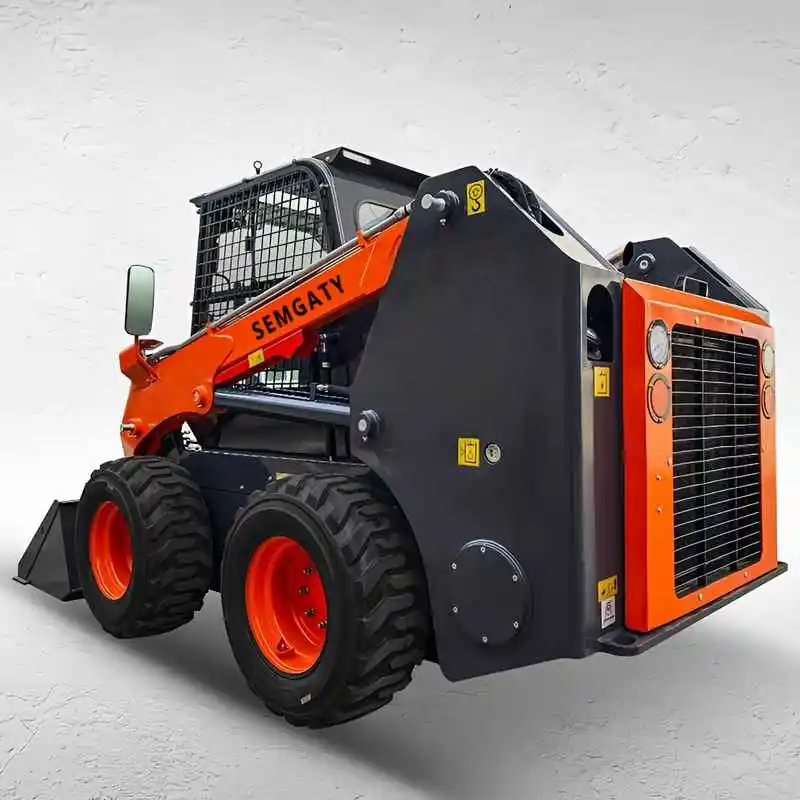
mini skid further optimizes the body size on the basis of skid steering design, with an ultra-compact structure. It can pass through standard indoor doorways and narrow corridors, and is more adaptable to refined construction scenarios such as community maintenance, garden greening and indoor renovation. Its light weight also makes cross-site transportation more convenient and efficient.
In terms of functional versatility, wheel loaders have a single function and are mostly used for shoveling and transporting bulk materials. It is difficult to match diversified accessories, and the scope of application is greatly limited. Most wheel loaders can only undertake single construction tasks, and the cost-performance ratio of small projects is low.
mini skidsteer has a strong multi-functional expansion capability, and can quickly replace buckets, clamps, sweepers, snow pushes and other accessories through a quick-connect device. It can realize multi-purpose use of one machine, covering material handling, site cleaning, snow removal, landscaping and other work, greatly reducing the equipment investment cost of users.
In terms of operation efficiency in complex scenarios, wheel loaders have low operation flexibility in limited spaces, and even cannot carry out construction, resulting in low overall work efficiency. They are more suitable for single large-scale projects with long-term construction in open areas.
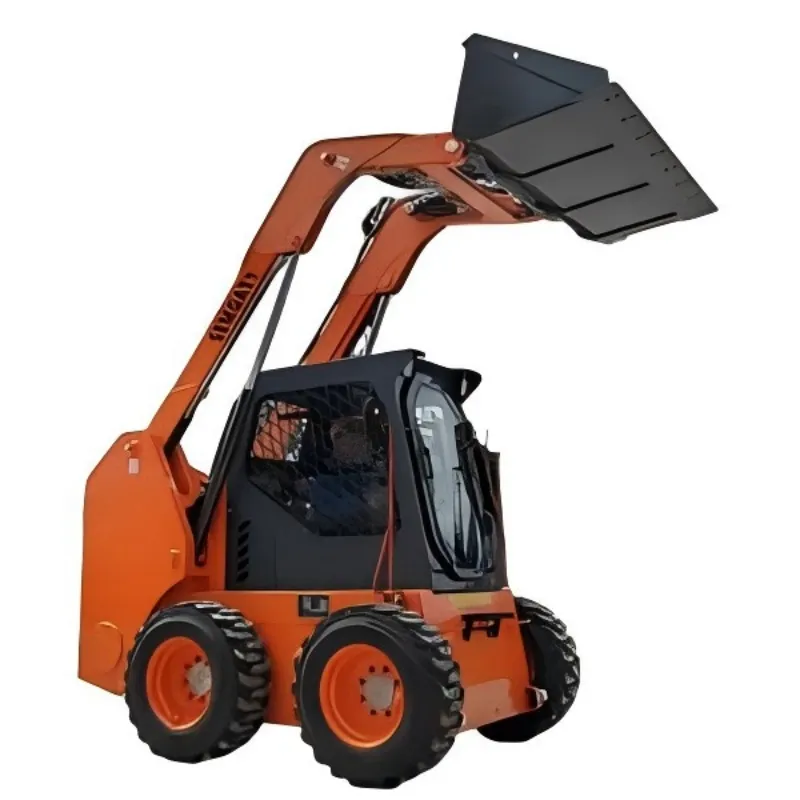
skid steer loader shows strong operation advantages in complex and narrow scenarios, can complete tasks efficiently without being limited by space, and shortens the construction period. For urban municipal construction, agricultural orchard management and other scenarios, its operation efficiency is far higher than that of traditional wheel loaders.
In terms of use cost and maintenance, wheel loaders have high fuel consumption, large volume and high daily use and maintenance costs, which bring greater economic pressure to small and medium-sized users. The maintenance of large components is complicated, and the maintenance cycle is long.
mini skid and mini skidsteer have low energy consumption design, simple daily maintenance and low later operation cost. They are more in line with the cost budget of small and medium-sized engineering teams, and can also meet the long-term frequent use needs of various small-scale construction scenarios.
To sum up, wheel loaders are dominant in large-scale open construction projects, while skid steer series equipment has irreplaceable advantages in narrow space, refined construction and multi-functional operations. With the diversification of global construction project scenarios, the market demand for compact and flexible skid steer loaders is rising steadily, becoming a cost-effective choice for more engineering users.