

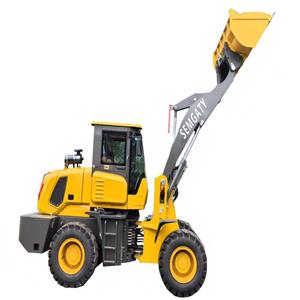
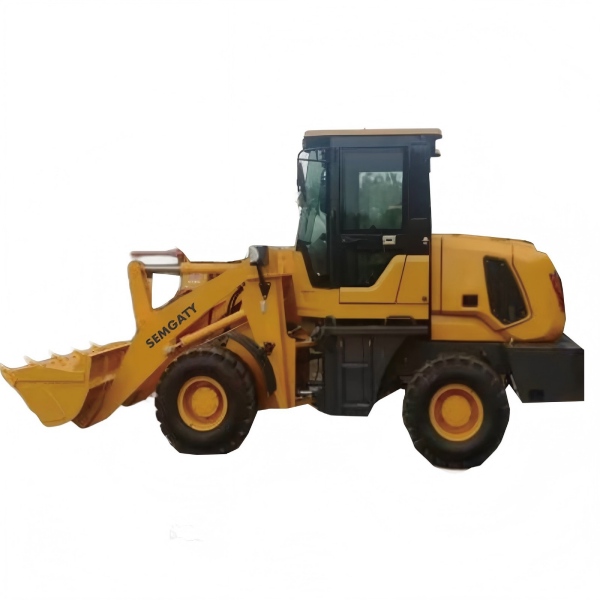
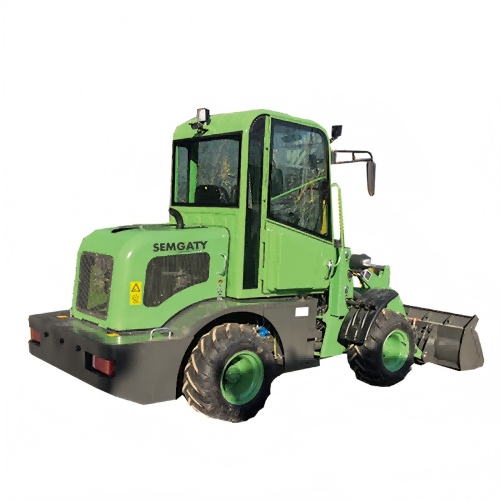
In construction, agriculture, and material handling industries, the performance of a small articulating front end loader, compact articulating loader, and small wheel loader depends on the coordination of multiple core components. Among these components, the transmission system plays a decisive role in power delivery and operational efficiency.
A transmission ensures that engine power is properly distributed to the wheels under different working conditions. Understanding the function of transmission systems helps buyers select the most suitable small articulating front end loader, compact articulating loader, and small wheel loader for various applications.
This article explains how transmission systems work and why transmission performance directly affects productivity, fuel efficiency, and machine durability.
What Is a Transmission in a Wheel Loader?
A transmission in a small articulating front end loader, compact articulating loader, and small wheel loader is a mechanical system that transfers engine power to the drivetrain while adjusting speed and torque.
A transmission allows a small articulating front end loader to operate efficiently at different speeds while maintaining sufficient torque for heavy-duty tasks.
Without a properly matched transmission, a compact articulating loader cannot achieve smooth acceleration or stable operation under varying loads. A reliable transmission ensures that a small wheel loader performs consistently in both light-duty and heavy-duty applications.
Core Function: Power Distribution and Torque Control
The primary role of a transmission in a small articulating front end loader, compact articulating loader, and small wheel loader is to distribute power and control torque output.
A transmission adjusts gear ratios, enabling a small wheel loader to deliver high torque at low speeds and higher speed during travel.
Efficient torque control allows a compact articulating loader to perform demanding tasks such as loading gravel, lifting materials, and climbing slopes. Proper transmission matching improves the working efficiency of a small articulating front end loader.
Improving Driving Performance and Maneuverability
A transmission significantly improves driving performance. A small articulating front end loader equipped with a high-quality transmission achieves smoother acceleration and better control.
A compact articulating loader benefits from responsive gear shifting, especially in tight working spaces such as farms, warehouses, and urban construction sites.
For a small wheel loader, a reliable transmission enhances maneuverability, reduces operator fatigue, and improves overall safety.
Impact on Fuel Efficiency
Transmission efficiency directly affects fuel consumption. A well-designed transmission reduces energy loss, allowing a small articulating front end loader, compact articulating loader, and small wheel loader to operate more economically.
An inefficient transmission increases engine load, resulting in higher fuel consumption and operational costs. Optimized transmission systems ensure that a small wheel loader achieves maximum productivity with minimal fuel usage.
Fuel-efficient transmission solutions are essential for long-term cost savings in global markets.
Durability and Maintenance Considerations
Durability is critical for transmission systems. A transmission in a small articulating front end loader, compact articulating loader, and small wheel loader must withstand heavy loads and continuous operation.
Regular maintenance, including oil replacement and system inspection, ensures long-term reliability. A well-maintained transmission reduces downtime and extends the service life of a compact articulating loader.
Selecting a high-quality transmission improves overall performance and ensures stable operation for a small articulating front end loader.
Matching Transmission with Working Conditions
Different applications require different transmission types. A small articulating front end loader used in agriculture may prioritize smooth operation and low-speed control, while a small wheel loader in construction requires higher torque output.
Hydrostatic transmissions provide precise control for a compact articulating loader, while powershift transmissions offer higher efficiency for heavy-duty applications.
Proper selection ensures that a small articulating front end loader, compact articulating loader, and small wheel loader operate efficiently under various working conditions.
Conclusion
Transmission systems are essential for ensuring the performance, efficiency, and durability of a small articulating front end loader, compact articulating loader, and small wheel loader.
From power distribution and torque control to fuel efficiency and driving comfort, transmission performance directly impacts machine productivity. Selecting the right transmission ensures reliable operation and long-term value.
For global buyers, understanding transmission systems helps optimize equipment selection and maximize return on investment.