What Are the Differences Between Micro Excavators and Other Excavators? Professional Interpretation
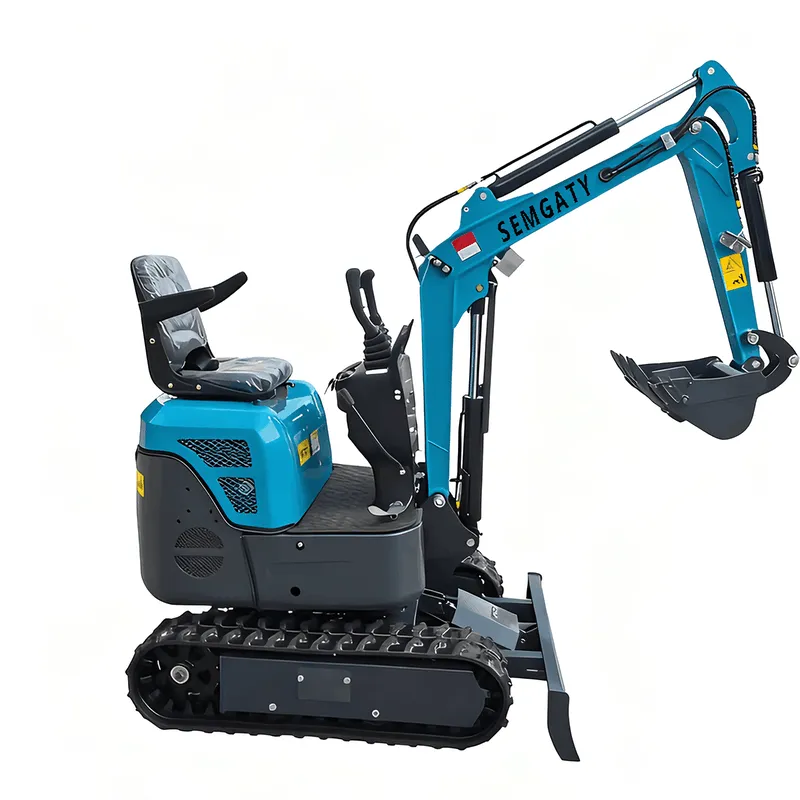
In the engineering construction industry, excavators are indispensable core equipment, covering a variety of types and models to adapt to different operation scenarios and intensity requirements. In recent years, with the rise of refined construction concepts and the expansion of small-scale operation scenarios, micro excavators have gradually become a new favorite in the market, forming obvious differences from medium and large excavators in terms of structural design, performance characteristics and application scenarios. Industry insiders point out that correctly understanding differences between micro excavators and other excavators is the key to enterprises and operators selecting suitable equipment, avoiding blind purchase and improving operation efficiency. Today, we will focus on
crawler mini excavator,
micro excavation, and
hydraulic crawler excavator, comprehensively interpret differences between micro excavators and other excavators, and provide professional reference for all users.
First of all, it is necessary to clarify the core definition and scope of micro excavators. In the industry, micro excavators generally refer to small excavators with an operating weight of less than 6 tons, among which crawler mini excavator is the most common type. Different from medium and large excavators that focus on high-intensity and large-volume operations, micro excavators take flexibility, refinement and multi-functionality as core advantages, and are mainly used in small-scale, narrow-space and low-intensity operation scenarios. micro excavation refers to the excavation operation completed by micro excavators, while hydraulic crawler excavator, as a general term for crawler excavators equipped with hydraulic systems, covers micro, small, medium and large models. Clarifying these three core concepts is the premise for understanding differences between micro excavators and other excavators.
The most obvious difference between micro excavators and other excavators lies in structural design and body size. crawler mini excavator, as a typical representative of micro excavators, has a compact body structure, with an overall width generally less than 1 meter and an operating weight between 1-6 tons. Such a compact design allows crawler mini excavator to easily shuttle in narrow spaces such as urban narrow roads, rural courtyards, indoor construction sites and garden paths. In contrast, medium and large hydraulic crawler excavators have an operating weight of more than 10 tons, with an overall width of more than 2 meters and a large body size, which requires open operation space.
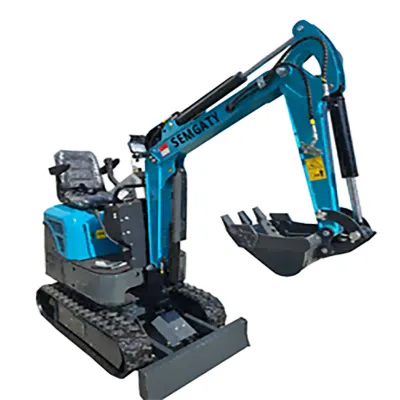
In terms of structural details, crawler mini excavator adopts a short-tail or no-tail rotation design, which can realize zero rotation radius and avoid collision with surrounding objects. It is equipped with a small-sized cab, simple and flexible in operation, and can be operated by a single person. Medium and large
hydraulic crawler excavator adopt a long-tail rotation design, with a large rotation radius and a larger cab equipped with more complex operation systems, usually requiring professional operators.
Performance parameters are another important difference. crawler mini excavator is mainly equipped with small-displacement engines, with power generally between 15-40kW, excavation depth between 2-3.5 meters, and bucket capacity between 0.03-0.1 cubic meters, focusing on flexibility and precision.
micro excavation operations completed by crawler mini excavator pay more attention to operation precision, such as ditch digging with accurate depth and width, which cannot be achieved by medium and large excavators.
Medium and large hydraulic crawler excavator are equipped with large-displacement engines, with power generally more than 80kW, excavation depth up to 7 meters or more, and bucket capacity more than 1 cubic meter. They have strong excavation force and loading capacity, suitable for large-volume earthwork excavation and mine operations, and can complete a large amount of tasks in a short time, far more efficient than crawler mini excavator in large-scale operations.
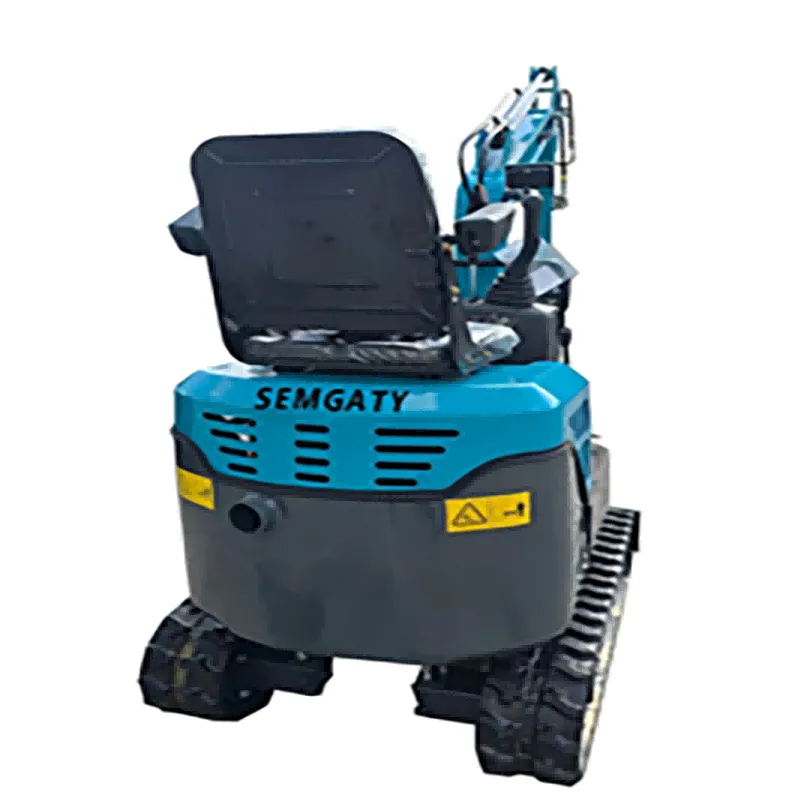
The difference in application scenarios is the core embodiment. crawler mini excavator and micro excavation are mainly applicable to small-scale and refined operation scenarios, including urban municipal maintenance, garden transformation, rural house construction, indoor decoration, agricultural water conservancy, and orchard management. In urban municipal maintenance, crawler mini excavator can be used for road pothole repair and pipeline laying, adapting to dense urban buildings. In garden transformation, it can complete tree pit excavation with high precision.
In rural areas, crawler mini excavator is essential for house construction, completing foundation excavation and material loading, replacing manual operation. In agricultural production, it adapts to uneven farmland terrain for ditch digging and farmland leveling. In indoor decoration, its small body size and low noise make it suitable for indoor earthwork excavation.
Medium and large hydraulic crawler excavator are mainly applicable to large-scale, high-intensity operation scenarios, including large-scale construction sites, open-pit mines, and large-scale water conservancy projects. They can complete large-volume earthwork excavation and ore excavation, adapting to harsh environments and accelerating construction progress.
In terms of operational cost and maintenance, crawler mini excavator has low fuel consumption (3-5 liters per hour) and low initial purchase cost, suitable for individual operators and small enterprises. Its maintenance is simple, with few wearing parts, and ordinary workers can master operation skills through simple training.
Medium and large hydraulic crawler excavator have high fuel consumption (more than 15 liters per hour) and high purchase cost, suitable for large enterprises. Their structure is complex, with high maintenance cost, requiring professional maintenance personnel and trained operators with relevant certificates.
In terms of functional configuration, crawler mini excavator focuses on multi-functionality and flexibility, equipped with quick-change devices to use various accessories. Medium and large hydraulic crawler excavator focus on high efficiency and stability, equipped with advanced hydraulic systems and intelligent monitoring systems.
Industry experts remind that micro excavators cannot replace medium and large excavators. Users should select appropriate equipment according to operation scenarios, intensity and economic budget: crawler mini excavator for small-scale, narrow-space tasks, and hydraulic crawler excavator for large-scale, high-intensity tasks.
With technological progress, crawler mini excavator, micro excavation, and hydraulic crawler excavator are developing towards intelligence, energy conservation, and environmental protection. Electric crawler mini excavator with zero emissions and low noise adapts to urban and indoor operations, while hydraulic crawler excavator adopts advanced hydraulic control technology to improve precision and energy utilization.
To sum up, differences between micro excavators and other excavators are mainly reflected in structural design, performance parameters, application scenarios, operational cost, and functional configuration. crawler mini excavator is suitable for small-scale, high-precision micro excavation operations; medium and large hydraulic crawler excavator for large-scale, high-intensity tasks. Users should understand these differences to select appropriate equipment, maximize value and promote industry development.