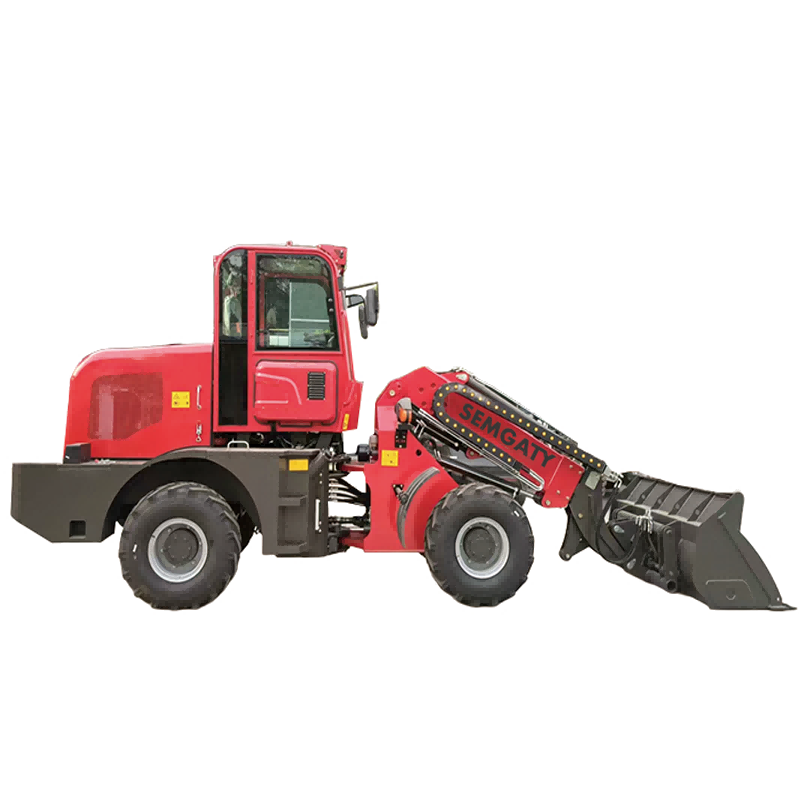
What Problems Can Wheel Telescopic Loader, Wheel Loader with Telescopic Boom and Telescopic Front Loader Solve in 2026
In 2026, global construction, agricultural operations, municipal maintenance, warehousing logistics, and emergency rescue sectors maintain steady growth. With upgraded operational scenarios, traditional loaders struggle to meet diverse needs like high-altitude work, long-distance material handling, and narrow-space operation. As multi-functional, high-efficiency machinery, wheel telescopic loader, wheel loader with telescopic boom, and telescopic front loader rely on unique telescopic boom designs to integrate loading, lifting, and outreach, solving practical problems across fields and becoming indispensable for operators.
Their core advantage is the telescopic boom, which solves traditional loaders’ limited operation range. Traditional loaders have fixed booms, only working within a fixed height and distance, unable to reach high or remote positions. In contrast, these three telescopic loaders can freely extend and retract booms, adjusting height and distance to break space limitations and access hard-to-reach areas.
wheel telescopic loader solves material handling and high-altitude work in harsh outdoor scenarios. On construction sites, mines, and large farms, traditional loaders fail to lift materials to high positions or reach remote areas. With a powerful telescopic boom and excellent off-road performance, it easily lifts materials to high-rise floors, stacks goods high, or retrieves materials from steep slopes, solving inefficient and unsafe manual handling. It can also be driven on public roads, facilitating transportation between job sites and reducing downtime.
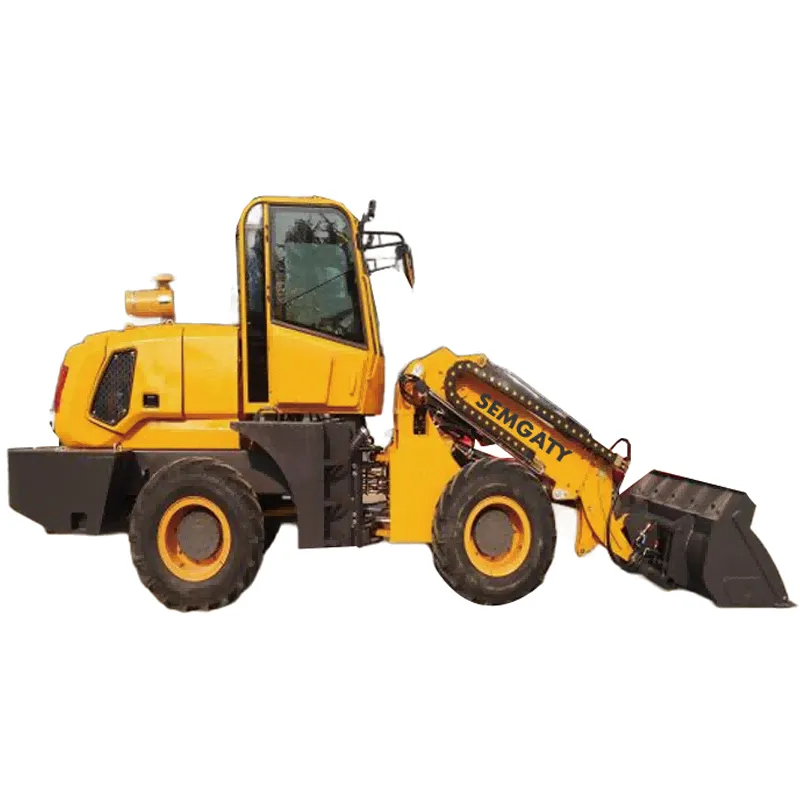
wheel loader with telescopic boom addresses multi-scenario integration and precise operation. Enterprises often need multiple machines (loaders, cranes, forklifts) to complete tasks, increasing investment and costs. This loader integrates loading, lifting, and outreach, and can switch attachments (forks, buckets, platforms) to handle multiple tasks, reducing investment and inefficiency from single-function machinery. Its precise boom control also solves difficult positioning in high-altitude and long-distance operations, such as placing materials or installing components accurately.
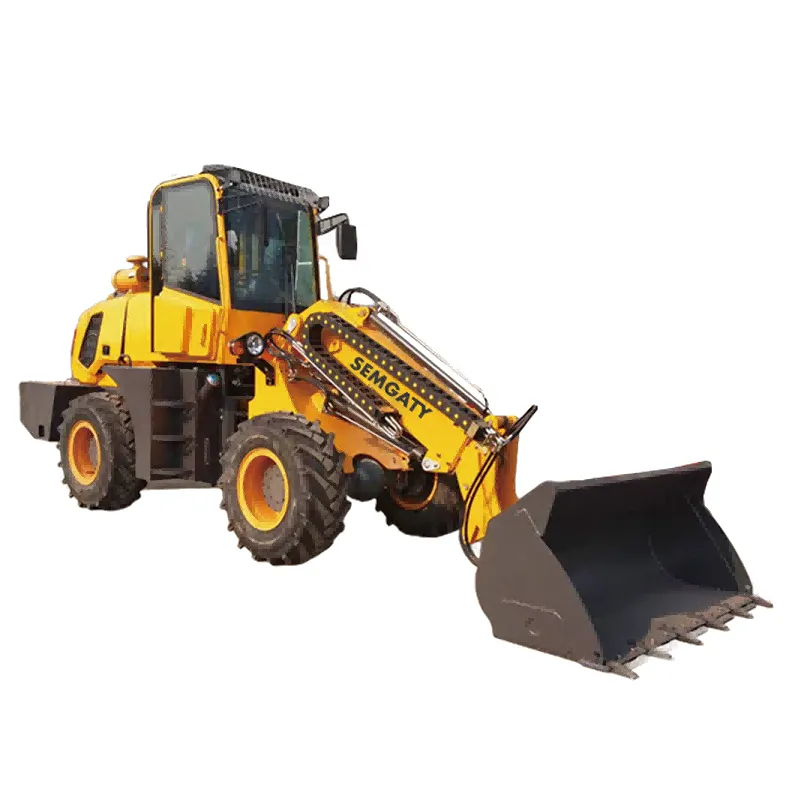
In agricultural and forestry operations,
telescopic front loader solves high-altitude work and complex terrain adaptation. On large farms, picking tall fruits or stacking hay bales is challenging—ladders are unsafe, and lifting vehicles are costly. Equipped with a picking basket or fork, it extends to reach tree tops or stack hay bales to 7-8 meters, solving low efficiency and high risk of manual work. In forestry, it handles logs in steep, dense areas, overcoming traditional loaders’ poor terrain adaptability.
Telescopic loaders also solve narrow-space and high-density operation inefficiency. In urban sites, warehouses, and narrow alleys, traditional large loaders struggle to move or enter, reducing efficiency. With compact structures and flexible mobility, these telescopic loaders shuttle freely in narrow spaces, and their retractable booms save space. For example, they clean alleys or repair high-altitude facilities in cities, and handle high-altitude warehouse storage without blocking passage.
In warehousing and logistics, they solve ultra-high shelf access. Traditional forklifts (lifting height <6 meters) cannot meet modern warehouses’ ultra-high shelves (up to 18 meters). Telescopic front loader and wheel telescopic loader easily reach shelf tops to store and retrieve pallet goods, improving space utilization and reducing labor intensity and costs.
wheel telescopic loader solves unstable operation in harsh terrains. On uneven, muddy, or steep sites, traditional loaders slip or get stuck. With a reinforced wheel chassis and excellent suspension, it operates stably on rough, steep, or wet ground, handling rocks and blocks, and overcoming poor adaptability and instability of traditional loaders.
wheel loader with telescopic boom addresses high safety risks in high-altitude work. Traditional high-altitude work relies on scaffolding or aerial platforms, which are complex, inefficient, and risky. Equipped with an aerial work platform, it sends operators to high positions, avoiding scaffolding and platform movement risks. Safety features like anti-rollover and anti-falling systems further ensure operator safety.
In emergency rescue,
telescopic front loader solves difficult rescue in complex disaster sites. In earthquakes or floods, debris blocks channels, and survivors are trapped in hard-to-reach areas. With flexible mobility and a telescopic boom, it clears debris, crosses obstacles, and delivers rescuers and materials, overcoming traditional rescue equipment’s poor adaptability and low efficiency.
They also solve high enterprise operational costs. Traditional operations need multiple machines, increasing purchase, transportation, and maintenance costs. These telescopic loaders realize "one machine with multiple uses", reducing investment. Simple maintenance, low fuel consumption, and one-person operation cut maintenance and labor costs. For rental companies, their wide applications ensure strong demand, solving low equipment utilization and unstable income.
Additionally, they solve environmental adaptability in special scenarios. Electric models (zero emissions, low noise) suit indoor or strict environmental areas, solving traditional fuel loader pollution. Sealed cabs and reinforced components ensure stable operation in high-temperature, dusty, or humid environments, overcoming poor adaptability of traditional loaders.
Q1 2026 market data: global demand for these three loaders rose 32% year-on-year, reflecting their ability to solve practical pain points. In China, driven by rural revitalization, urban infrastructure, and logistics development, demand grew 28% year-on-year, becoming a core force for industry efficiency.
In summary, wheel telescopic loader, wheel loader with telescopic boom, and telescopic front loader solve core operational problems: telescopic booms break range limitations; multi-functionality reduces investment and inefficiency; flexibility solves narrow-space issues; terrain adaptability ensures stable harsh-environment operation; safety and environmental designs address risks and pollution. In 2026 and beyond, technological optimization will help them solve more pain points, supporting global industry development.