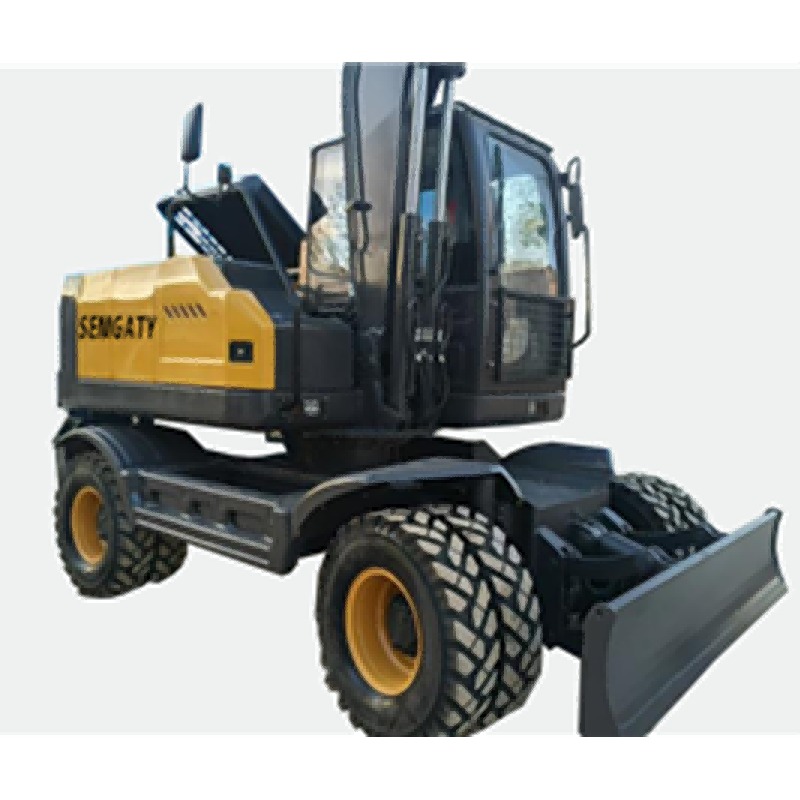
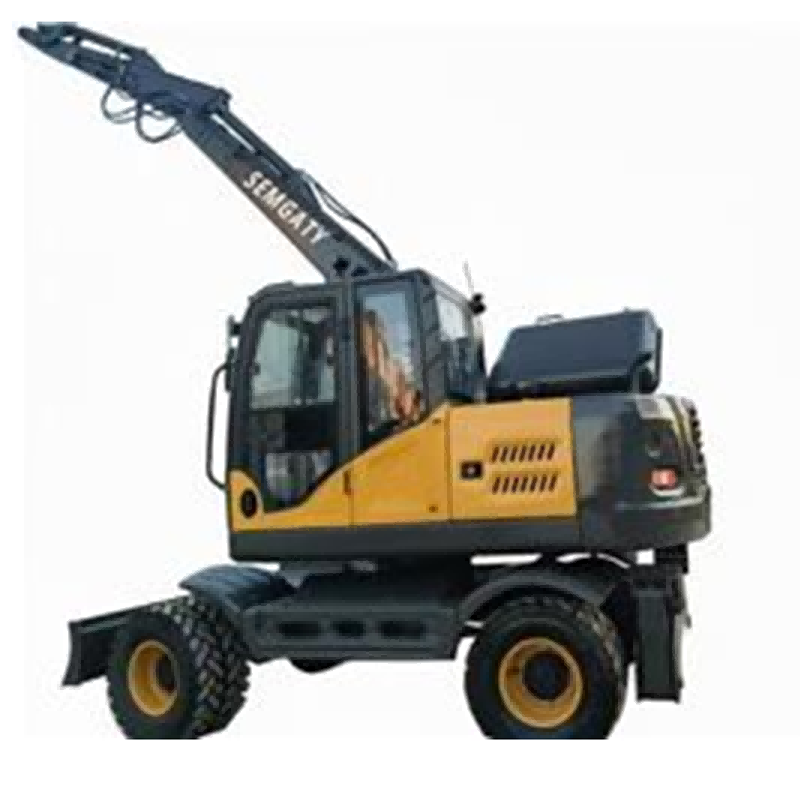
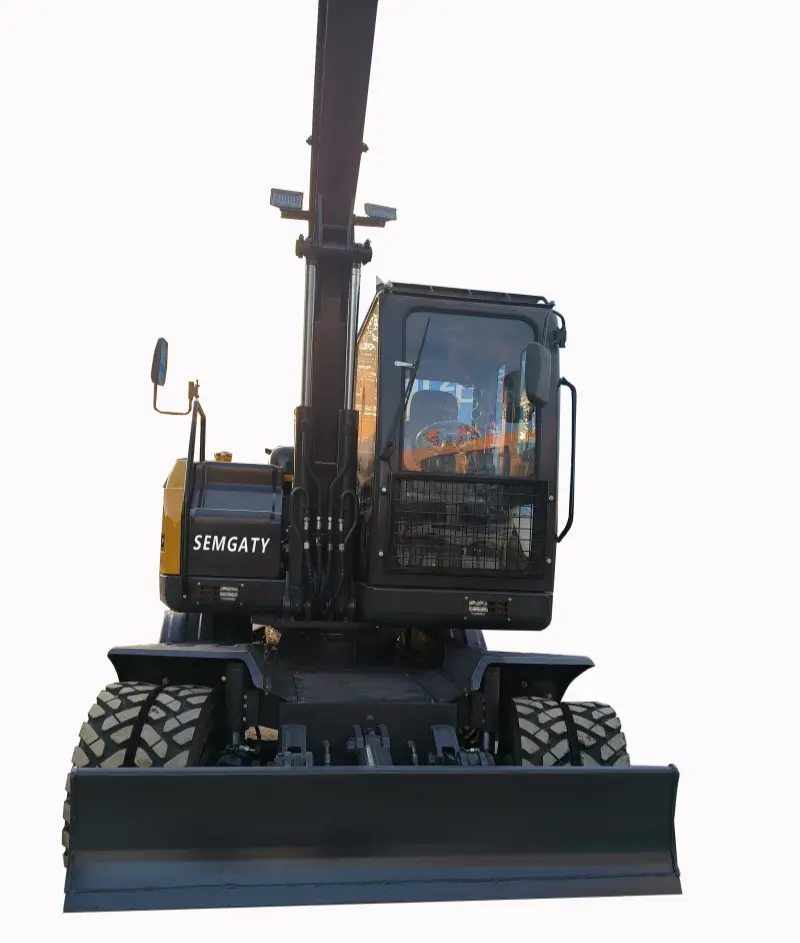
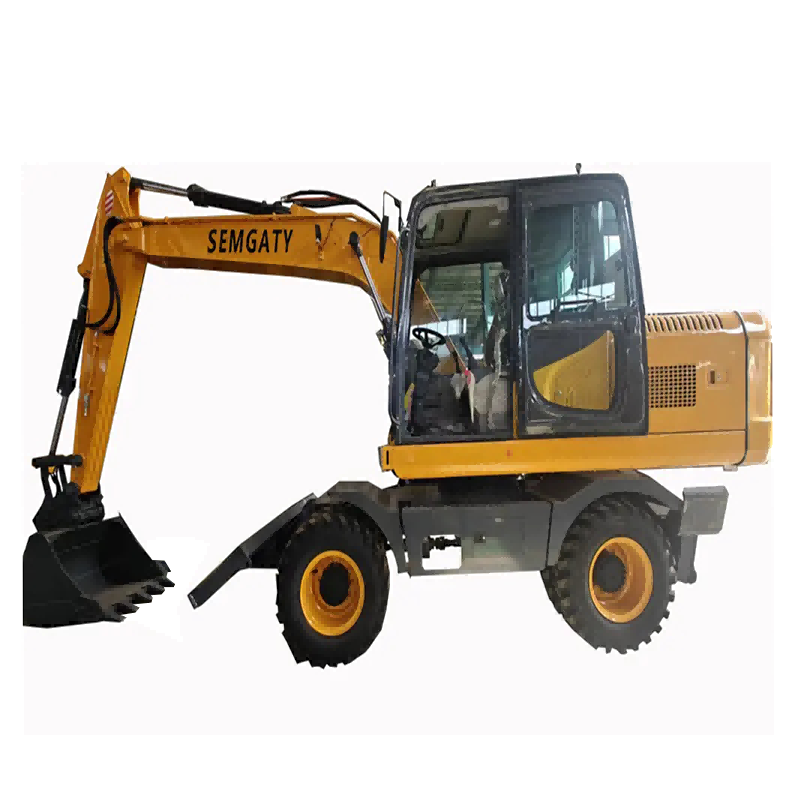
| parameter |
| Operating weight | 9.3t |
| Volume of Bucket | 0.35m³ |
| Engine model | Yuchai |
| Power | 62.5Kw |
| Fuel trank | 130L |
| Travel speed | 40km/h |
| Swing speed | 12r/min |
| Bucket digging force | 44Kn |
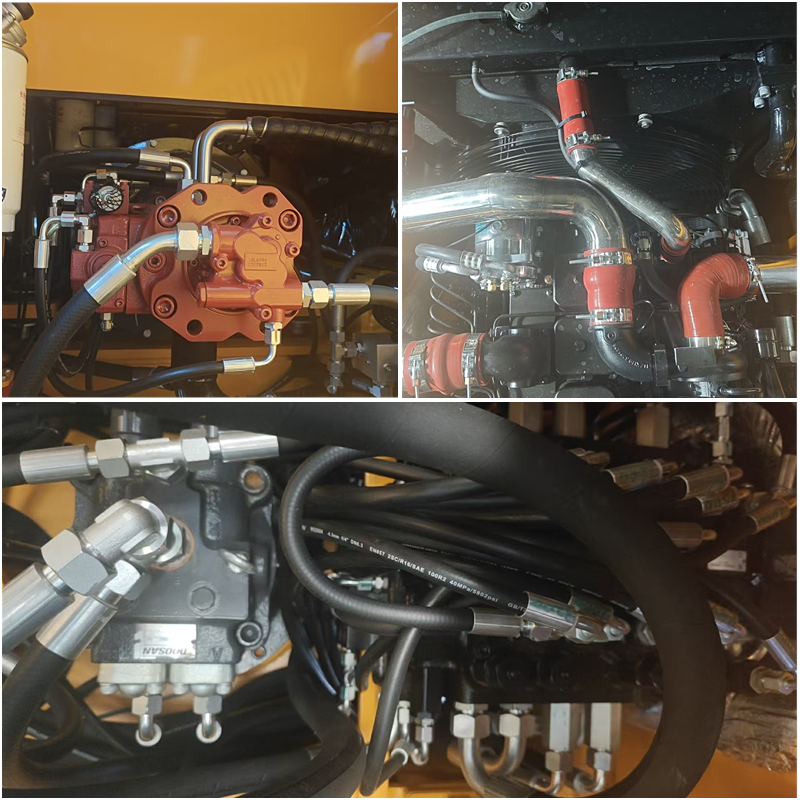
| Hydraulic pump model | Shimadzu、Doosan |
| Maximum flow | 120L/min |
| Pressure | 20Mpa |
| Hydraulic oil tank | 110L |
| Overall length | 6540mm |
| Overall width | 2129mm |
| Machine height(Boom head) | 2821mm |
| Total height(to operators cab top) | 2728mm |
| Ground clearance(bob- weight) | 1021mm |
| Min.ground clearance | 240mm |
| Rear-end seing radium | 1904mm |
| Table width | 2000mm |
| Max.digging height | 7839mm |
| Max.dumping height | 5768mm |
| Max.digging depth | 4634mm |
| The largest mining in stopping distance | 7299mm |
| Min.swing radius | 4056mm |
| Minimum turning radius at maximum height | 5312mm |
| Arm length | 2200mm |
| Boom length | 3850mm |
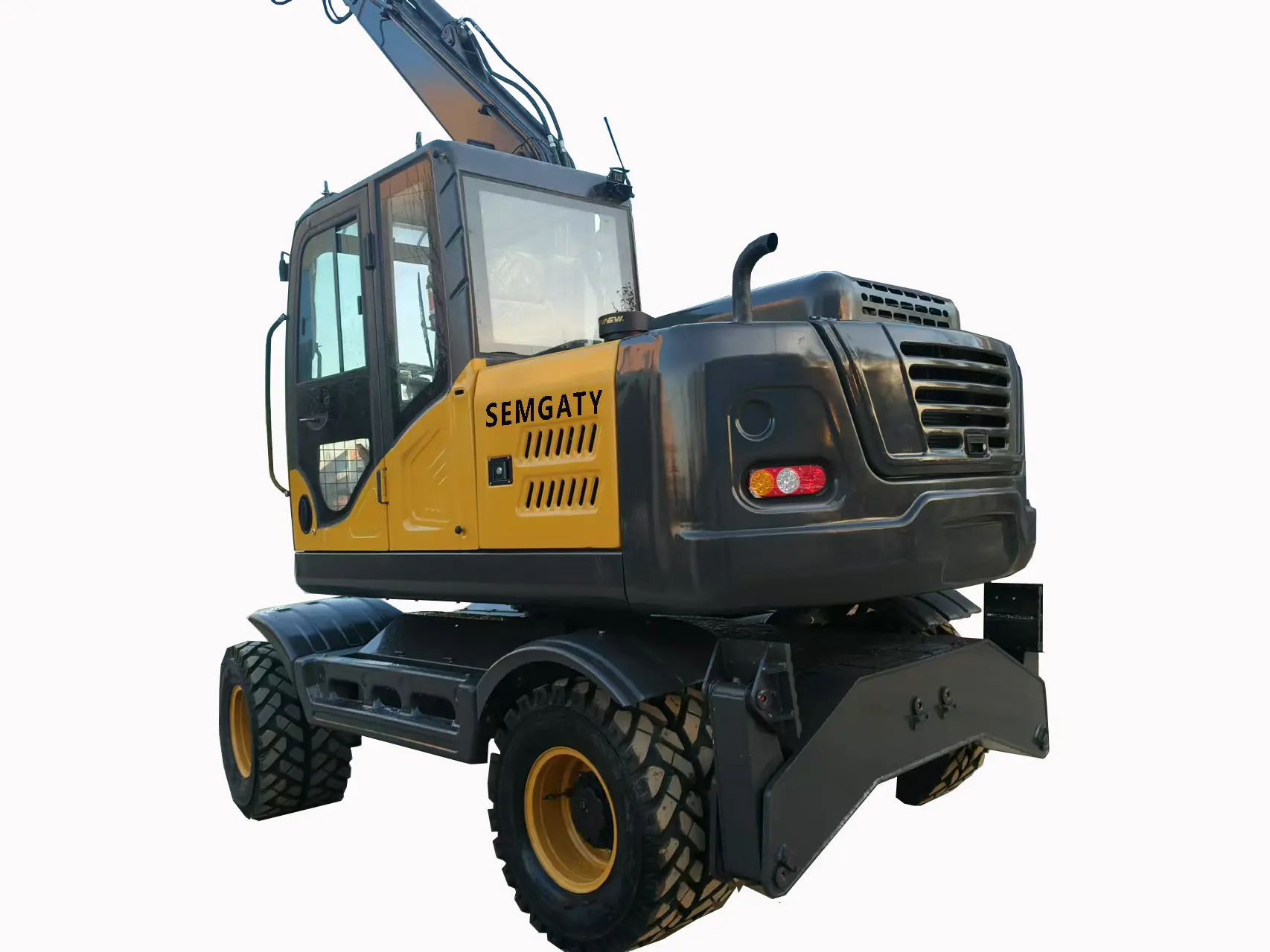
Wheeled excavators are widely used in small and medium-sized engineering projects such as municipal maintenance and highway construction. Market prices vary significantly depending on the model and configuration. We are a custom-designed machine manufacturer and can customize machines according to customer needs.
Wheeled excavators drive their working devices through a hydraulic system. The core principle is that a diesel engine or electric motor drives a hydraulic main pump to generate high-pressure oil, which is then controlled by a multi-way valve to execute digging actions using hydraulic cylinders or motors. This allows for combined boom and stick operations to improve efficiency.
Key features include:
High mobility: Travel speeds reach 20-40 km/h (20-35 km/h for domestic models, 25-40 km/h for foreign models), supporting self-transfer and reducing transportation costs.
Multi-functional adaptability: Can quickly switch between various working devices such as front shovels and backhoes, suitable for tasks such as trenching and loading/unloading.
Limitations: Digging force is weaker than tracked models, with poor adaptability to hard rock operations; and rear visibility is limited, requiring precautions against rollover risks. Application Scenarios and Market Status
Main Application Areas:
Municipal Engineering: Road maintenance, pipeline laying.
Transportation Construction: Earthwork excavation and leveling.
Agricultural and Forestry Operations: Orchard management, material handling.
Multi-purpose applications are available to meet customer needs.
Wheel excavators are earthmoving machines with tires as their walking components. They possess high mobility and rapid relocation capabilities, and are widely used in small to medium-sized projects such as municipal maintenance and highway construction. Market prices vary significantly depending on the model and configuration. As a professional manufacturer of custom-designed excavators, we support customized design and production based on specific customer requirements.
Wheel excavators use a hydraulic system to drive the working device. The core working principle is: a diesel engine or electric motor drives a hydraulic main pump to generate high-pressure oil, which controls the hydraulic cylinder or hydraulic motor through a multi-way valve, thereby achieving the digging action. The composite operation design of components such as the boom and stick significantly improves operating efficiency.
Key Technical Features:
High Mobility: Travel speeds typically reach 20–40 km/h (domestic models generally 20–35 km/h, while foreign models are mostly 25–40 km/h), allowing for independent relocation and effectively reducing transportation costs.
Multi-functional Adaptability: Supports quick switching between various operating devices such as front shovels and backhoes, suitable for trenching, loading and unloading, leveling, and other tasks.
Limitations of Use: Compared to tracked excavators, its digging force is weaker, and its adaptability to complex geological conditions such as hard rock is limited; in addition, there are blind spots in rear visibility, requiring careful operation to prevent the risk of tipping over.
Application Scenarios and Market Status: Wheeled excavators are mainly used in the following fields:
Municipal Engineering: Road maintenance, pipeline laying, etc.;
Transportation Construction: Earthwork excavation, site leveling;
Agricultural and Forestry Operations: Orchard management, material handling, etc.
As the market demands for the multi-functionality and efficiency of equipment, wheeled excavators are developing towards "one machine with multiple functions," further expanding their application range and meeting diverse construction needs by configuring different attachments.
With technological innovation, our product configuration and parameters will continue to
change without notice;
if there is any doubt, the specific confirmation of our international trade sales shall prevail;