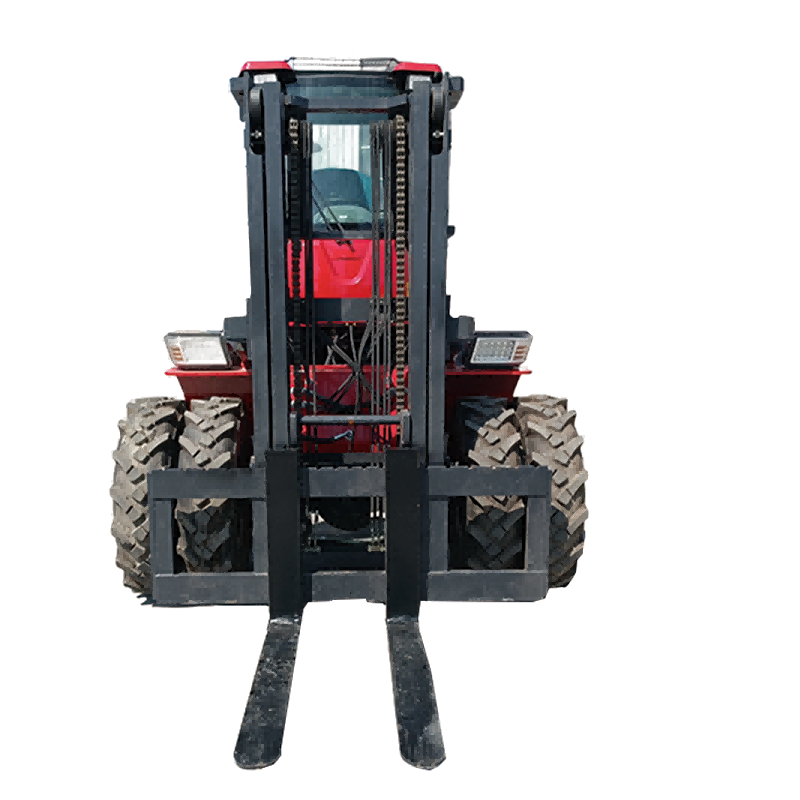
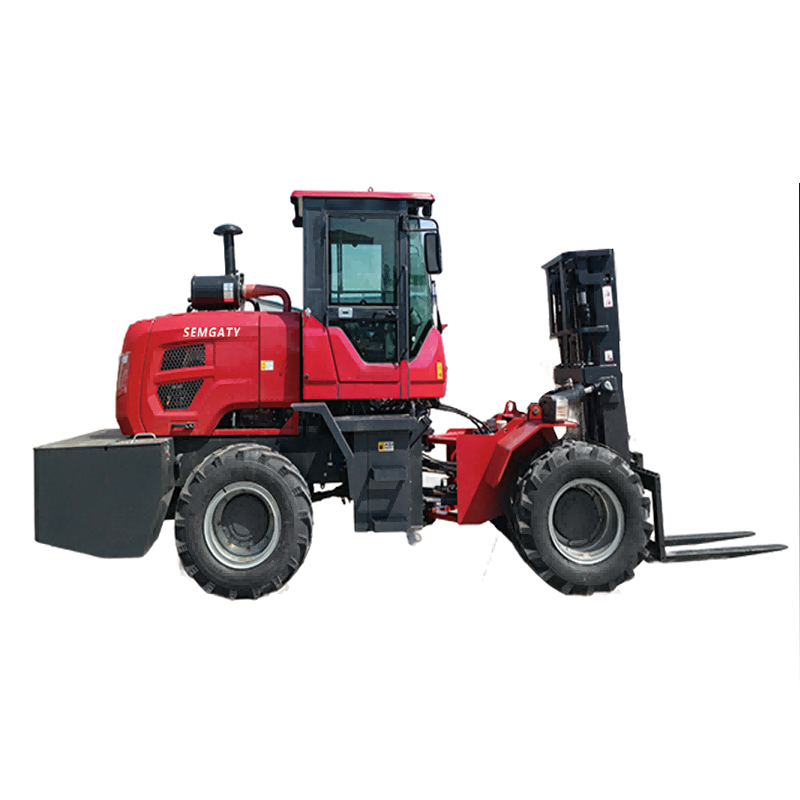
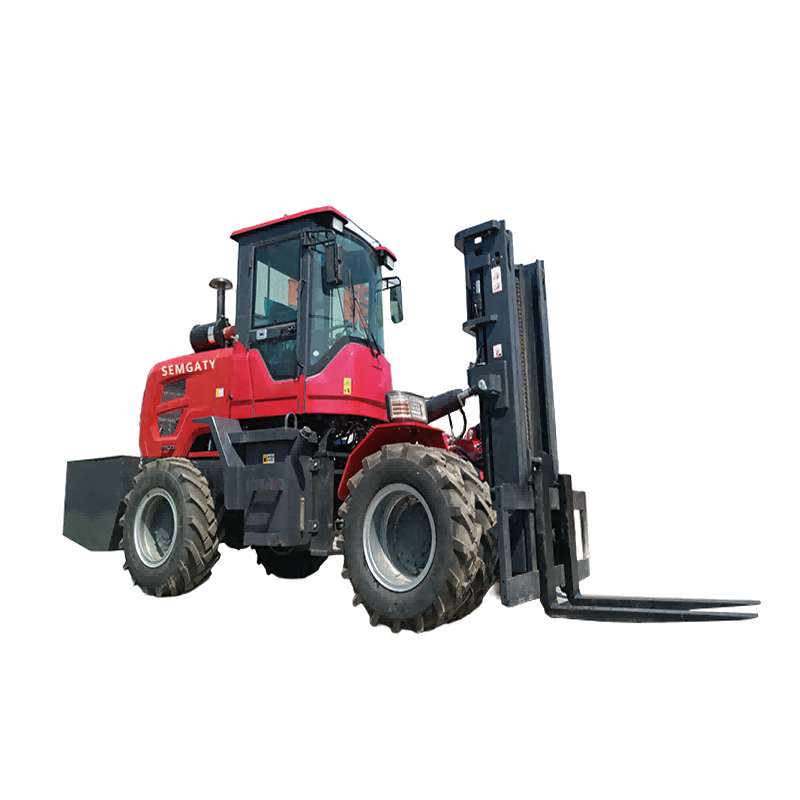
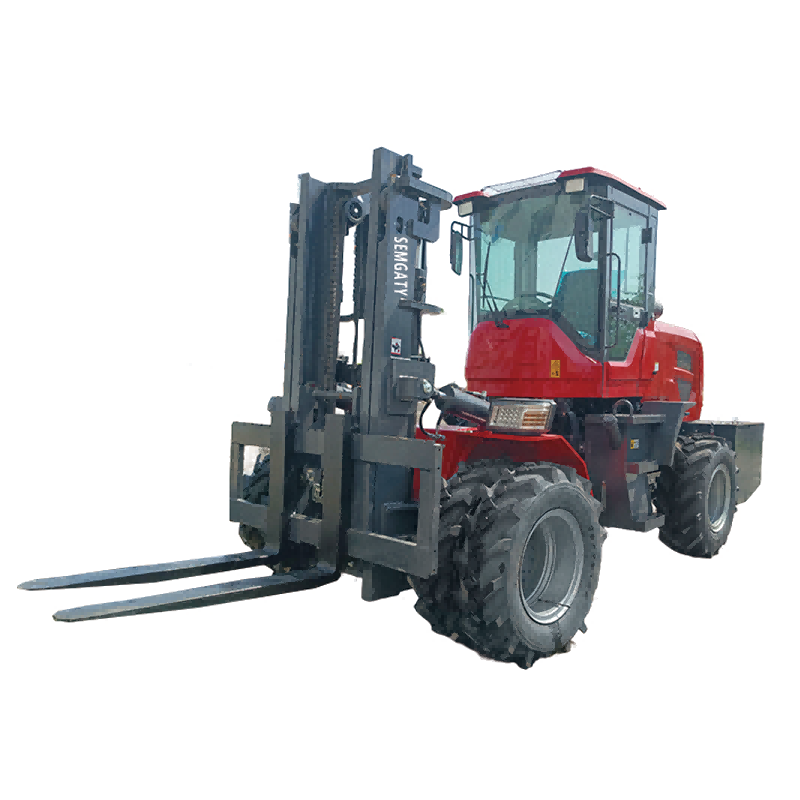
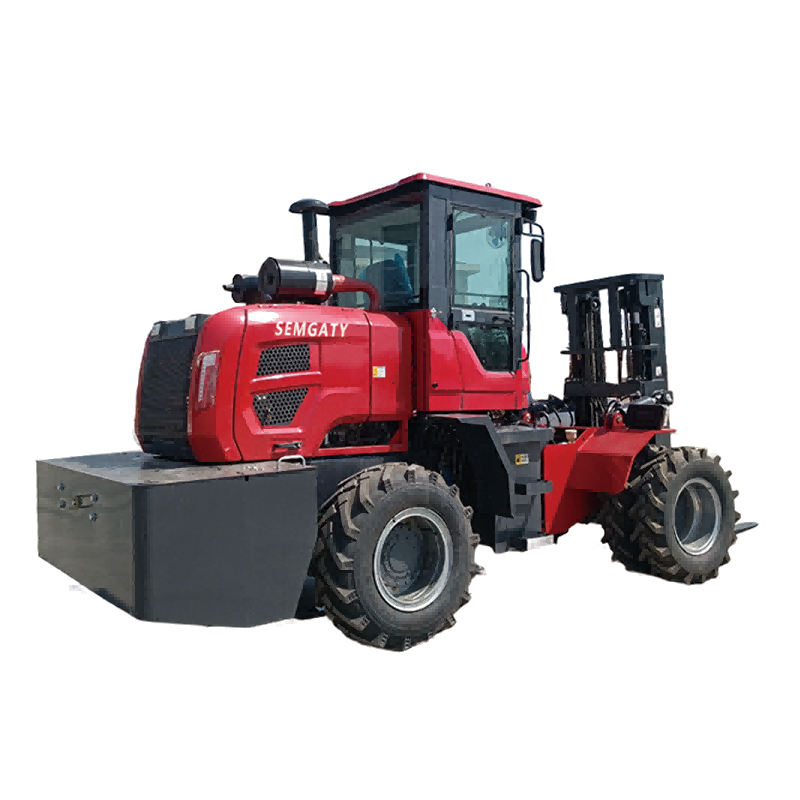
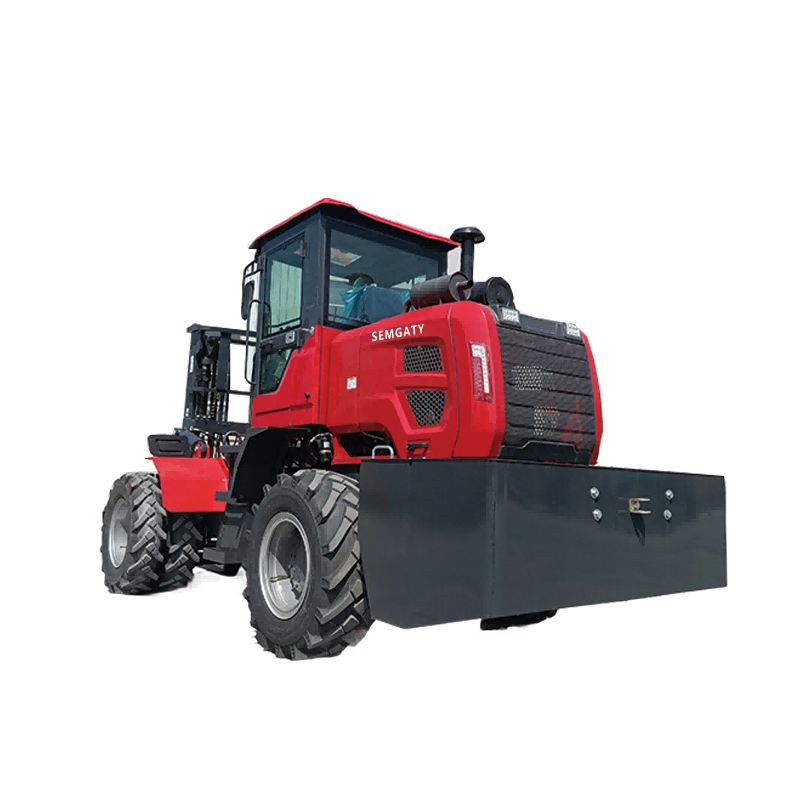
| Parameters |
|
| Power type | Diesel |
| Rated load | 7000KG |
| The external dimensions are length, width and height | 5030*2190*2810mm |
| Load center distance | 600mm |
| The maximum height that the forks can lift | 4300mm |
| Maximum lifting height | 3000mm |
| The full height of the mast (with the forks on the ground and the mast vertical) | 2580mm |
| Freely increase height | 100mm |
| Front overhang | 684mm |
| Rear overhang | 1520mm |
| Wheelbase | 2628mm |
| Minimum ground clearance (at the mast) | 356mm |
| Track length (front wheel/rear wheel) | 1700/1700mm |
| Inside the minimum turning radius | 3900mm |
| Outside the minimum turning radius | 5800mm |
| Mast tilt Angle (front/rear) | F8°,R10° |
| Fork size | 1220*50*150mm |
| Maximum driving speed (full load/empty load) | 30/35Km/h |
| Speed increase (full load/empty load) | 350/500mm/s |
| Speed decrease (full load/empty load) | 550/450mm/s |
| Maximum climbing capacity (full load/empty load) | 25/35° |
| Number of wheels X/ Drive wheels | 4X/4 |
| Tire type (front/rear) | Pneumatic tire |
| Front wheel tire | 16/70-20 |
| Rear wheel tire | 16/70-20 |
| Service brake | Disc brakes |
| Parking brake | Mechanical handbrake |
| Engine model (Foreign trade) | Weifang National II 4102 turbocharged engine |
| Engine power (Foreign trade) | 76Kw |
| Model of reducer | 280 |
| Total weight | 7830KG |
Four-wheel drive forklifts, as a special type of industrial material handling equipment, demonstrate irreplaceable value in complex operating scenarios due to their unique drive structure and performance advantages. Compared to traditional two-wheel drive forklifts, the four-wheel drive system delivers power to all four wheels simultaneously, achieving a dual improvement in traction and maneuverability, especially on non-standard road conditions such as mud, gravel, and slopes.
In terms of power distribution mechanisms, four-wheel drive forklifts employ full-time or part-time four-wheel drive technology, automatically adjusting the power ratio between the front and rear axles based on road resistance. For example, when front wheel slippage is detected, the system quickly transfers some power to the rear wheels to ensure the vehicle maintains continuous traction. This intelligent power management not only improves operational efficiency but also significantly reduces equipment damage and the risk of cargo tipping due to slippage.
Structurally, four-wheel drive forklifts are typically equipped with reinforced frames and independent suspension systems to withstand the impacts of high-intensity operations. Their ground clearance is higher than that of ordinary forklifts, and combined with large-diameter anti-slip tires, they can easily cross obstacles or traverse uneven terrain. Furthermore, some high-end models integrate a differential lock function, locking the differential in extreme road conditions to ensure both wheels rotate at the same speed, further enhancing their ability to get out of trouble.
The expansion of application scenarios is a key value proposition of four-wheel drive forklifts. On construction sites, they can directly transport building materials to unpaved construction areas; in agriculture, they can reach deep into fields to load and unload crops; and at ports and docks, they can handle the challenges of soft ground caused by tides. This cross-scenario adaptability makes four-wheel drive forklifts one of the preferred equipment for customers in logistics, manufacturing, construction, and many other industries.
Regarding operating comfort, four-wheel drive forklifts reduce bumps through an optimized transmission system, and combined with adjustable seats and a low-noise cab, significantly reduce operator fatigue. At the same time, their precise steering control system allows the vehicle to maneuver flexibly in narrow spaces, making them particularly suitable for the micro-management needs between warehouse shelves. Some models are also equipped with a 360-degree panoramic camera, further enhancing operational safety.
Controlling maintenance costs is another key focus for users. While four-wheel drive systems are more structurally complex than two-wheel drive models, modern design, through modular components and maintenance-free bearings, extends maintenance intervals by over 30%. Furthermore, intelligent diagnostic systems monitor the status of critical components in real time, providing early warnings of potential faults and preventing losses from unplanned downtime.
Looking to the future, with the penetration of electrification technology, four-wheel drive forklifts are evolving towards greener and more intelligent designs. New energy models, through the integrated design of battery packs and four-wheel drive motors, retain the power advantages of traditional four-wheel drive while achieving zero-emission operation. The introduction of 5G communication and autonomous driving technologies will drive the upgrade of four-wheel drive forklifts from manual operation to autonomous handling, bringing revolutionary changes to industrial logistics.
With technological innovation, our product configuration and parameters will continue to
change without notice;
if there is any doubt, the specific confirmation of our international trade sales shall prevail;