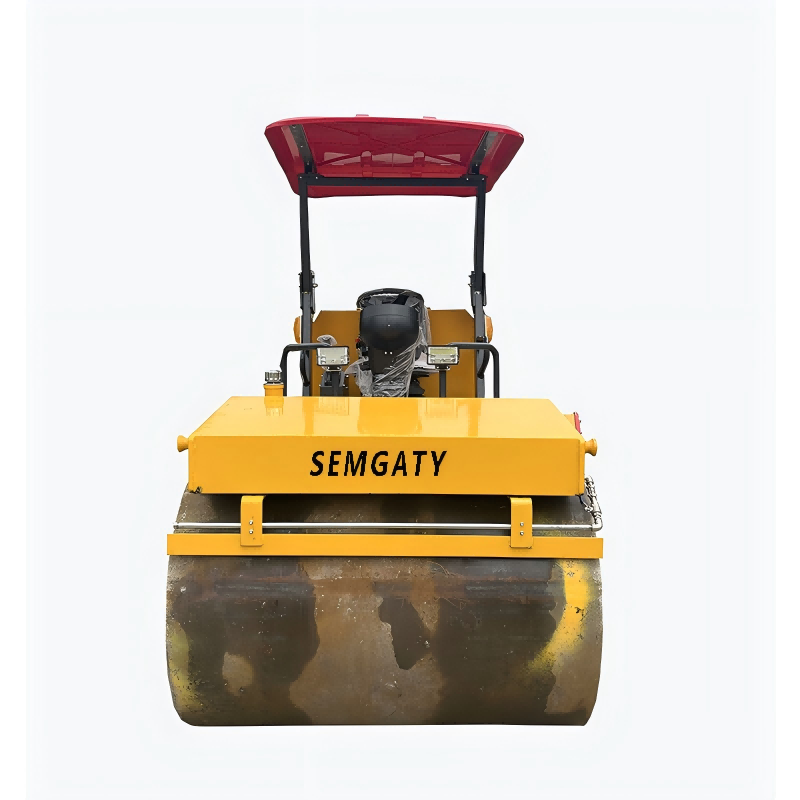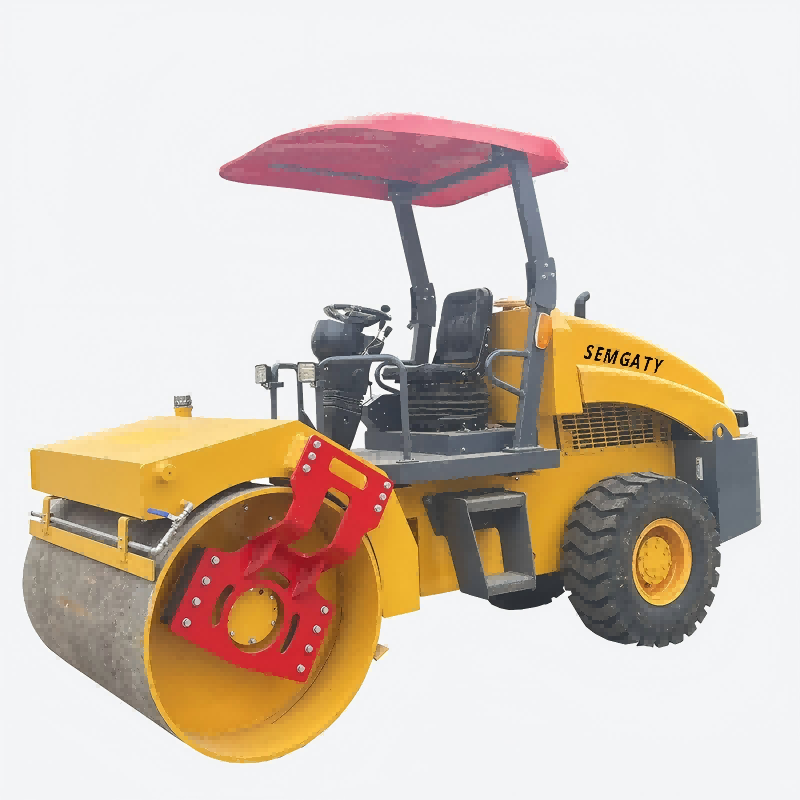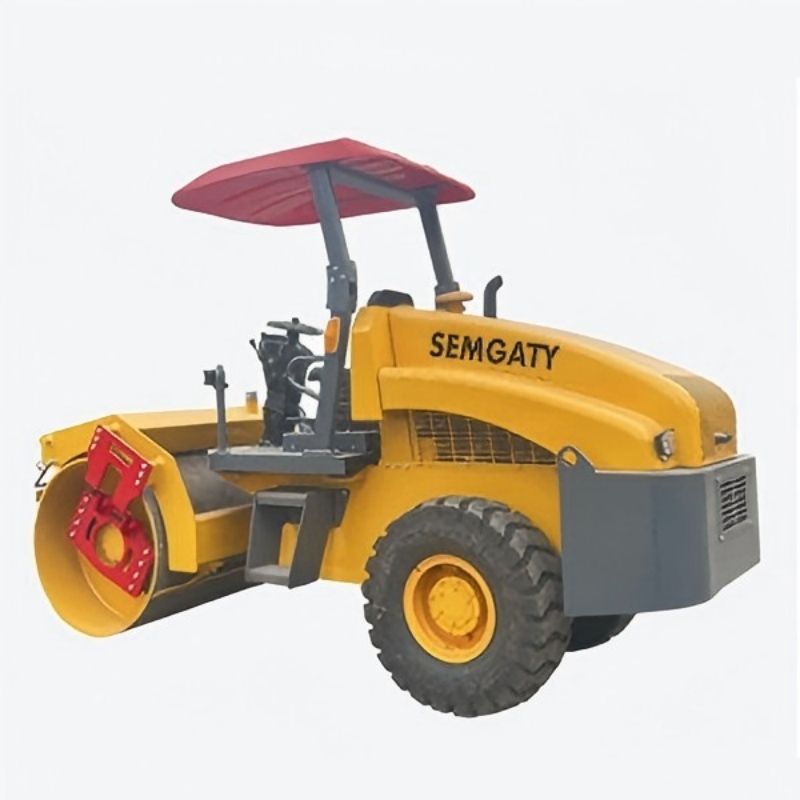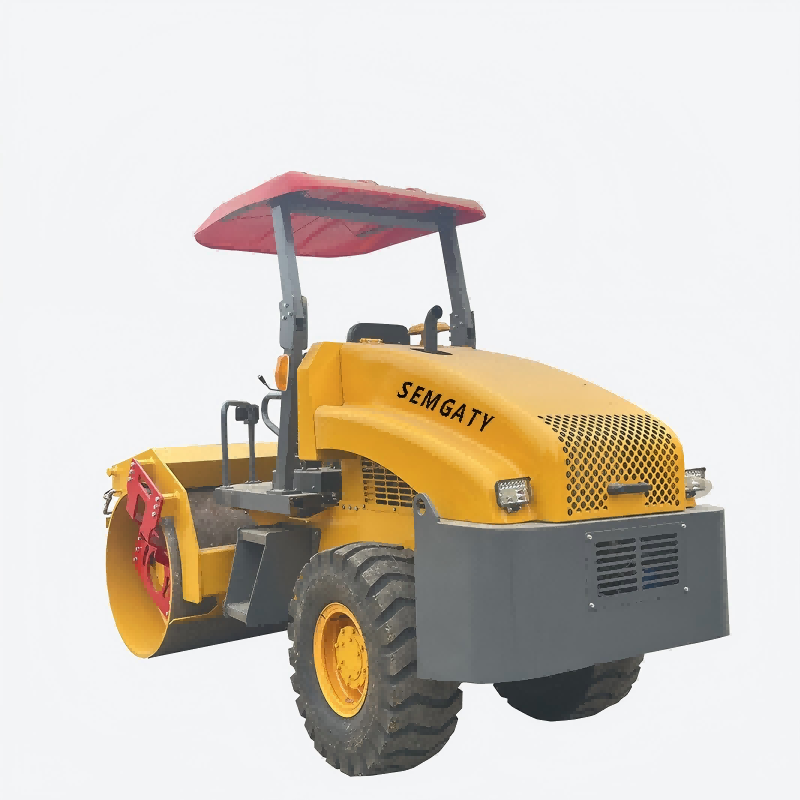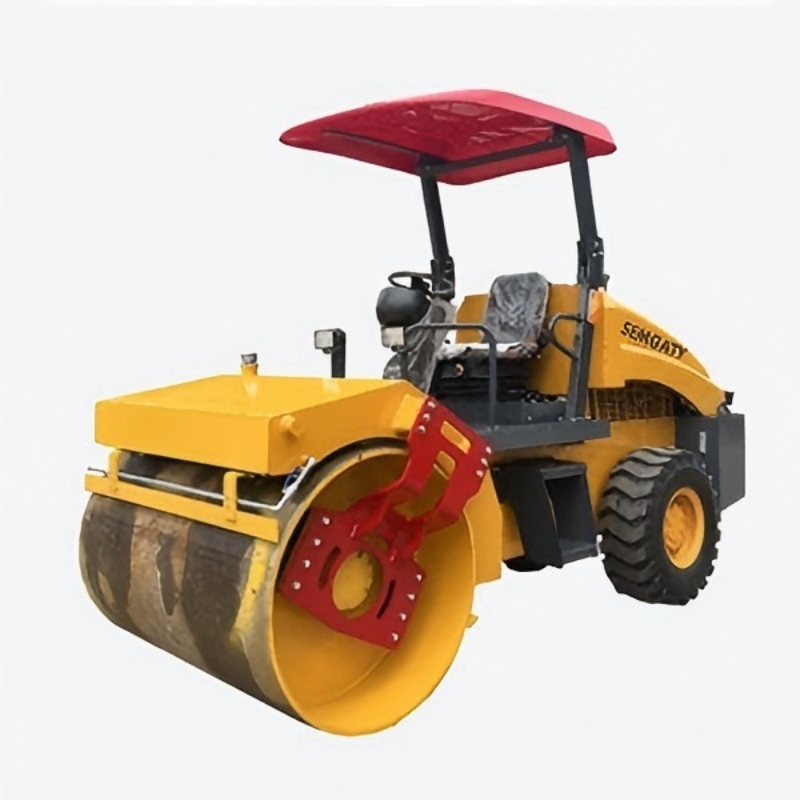
| parameter | ||
| Model | Fully hydraulic single-drum vibratory roller | Power shift single drum vibratory roller |
| Operating weight | 4500KG | 4300KG |
| Static line load | 140N/cm | 140N/cm |
| Amplitude | 0.5mm | 0.5mm |
| Vibration frequency | 55Hz | 52Hz |
| Excitation force | 72Kn | 65Kn |
| Travel speed | 2.7/4.9/7.8/14.3km/h | 0-8.2km/h |
| Climbing ability | 0 | 0 |
| Turning radius | 5100mm | 5100mm |
| Overall vehicle dimensions (L× W × H) | 3820*1560*2520mm | 3820*1560*2520mm |
| Vibrating wheel width | 1450mm | 1450mm |
| Vibrating wheel diameter | 1000mm | 1000mm |
| wheelbase | 2300mm | 2300mm |
| Engine power | 36.8KW | 36.8KW |
| Engine model | Yunnei YN27PAF4 | Yunnei YN27PAF4 |
| Non-road country IV | Non-road country IV | |
| Water tank capacity | 180L | 180L |
A road roller, also known as a soil compactor, is a type of road construction equipment, classified into steel-wheeled and tire-driven types. Within the category of construction machinery, road rollers fall under the category of road equipment and are widely used in the compaction of fill sections in large-scale engineering projects such as highways, railways, airport runways, dams, and stadiums. They can compact sandy, semi-cohesive, and cohesive soils, stabilized subgrade soils, and asphalt concrete pavement layers. Road rollers utilize their own weight for various compaction operations, causing permanent deformation and densification of the compacted layer.
Classification by Axle Arrangement: Based on axle arrangement, road rollers are classified into single-axle single-wheel, double-axle double-wheel, double-axle three-wheel, and three-axle three-wheel types. They are powered by internal combustion engines and employ mechanical or hydraulic transmission. Generally, they feature front-wheel steering for good maneuverability and rear-wheel drive. To improve steering and compaction performance, articulated steering structures and all-wheel drive are preferable. The front wheel frame and chassis are articulated to reduce machine sway on uneven road surfaces. The rear wheels and chassis are rigidly connected. Hydraulic operation is used, with steering controlled by hydraulic cylinders. Both the front and rear rollers are equipped with scrapers to remove any adhering material. A water spray system is also included to spray water onto the rollers during asphalt pavement compaction, preventing asphalt mixture from adhering. To increase the compaction force, iron, sand, water, or other materials can be added inside the rollers to increase weight.
With technological innovation, our product configuration and parameters will continue to
change without notice;
if there is any doubt, the specific confirmation of our international trade sales shall prevail;
Of course. Please let us know the specific product model you are interested in and we will immediately send you the latest technical specifications, test reports and our existing certifications (such as CE, RoHS, FCC, etc.) via email.
Yes, we offer professional OEM and ODM services. We have a strong R&D and engineering team. Please provide us with your detailed requirements or design draft, and we will evaluate the feasibility and provide you with a proposal and quotation.
We accept a variety of secure payment methods, including: · T/T (Telegraphic Transfer): This is our most commonly used method. The down payment ratio is a 30% deposit, and the final payment is 70%, payable before shipment. · L/C (Letter of Credit): We accept letters of credit at sight, but they must be issued by a reputable bank.
Our standard production time is approximately 30 days after receiving the deposit. The specific time may vary slightly depending on the order quantity and production schedule. Once the order is confirmed, we will provide you with a precise production schedule.