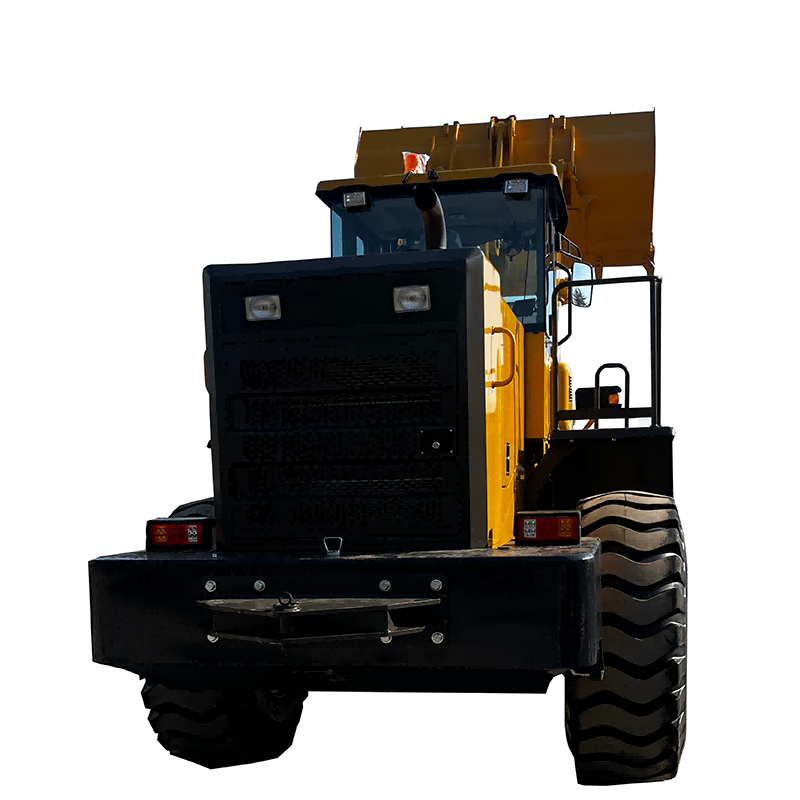
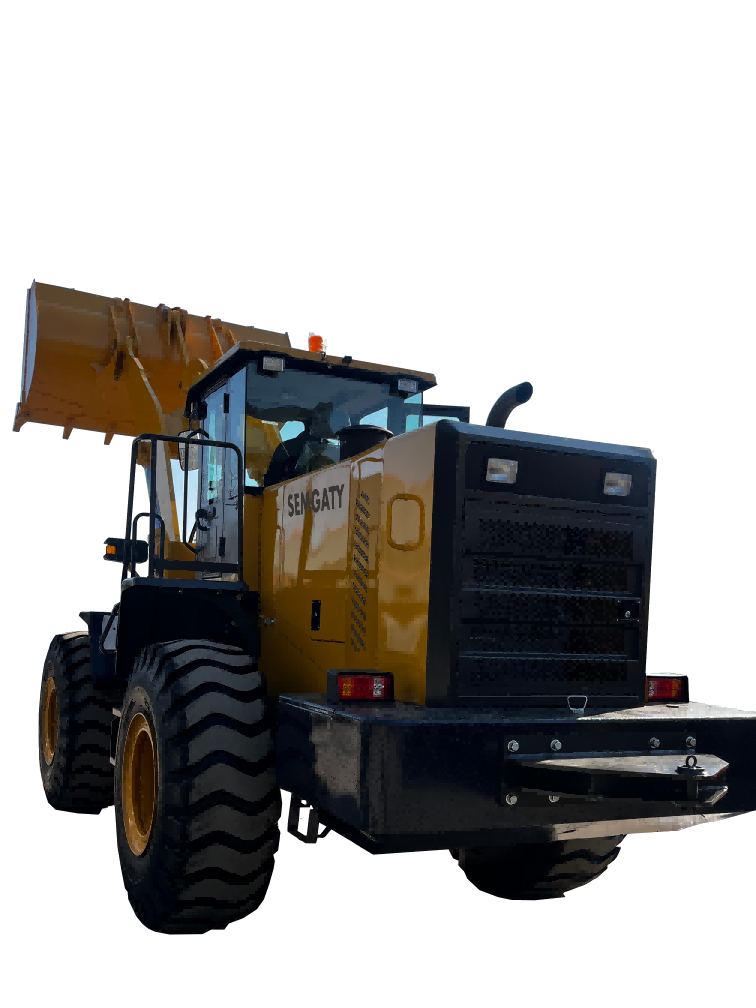
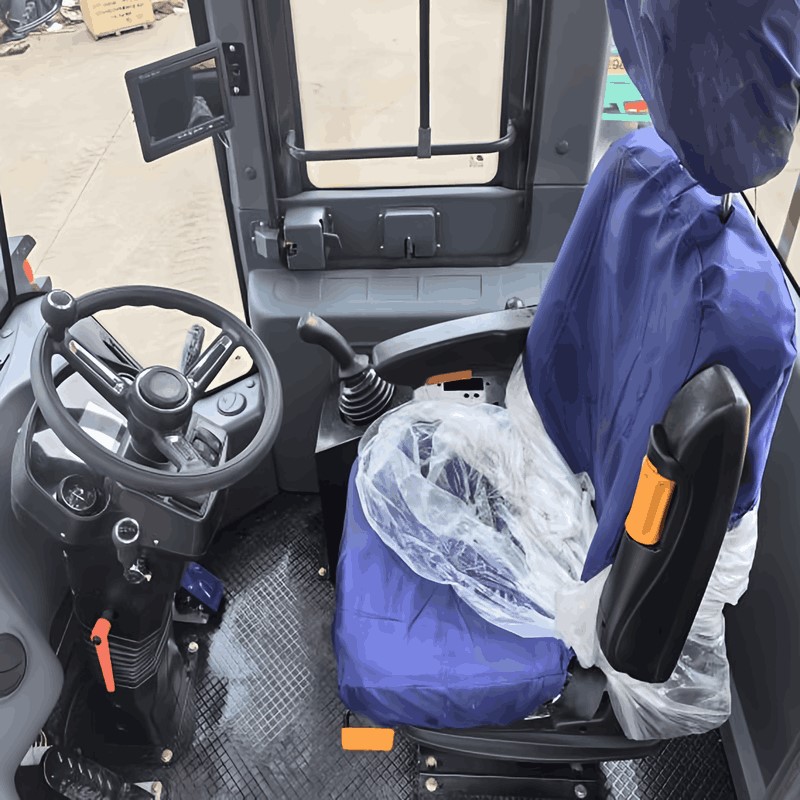
| parameter |
| Performance | 1 | Rated load | 5500KG |
| 2 | Overall weight | 16800KG |
| 3 | Rated bucket capacity | 3m3 |
| 4 | Maximum tractive force | 148Kn |
| 5 | Maximum breakout force | 194Kn |
| 6 | Maximum grade ability | 30℃ |
| 7 | Maximum dump height | 3100mm |
| 8 | Maximum dump reach | 1000mm |
| 9 | Overall dimension (L×W×H) | 7900×3000×3470mm |
| 10 | Minimum turning radius | 70200mm |
| Engine | 11 | Model | Weichai Steyr WP10HG220E476 |
| 12 | Type | lnline / Water cooling/ Dry cylinder/ Injection |
|
| 13 | No. of cylinder-bore/stroke | 6-126×130mm |
| 14 | Rated power | 162kw--2200r/min |
| 15 | Maximum torque | 900N.m |
| 16 | Min. fuel-consume ratio | ≤198g/kw.h |
| Transmission system | 17 | Torque converter | YJ375 |
| 18 | Gearbox mode | Power shift normally engaged straight gear |
| 19 | Gear shift | 4 forward shift 4reverse shift |
|
| 20 | Maximum speed | 38Km/h |
| Drive axles | 21 | Main reducing spiral | Bevel gear grade 1reduction |
|
| 22 | Decelerating mode | Planetary reduction,grade 1 |
|
| 23 | Wheel base (mm) | 3200mm |
| 24 | Wheel tread | 2250mm |
| 25 | Minimum ground clearance | 450mm |
| Hydraulic system | 26 | System working pressure | 17MPa |
| 27 | Boom lifting time | 6.05±0.25s |
| 28 | Total time | 10.8±0.5s |
| 29 | Fuel tank capacity | 300L |
| 30 | Function of leveling automatically | Yes |
|
| Brake system | 31 | Service brake | Air over hydraulic disc brake on 4 wheels |
|
| 32 | Parking brake | Manual parking brake |
| Tyre | 33 | Type specification | 23.5-25 |
| 34 | Front tyre pressure | 0.4Mpa |
| 35 | Rear tyre pressure | 0.35Mpa |
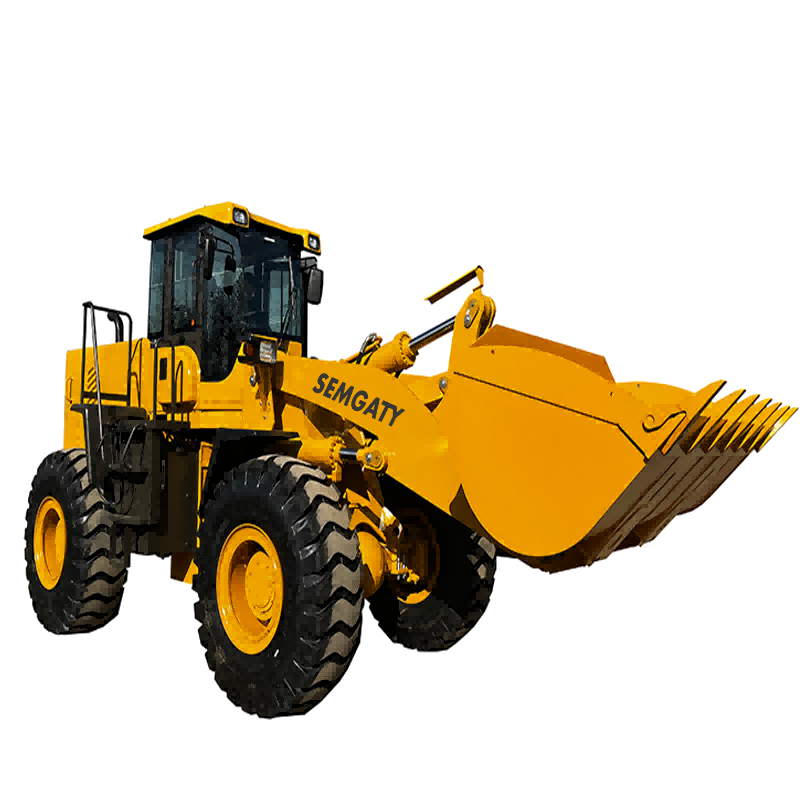
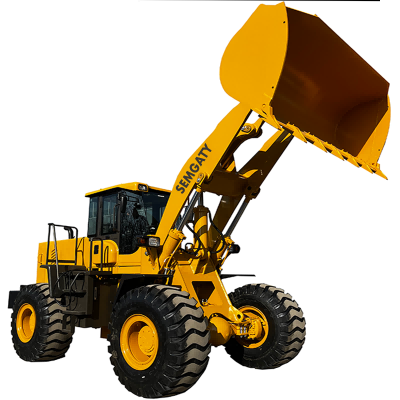
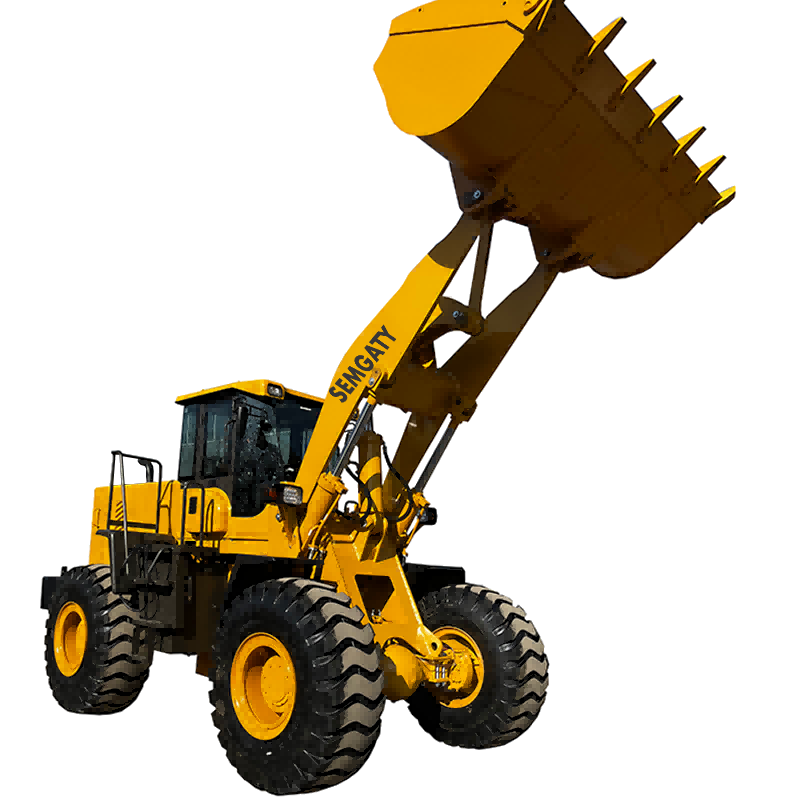
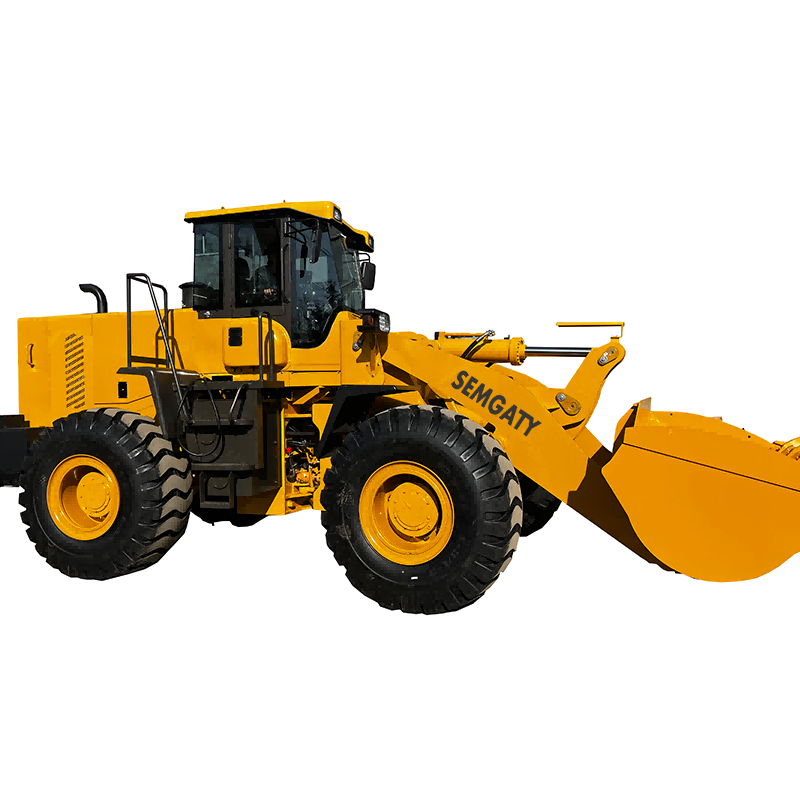
The 5.5-ton bucket loader is primarily used in earthmoving, mining, port loading and unloading, and construction. Its large bucket design significantly improves material loading efficiency. For example, with a rated load of 5.5 tons, work efficiency can be increased by more than 15% compared to a 5-ton model. The bucket capacity typically reaches 5.5 cubic meters, filling a truck with a single scoop, reducing the number of trips required, and is particularly suitable for lightweight materials such as coal and sand. In terms of value, this type of loader reduces the unit material transportation cost through its large-capacity bucket, while optimizing the power system to ensure stable operation. For locations with high environmental requirements (such as grain storage), the electric version can achieve zero emissions, low noise, and save approximately 60% on energy costs. Furthermore, modular attachment interfaces support quick switching between buckets, log forks, and other functional components, enhancing adaptability to various scenarios.
To understand the differences between 5-ton, 5.3-ton, and 5.5-ton loaders, we can analyze them from multiple perspectives:
I. Technical Characteristics Comparison
Hydraulic System: The 5.3-ton loader typically features a 21MPa high-pressure hydraulic pump, offering a 15% increase in work capacity compared to the 18MPa system of the 5-ton model. The 5.5-ton loader employs a dual-pump confluence hydraulic system, maintaining lifting speed while increasing lifting force by 10%.
Structural Reinforcement: The 5.3-ton loader's main beam thickness is increased by 2-3mm, and the steering axle bearing specifications are upgraded by one grade to accommodate heavier loads. The 5.5-ton loader is equipped with a reinforced planetary gearbox, increasing torque capacity to 980 N·m, and comes standard with mining tires with a 5mm thicker tread to withstand harsh working conditions such as gravel pits.
II. Economic Performance
Compared to the 5-ton model, the 5.3-ton loader consumes 8-12% more fuel, but its single-cycle operating efficiency is increased by approximately 6%, making it suitable for scenarios with high operating frequency. The 5-ton model can reduce overall maintenance costs by 18-22% under continuous 8-hour operation, making it more suitable for cost-sensitive users with low operating frequency.
III. Applicable Scenarios and Selection Decisions
Material Density: For ores with a specific gravity > 2.5 t/m³, a 5.3-ton or higher model is recommended to ensure operational safety and efficiency.
Operating Frequency: Select the appropriate model based on the operating frequency. For high-frequency operations, consider a 5.3-ton or higher model; for low-frequency operations, a 5-ton model is more economical.
Site Slope: When operating on sites with a slope > 10%, the rated load should be calculated at 80% to ensure safe operation.
Furthermore, during actual procurement, a TCO (Total Cost of Ownership) model should be used to comprehensively evaluate key indicators such as equipment price, fuel consumption data, and maintenance cycle. For special working conditions, it is recommended to request a load spectrum test report from the manufacturer to verify the equipment's dynamic load-bearing capacity.
These products are currently available in our store. Our forklift series covers a variety of rated loads, is technologically advanced, economical and efficient, and suitable for various working conditions. Please contact us for more information and to get the best solutions for you.
With technological innovation, our product configuration and parameters will continue to change without notice;
if there is any doubt, the specific confirmation of our international trade sales shall prevail;